Showing posts with label apple. Show all posts

New report says Apple iMac computers still on target for 2012 launch

iMacs (October 2012)

Despite last week's report indicating production problems could delay the launch of Apple's new iMac computers until 2013, it seems the machines are still on target for a 2012 release, and may already be arriving at distribution centers around the world.

Concern amongst those waiting for Apple’s new iMac computers escalated last week, after a French blog reported the release had been delayed, possibly until 2013. While it was impossible to judge the validity of the report’s sources, talk of a delay regarding a new Apple product was hardly a surprise, given the problems it has seen with the iPhone 5 and the iPad Mini so far this year.

However, 9to5mac.com has refuted the site’s claims, saying its own sources tell them the 21.5-inch iMac is already arriving at distribution centers in the U.S. and elsewhere in the world; indicating the planned November release will go ahead after all.

As for the 27-inch iMac, Apple gave it a tentative December release date, which is not only likely to be met, but perhaps even improved upon, with the massive computers becoming available to order around the same time as the 21-5-inch iMac.

Apple’s new iMac’s are considerably slimmer than older models, and some high-tech manufacturing processes have been used to fit all the computer hardware inside. The trouble Apple has had manufacturing the iPhone, which has been described by Foxconn as the most difficult device it has ever assembled, only made the rumored iMac delay seem more likely.

So, while a delay in their launch may have been averted, the iMac computers could still be a rarity in stores and online. Apple CEO Tim Cook warned there would be a “significant shortage” of the company’s range-topping desktop machines during the first three months after launch, so it’ll be wise to get an order in early if you’re desperate. You know, just like every other recent Apple release.

The only good thing is there’s unlikely to be a huge run on the $1300-plus computers during the Christmas shopping season, as eager buyers rush to claim the last remaining iPad Mini tablets and new iPod music players instead.


Source : digitaltrends[dot]com

Launch of new iMacs may be delayed till 2013, report says

iMacs (October 2012)

Waiting to get your hands on one of Apple's new iMacs? Well, it seems like you might have to wait a little longer than expected.

Users of old iMac machines who for the last couple of years have been waiting patiently for Apple to unveil a refreshed machine before upgrading were finally able to feast their eyes on the latest model last month when Apple unveiled a shiny new, and rather thin (at the edge, at least), design.

Shipping dates were set for November for the 21.5-inch model and December for the 27-inch model. Many of those iMac users have no doubt started to make plans for their older machine, whether it involves giving it to a friend, using it as a giant paperweight or simply consigning it to the attic.

Well, those plans might have to be put on hold for now as it appears the launch of the new machines may have been pushed to 2013. This will come as a big disappointment not only to those hoping to purchase a new iMac, but also to Apple executives who’d been looking forward to healthy sales of the new computer during the upcoming holiday shopping season.

French Mac-specialist blog MacBidouille says it has learned from a “commercial source” that Apple has delayed the launch of the new iMacs because of issues with its advanced welding process – possibly so advanced that it hasn’t quite got the hang of how to do it yet. The process, called ‘friction stir welding’, uses high heat pressure to create a seamless joint in the iMac’s frame.

Apple Insider pointed out in a report on Wednesday that other challenges for manufacturers include the screen’s lamination process, which gets rid of a tiny air gap between the iMac’s display and front glass, which was present in previous versions of Apple’s desktop computer. “In August, KGI analyst Ming-Chi Kuo reported that the process is more involved with the 27-inch model and would cause supply constraints for the initial batch of machines,” Apple Insider wrote.

The iMac’s page on Apple’s website displays a “coming soon” badge, while the online store continues to show a November shipping date for the smaller iMac and December for the larger one. If MacBidouille’s source turns out to be correct, we can expect to see these dates change soon.


Source : digitaltrends[dot]com

Samsung, Nokia dominate third quarter mobile phone sales

Samsung, Nokia dominate third quarter mobile phone sales

Samsung and Android continue to outpace Apple and iOS

A look inside the quarterly sales numbers showed smartphones are up 46.9 percent over the same period in 2011, and revealed Android phones outpaced Apple's iOS phones by 5:1 during the third quarter.

The sales figures, as reported by the analysts at Gartner, show mobile phone sales have decreased by 3 percent overall, continuing a trend started earlierthis year.

Despite the overall sales dipping, smartphone sales bolstered by Samsung, Nokia, and Apple have continued to escalate, and are now responsible for almost 40 percent of all mobile phone sales.

Samsung holds lead

During the third quarter, Samsung was able to maintain its lead over Apple in smartphone sales, largely due to the Galaxy lineup, including the Galaxy SIII.

With a 32.5 percent share of the smartphone market, Samsung was able to hold off second-place Apple, which earned 14 percent of the sales.

Research in Motion was able to slip into third place, with HTC following closely behind, as Nokia's smartphone sales slipped to seventh.

Samsung still found itself in the overall lead with 97.9 million phones sold (22.9 percent), a narrow margin of victory over Nokia's 82 million total mobile phones sold (19.2 percent).

Apple was able to solidify third place by selling 23.5 million iPhones (3.9 percent), which was a 36.3 percent jump from 2011, and accounted for the largest increase in year-over-year sales.

Gartner expects Apple to have another traditionally strong fourth quarter due to the expanding availability of the iPhone 5, but doesn't think holiday sales will impact the overall market all that much.

Android still king of the hill

Even though iPhone sales increased tremendously during the third quarter, Apple's iOS still had trouble catching up to Android.

With 122 million Android phones sold during the third quarter, Google's OS increased it's share to 72.4 percent of the market.

Despite Android earning 20 percent more users during the third quarter, iOS was still able to garner 13.9 percent of all users, a drop of just one percent from Q2.

Apple was able to maintain second place largely due to the decreasing numbers of Symbian and Microsoft's Windows Phone 7, as both OS were being phased out for Windows Phone 8.

iOS is expected to increase its numbers during the fourth quarter according to Gartner analysts, but all that depends on how strong Apple's final quarter turns out from a sales perspective.


Source : techradar[dot]com

Samsung remains steadfast as it vows to continue legal battle with Apple

Samsung will not follow HTC's lead and come to a peaceful conclusion to its ongoing legal battle with Apple, vowing not to negotiate with the firm.

HTC and Apple shook hands earlier this week, having decided to put all their patent disputes behind them, and get on with building smartphones instead. This was good news for us, as it’s one less lawsuit to hear about, good news for HTC, as it avoids any costly court judgements and finally, good news for Apple as it will make money from each HTC Android phone sold.

Samsung however, will not be following HTC’s lead, and will instead continue to battle it out with Apple both in stores and in the courtroom. In an interview with Yonhap News in Korea, Samsung’s President of Telecoms and IT, Jong-Kyun Shin said “we don’t intend to negotiate at all” when asked if Samsung would settle any dispute in a similar way to HTC.

The various legal battles between Apple and Samsung have captured headlines throughout the year, particularly regarding Apple’s $1 billion win against the company, and Samsung’s controversial win in the UK. Shin’s comments indicate we’ll be seeing more of the same in the future.

HTC has signed a 10-year licensing contract with Apple, believed to include a payment of around $6 to $8 per HTC handset sold, which could total up to a figure of approximately $275 million per year, based on HTC’s current smartphone sales performance.

It’s an interesting turn of events too, as Apple has long been viewed as the aggressive one when it comes to litigation, but this shows Samsung is equally committed to continuing the patent war in a courtroom setting.

Samsung has filed an appeal against its $1 billion judgement, which is currently being assessed by the courts, while Apple has asked for more damages, saying Samsung has harmed the iPhone’s “distinctive product identity.” As Samsung won’t be signing an agreement with Apple anytime soon, expect more legal fireworks from the pair over the coming months.


Source : digitaltrends[dot]com

Samsung defiant: 'We don't intend to negotiate with Apple'

Samsung defiant: 'We don't intend to negotiate with Apple'

Settle? Oh hell no.

Samsung has said that it is not looking to negotiate with its fierce rival Apple, with an HTC-style settlement looking increasingly unlikely.

Speaking to the Korean media, Samsung's mobile president Shin Jong-kyun revealed the firm was sticking to its guns in its continuing battle with its Cupertino-based rival.

Jong-kyun was quoted by Yonhap News saying: "It may be true that HTC may have agreed to pay 300 billion won (£173 million/$276 million) to Apple, but we don't intend to [negotiate] at all."

Say no to negotiation

At the start of the week Taiwanese manufacturer HTC announced that it had resolved its patent disputes with Apple, agreeing a 10 year licensing deal with the iPhone maker.

The ongoing game of one-up-manship between Apple and Samsung in the courts is well documented, and becoming ever more tedious, and this latest revelation will not help a resolution arrive any quicker.

We now lay in wait for Apple's sarcastic response, possibly in a similar fashion to the way it "apologised" for accusing Samsung of copying its products.


Source : techradar[dot]com

Why would Apple move Macs to ARM processors?

Apple ARM processor mac intel

Rumors have Apple moving away from the Intel chips currently used in Macs to the ARM-based chips used in mobile devices like the iPhone and iPad. But would such a seismic shift make sense?

Apple’s Macintosh computers rely on processors from chipmaking giant Intel – just like the vast majority of the world’s PCs, notebooks, and servers. However, Apple’s iOS device line, such as the iPhone, iPads, and iPod touch, rely on processors based on designs from ARM. These chips aren’t as fast or powerful as mainstream Intel processors, but they’re cheaper and they consume far less power, making them ideal for mobile devices like smartphones and tablets.

Now, Bloomberg is citing three unidentified sources saying Apple is seriously investigating shifting Macs from Intel to ARM chips, and new developments from ARM are adding fuel to the fire.

Could Apple move Macs away from Intel to ARM-based processors? What hurdles would Apple face, and how would ARM-based Macs stack up?

Here we go again

Apple Phil Schiller A6X processor

With the original iPad back in 2010, Apple revealed it was designing its own ARM processors rather than relying on chips designed by Samsung or other manufacturers. (That first chip was the Apple A4, which quickly moved to power the iPhone 4 as well.) With Apple designing its own chips, speculation immediately mounted that the company might one day move its Macintosh computers away from Intel to its own ARM-based processors. After all, it wouldn’t be the first time Apple has changed the Mac’s processor architecture. Apple has already shifted the Mac’s processor architecture three times: from Motorola 68000s, to PowerPC, and then to Intel. If there’s a company with experience managing these transitions, it’s Apple. And each time Apple has unveiled a new processor, that speculation has started anew.

What’s different this time around?

ARM 64-bit architecture

Current ARM-based chip designs use 32-bit architectures. For now, that’s ample for most mobile and tablet applications, but one significant ramification for desktop computing is that these processors can only handle about 4GB of memory. Macs today ship with a minimum of 4GB of RAM, and many ship with  8GB, so using a 32-bit architecture just isn’t feasible for today’s desktop computers. However, last week ARM Holdings took the wraps off its Cortex-A50 series, the first ARM processors designs with a 64-bit architecture. (One of them also can claim the title as the world’s smallest 64-bit processor.) Suddenly, managing the amount of memory common in today’s desktop computers—and even high-end servers and workstations—is within reach.

ARM doesn’t make chips; it designs then, and licenses those designs to companies like Samsung, Qualcomm, and (of course) Apple. It will take time for firms to implement 64-bit designs of their own. Nobody is expecting 64-bit ARM chips to be a reality on the market for another year or 18 months. But the market is no longer holding its breath for ARM to release 64-bit designs: now, the work can begin.

It’s also worth noting Apple’s relationship with ARM is much older than its relationship with Intel. It goes all the way back to the 1980s, and Apple collaborated in early stages of ARM processor development. That resulted in Apple owning a over 40 percent of ARM, and that stake helped Apple weather its mid-1990s death spiral as it repeatedly padded its bottom line by selling ARM shares to lower its losses.

Apple is getting results

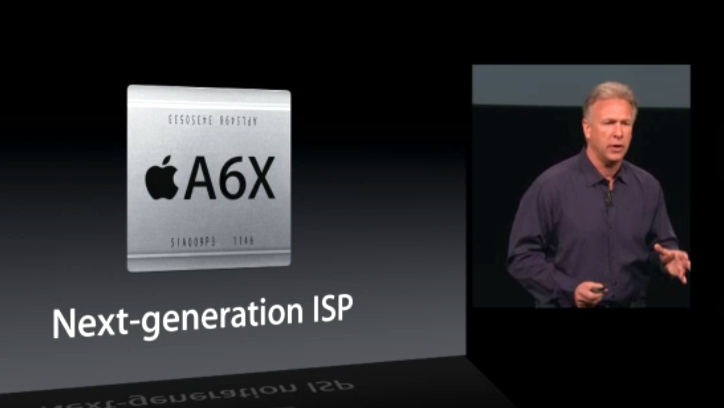
Apple’s work to design its own processors isn’t just a vanity project: It’s about getting performance and capabilities that can’t be matched by other mobile device makers using stock parts. Apple has invested heavily in acquiring chip design expertise (in part through the acquisition of PA Semi and Intrinsity. Apple has consistently been increasing the clock speed of its processor and graphics cores and getting improvements through architectural adjustments. Unveiling the latest iPad, Apple also revealed its latest A6X processor was laid out by hand, rather than trusting the details to CAD tools. The company is clearly willing to sweat the details and design processors that specifically support things like its Retina displays without sacrificing battery life compared to previous, lower-powered products. That expertise can directly translate to notebook and desktop PC designs.

New Technology group

Part of Apple’s recent executive shakeup (which saw the ouster of iOS chief Scott Forstall) was the creation of a new Technologies unit under Bob Mansfield, including Apple’s semiconductor teams, described as having “ambitious plans for the future.” Although the Technologies group is tasks with unifying all of Apple’s wireless efforts, as VP of Mac Hardware Engineering, Mansfield oversaw the development of things like Apple’s iMac and MacBook lines. While the industrial design of Macs remains the province of Jonathan Ive, actually getting them built still seems to fall on Mansfield’s shoulders, in addition to being in charge of chips.

Thinner and lighter

When Apple introduced the MacBook Air back in 2008, it was deemed almost impossibly thin, and the line continues to set the bar for ultraportable notebooks. Apple built the original MacBook Air using a custom Intel processor; one of the reasons Apple was able to beat other PC makers to the super-slim form factor was that it wasn’t using off-the-shelf parts. Apple has continued to demonstrate with the Retina MacBook Pros, ongoing MacBook Air line, and the latest iMac that its obsession with thin-and-light computer designs continues unabated. Although Intel has acknowledged Apple has has provided valuable input into its chip designs, Intel is not making custom processors for Apple, which poses a problem moving forward. It will be difficult for Apple to keep its PC products in front of the rest of the market if it’s forced to use the same off-the-shelf processors as everyone else. Design considerations alone might be incentive to Apple to start seriously looking at alternatives to Intel.

Would OS X run on ARM?

ARM Cortex A50 Big-Little

Apple bringing its OS X operating system to ARM might seem like the equivalent of Microsoft bringing Windows 8 to ARM devices in the form of Windows RT: a potential seismic shift in the product landscape. However, Apple has a head start. Its iOS operating system is based on Mac OS X, meaning the two share a large number of core technologies. Much of the groundwork for running OS X on an ARM chip already exists, and there’s long been speculation Apple has been bringing up most of OS X on ARM systems for years just as a proof of concept.

A bigger question is how well OS X would run on ARM processors: Would it deliver a reasonable desktop experience? By some benchmarks, the A6 processor Apple uses in the iPhone 5 already substantially outperforms any PowerPC notebook Apple ever made, and the A6X in the latest iPad scores even higher. And with the power available in notebooks and desktop computers (as opposed to phones and tablets), Apple could push the processors to significantly higher clockspeeds. Apple could also improve performance and keep heat levels down by adding more processor cores. That would increase the cost of each processor, but Apple’s chips are so much less expensive than Intel’s mainstream CPUs that Apple could afford to eat a bit of expense there.

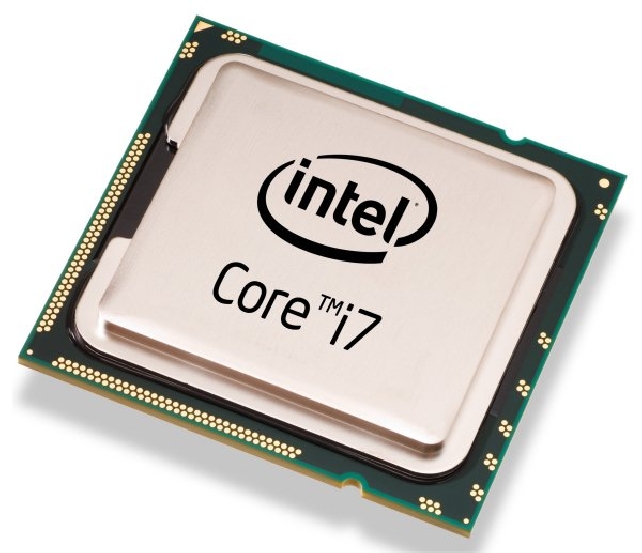
(Doubt that? Intel’s published price lists (PDF) run from $117 for a low-end Core i3 chip to $999 for a high-end Core i7. Bulk customers like Apple, Dell, Lenovo, and HP presumably get a significant discount, but the contrast is stunning: iSuppli estimates Apple pays under $20 for its A6 processor.)

Given how many people find Apple’s iOS devices totally acceptable for lightweight gaming, Web browsing, email, managing photos and entertainment like movies and music, it’s fair to guess hypothetical ARM-based Macs would be able to meet those same sorts of needs easily. On consumer notebooks and desktop systems, the real performance constraints are usually memory, storage, and networks, not the processor.

However, once one gets beyond mainstream computing needs, ARM chips aren’t going to be able to stand up to Intel in the foreseeable future. That means folks who rely on their Macs for content creation, high-end gaming, software development, and compute-intensive applications like large databases, software development, real-time digital signal processing (think musicians and DJs), would suffer from a switch to ARM processors. These are the same users who purchase Apple’s highest-priced, highest-margin Macintosh computers and constitute many of Apple’s most loyal and lucrative Macintosh customers. It seems unlikely Apple would kick them to the curb, so if Apple does move Macs to ARM-based processors, higher-end Macs are likely to stay with Intel.

Barriers to OS X on ARM

OS X Mountain Lion Messages

This doesn’t mean making OS X practical on ARM chips would be a cakewalk. Assuming Apple can indeed overcome possible performance hurdles with its own 64-bit designs down the road. Other barriers include:

Backward compatibility

Just as Windows RT can’t run old Windows software, a hypothetical ARM-based Mac wouldn’t be able to run old OS X software. In the past, Apple has always provided an emulation layer that let old software continue to run, albeit slower. Apple’s cleanest transition was from PowerPC to Intel: Its Rosetta PowerPC emulators let Mac users transition the vast majority of their existing PowerPC software to their new Intel Macs without batting an eye, letting them continue to use their software, then upgrade to new Intel versions over time.

It’s not clear that Apple could manage a transition from Intel to ARM so easily. Russia’s Elbrus Technologies recently announced an x86 emulator for ARM that can let ARM chips run software compiled for Intel processors, but it can only deliver about 40 percent of the ARM processor’s performance through emulation. Elbrus thinks it can bring that level up to 80 percent by the end of 2014, but considering ARM chips are already slower to begin with, that may still mean sluggish performance. The alternative is Microsoft’s approach: Bar legacy software outright.

A desktop version of iOS?

The Mac used to be Apple’s market-leading product… but then it was eclipsed by the iPod, and then by the iPhone, and then by the iPad. Where Apple customers used to come to iOS devices with a knowledge of Mac OS X, now it’s much more likely Apple customers come to the Mac after getting into the Apple ecosystem on an iOS device. Apple’s “back to the Mac” emphasis in Lion and Mountain Lion is about taking elements of iOS and taking them back to OS X so iOS users feel more at home. The Mac App Store, Notifications, and full-screen mode all arose from this effort.

If Apple can’t support legacy Intel apps, would it make sense to essentially make a version of iOS for the desktop? It have the advantage of being instantly familiar to millions of existing iOS users, with hundreds of thousands of existing apps available on launch day. However, apps originally designed for smartphones and tablets generally would not translate well to a notebook or desktop computer. After all, Apple CEO Tim Cook was quick to criticize Microsoft for the sacrifices made by its own hybrids. Apple would also have to make some changes to iOS to match desktop users’ expectations. For instance, multitasking under iOS is currently limited to a handful of tasks that can be delegated to the operating system, all in the name of power management and maximizing battery life. Many desktop users would expect more robust multitasking, without a significant impact on battery life.

What about Intel’s stranglehold?

intel core i7

Apple likes to control its own destiny. Part of that fierce independence comes from total control of product design from the ground up, from the silicon in the chips to the finish on the case to the pixels on the screen. With its Macintosh computers, Apple doesn’t control two key parts of the package: the processor and the graphics chip, which it relies on Intel and Nvidia for. If Apple were to make its own ARM processors, it would liberate Apple from dependence on Intel’s rigid upgrade schedule, which controls the rest of the PC industry.

Of course, putting ARM chips into Macs – or threatening to – could simply be a clever way to exert leverage on Intel. Intel scored a tremendous public relations coup back in 2005 when Apple switched from PowerPC to Intel processors. Although Intel can certainly afford to lose Apple as a client on purely financial level, the damage to Intel’s reputation could be substantial – after all, Apple is one of the most-watched and most-respected companies on the planet. Toying with the idea of a switch to ARM chips could give Apple significant negotiating chips with Intel, maybe even enough to get the chipmaking giant back to making custom processors only available to Apple, like it did with the original MacBook Air.

Apple did not respond to a request for comment.

Source : digitaltrends[dot]com

Judge to consider Samsung's juror misconduct claim in Apple suit

Judge to consider Samsung's juror misconduct claim in Apple suit

Apple and Samsung's 1,000 year war continues

It all comes down to this (maybe): during a Dec. 6 hearing, Calif. Judge Lucy Koh will examine Samsung's claim that the jury foreman in the ongoing patent suit with Apple "concealed information."

After Apple's $1.05 billion victory in August, Samsung appealed the decision with a slew of new arguments, chief among them one of jury misconduct.

Samsung alleged that Vel Hogan, the jury foreman in the case, failed to disclose that he was sued by Seagate, his former employer, and driven to bankruptcy in 1993.

Seagate and Samsung have a "substantial strategic relationship," according to Samsung, and it seems Samsung believes that could have swayed Hogan to influence the jury against it.

That's the idea at least

Samsung also claimed that Apple knew about Hogan's connection to Seagate, and failed to disclose it.

Judge Koh wrote, "At the December 6, 2012 hearing, the Court will consider the questions of whether the jury foreperson concealed information during voir dire, whether any concealed information was material, and whether any concealment constituted misconduct.

"An assessment of such issues is intertwined with the question of whether and when Apple had a duty to disclose the circumstances and timing of its discovery of information about the foreperson."

Here's the kicker

CNET reported on Thursday that "legal experts" maintain that it's difficult to get a trial thrown out based on jury misconduct alone.

Further (and here's the kicker): Hogan did disclose that he had been involved in litigation "with a former partner."

He did not disclose who that partner was, but as Hogan reportedly noted, he was not asked to.

Even if this juror misconduct claim won't stick, Samsung will surely have half a dozen more up its sleeves, so don't expect an end to this case any time soon (especially since Apple still wants another $707 million from Samsung).


Source : techradar[dot]com

Cellular versions of the iPad Mini could start to ship next week

Although Apple hasn't provided an exact, single date on when the iPad Mini Wi-Fi + Cellular model will ship, buyers who have pre-ordered the tablet are seeing their accounts updated with various shipping dates, some as soon as five days time.

Ever since the iPad Mini was announced, there was a question mark over when the model with 3G/4G LTE connectivity would appear. Apple’s press release stated the cellular models would ship “a couple of weeks” after the Wi-Fi only Mini, putting the date somewhere around the middle of November.

It looks like Apple will keep its promise too, as reports are coming in that customers who pre-ordered the cellular Mini tablet have started to receive notices that it’ll ship “in the next five business days.” That could be on or slightly before November 16, two weeks after the iPad Mini went on sale.

This won’t be the same for everyone, of course, and Apple has already flip-flopped on iPad Mini LTE release dates once, with some buyers finding a November 21 and November 23 shipping date added to their account soon after launch, but this was quickly replaced with “mid-November” instead. Subsequently, these dates have been re-applied to some accounts.

So, if you’ve ordered an iPad Mini LTE, there’s a chance it will arrive sometime between November 16 and November 23, depending on when you placed your order, and your chosen delivery method.

Apple has been experiencing some delays with getting the iPad Mini into its customer’s hands, with the Wi-Fi-only tablet selling out as an online pre-order, and then again when it hit retail stores last weekend. Despite this, Apple shifted three million iPad Mini and fourth generation iPad tablets over those three days.

While still a considerable amount of iPad tablets sold, this was a little lower than some analysts hoped for, and this could have been due to the cellular model not being available on launch day. An analyst for Merrill Lynch called the 4G LTE iPad Mini “more important than people think,” reminding us that the cellular versions of the full-size iPad make up 45-percent of sales.

If you’ve pre-ordered an iPad Mini, has its delivery date been updated yet?


Source : digitaltrends[dot]com

Tablet survey: Apple products top holiday wish lists

Apple iPad Mini review iPad comparison iOS tablet

Hoping to find an Apple tablet in your Christmas stocking? According to the results of a new survey, you're not alone.

For the second year running, a survey by online shopping site PriceGrabber shows Apple products at the top of consumer wish lists this holiday season.

A refreshed iPad (in fact, you could call it double-refreshed) since last Christmas, together with the introduction of the smaller 7.9-inch iPad Mini, have evidently enabled the Cupertino company to maintain strong consumer interest, with 63 percent of respondents hoping to receive a tablet this holiday season wishing for an iPad 3 or 4. Twenty-four percent said they’d like to receive an iPad Mini.

It was neither a Kindle Fire nor the Nexus 7 that placed third, with 22 percent saying they’d like to receive Samsung’s latest 5.5-inch Galaxy Note device instead. Amazon’s Kindle Fire HD was the preferred choice for 20 percent of respondents, while 13 percent went for the Surface.

PriceGrabber’s survey, which allowed respondents to select as many tablets as they liked, involved 1,475 US-based online shoppers interviewed between October 24 and November 1, 2012.

Of course, the tablet market has changed greatly in the last 12 months, with big hitters like Amazon introducing its new range of Kindle Fire tablets. Google also entered the tablet arena this year with its Asus-made Android-powered Nexus 7 and Nexus 10 devices. The Nexus 10 doesn’t appear in the survey results, presumably because it was announced at the tail end of the period during which the research was conducted.

Lower-priced category

In the lower-priced tablet category – a category that’s expected to generate a lot of revenue for tech companies this holiday season – PriceGrabber asked consumers not which tablet they’d like to receive but instead which one they’re most likely to buy as a gift.

The iPad Mini was chosen by 45 percent of consumers, while 27 percent went for the Kindle Fire HD. The Nexus 7 and non-HD Kindle Fire tablet tied for third spot, each receiving 19 percent. Six percent selected one of Barnes & Noble’s tablet offerings.

PriceGrabber’s Rojeh Avanesian commented on the results in a release, saying, “Tablets continue to grow in popularity as a top holiday gift, especially with the emergence of lower priced tablets in the $200 to $300 price range targeting budget-conscience consumers.”

Does it surprise you to see the Galaxy Note in third spot among consumer preferences – placing higher than the Fire HD and Nexus 7 – or, considering its feature set and portability, does it make perfect sense? 


Source : digitaltrends[dot]com

Analyst: Apple to sell 46.5 million iPhones this quarter

Analyst: Apple to sell 46.5 million iPhones this quarter

Supply woes are easing, says analyst

Apple could sell as many as 46.5 million iPhones in the quarter ending Dec. 31, according to one analyst.

Sterne Agee analyst Shaw Wu brings word from supply chain sources that the Foxconn plant has been able to up its manufacturing capacity for the new iPhone 5 handset.

The Chinese factory had experienced difficulties in the large scale manufacture of the new 4-inch handset, due to component shortages and assembly troubles, leaving Apple less able to fulfil demand.

Earlier this week Foxconn chairman Terry Gou reportedly admitted: "It's not easy to make the iPhones. We are falling short of meeting the huge demand."

Issues resolved

However, the easing of these issues, Wu told investors, will clear the way for Apple to quickly replenish stocks and sell an ungodly amount of iPhones in the run up to, and immediate aftermath of, Christmas.

If Apple achieves the lofty 46.5m prediction, it would represent a gigantic leap of well over 50 per cent year-on-year, compared with the 26.9m sales it racked up during the final quarter 2011.

With Apple's share price taking a beating after missing sales expectations during the last quarterly financial report, a solid Christmas season could be the key to stocks crashing through the roof once again.


Source : techradar[dot]com

Analyst: Apple to sell 46.5 million iPhones before end of year

Analyst: Apple to sell 46.5 million iPhones before end of year

Supply woes are easing, says analyst

Apple could sell as many as 46.5 million iPhones in the quarter ending December 31, according to one analyst.

Sterne Agee analyst Shaw Wu brings word from supply chain sources that the Foxconn plant has been able to up its manufacturing capacity for the new iPhone 5 handset.

The Chinese factory had experienced difficulties in the large scale manufacture of the new 4-inch handset, due to component shortages and assembly troubles, leaving Apple less able to fulfil demand.

Earlier this week Foxconn chairman Terry Gou reportedly admitted: "It's not easy to make the iPhones. We are falling short of meeting the huge demand."

Issues resolved

However, the easing of these issues, Wu told investors, will clear the way for Apple to quickly replenish stocks and sell an ungodly amount of iPhones in the run up to, and immediate aftermath of, Christmas.

If Apple achieves the lofty 46.5m prediction, it would represent a gigantic leap of well over 50 per cent year-on-year, compared with the 26.9m sales it racked up during the final quarter 2011.

With Apple's share price taking a beating after missing sales expectations during the last quarterly financial report, a solid Christmas season could be the key to stocks crashing through the roof once again.


Source : techradar[dot]com

iOS 7: 12 things we want to see

iOS 7: 12 things we want to see

What will Apple introduce in iOS 7?

The latest major update for Apple's mobile devices, the iPad, iPhone and iPod touch, was mostly hit, but with a Maps-shaped miss.

Lots of people were rightly angry about Apple ditching Google data, but beyond that mis-step there were things to like: a more useful Siri (App launching plus the recognition that a world exists outside of the USA), shared Photo Streams, handy Phone app controls such as 'send to voicemail', and major improvements to Mail, Safari, accessibility and the Camera app.

But regardless of what Apple achieves, it's never really enough. As soon as you've sat there playing with the latest iOS, ideas pop into your head regarding what you'd like to see next. This article explores a dozen of the features we're clamouring to see in iOS 7. (And by 'clamouring', we of course mean 'asking really nicely'. C'mon, Mr Cook - pretty please?)

1. Hide Apple apps

Pretty much everyone we know with an Apple device has a folder entitled 'Apple'. This isn't filled with must-have apps from the geniuses at Cupertino, but all the junk Apple installs that you can't get rid off. To be fair, what each individual considers junk is different, and these apps—Compass, Stocks, Voice Memos, Passbook, and so on—have their fans; but is it too much to ask for a switch in Settings that will hide those we don't use?

Hide Apple apps

2. Better app management

Change for change's sake is rarely a good thing. Recognition is key to satisfying experiences with technology. That's why we're not yelling at Apple to change how iOS home screens work. What we would like to see is improvements to app management: more screens; by default saving app data on delete; and an alphabetical list of installed apps, perhaps accessible from Spotlight.

3. Change app defaults

We're pretty certain this request would be met with wide-eyes from Apple CEO Tim Cook, swiftly followed by a full twenty minutes of belly laughing, but we want the ability to use non-default apps for important things like email and calendaring. Apple's own apps would remain the defaults, but you should also be able to pick your own in Settings.

Want a browser other than Safari as your default? Maybe in iOS 7

4. Provide a guest account

It's extremely unlikely that Apple's ever going to enable multiple user accounts on iOS devices—they are, after all, designed as extremely personal computers. What is perhaps more realistic is some kind of guest account you could switch to when handing your device over to someone for a short while; something similar already exists on the Mac in OS X.

5. Change Siri's voice

OS X is blessed with dozens of high-quality voices that witter away to you in various dulcet tones. By contrast, Siri is Siri. In the US, you get a slightly robotic woman; in the UK, Siri's that bloke who did The Weakest Link for a decade. It'd be great if you could choose the voice your device uses to speak. (Possible exception: Yoda voice.)

6. Provide App Store demos

Apps and games might be cheap, but that doesn't figure cheapskates into the equation. Too often, people are unwilling to risk 69p on the latest release, forcing devs into irritating freemium models or making them clutter up the App Store with 'lite' versions of their output. Apple should just allow demos: 24 hours from first launch and then you buy or the app won't run. Boom.

7. Power up 'Do Not Disturb'

Fed up of getting woken up in the middle of the night by the marketing efforts of [redacted, but quite possibly a well-known mobile network] or Game Center fanfares? Do Not Disturb is a great feature that enables you to time when your phone will quit bugging you. But you can define only a single schedule, and we want to see alternative options for weekends.

Do Not Disturb: a great start, but it needs separate settings for weekends

8. Make locking location-aware

Locking is a great thing on iOS devices, making it at least a little harder for some scallywag to get at your data if they pinch your shiny Apple joy. But it could be more intelligent, locking on a location-aware basis, and not when you're, say, happily sitting at home on the sofa.

9. Improve the lock screen

There's something to be said for Apple's minimalism regarding the iOS lock screen, and it's mostly that it's too minimal. We're not sure we want to see Android-style widgets sprayed everywhere, but a little more functionality wouldn't go amiss. For example, artwork from a currently playing song is displayed on the lock screen, but there are no controls for pausing or skipping to the next track, until you double-press Home, which isn't hugely discoverable. And beyond notifications, nothing else shows up there at all.

The lock screen, showing currently playing audio which we can't pause

10 Cut all iTunes ties

In recent years, Apple's made great leaps away from iTunes, and you can technically get away with never using the monstrous jukebox. However, there's still no way to easily get your existing music collection nor your photographs on to your device, and there should be. (Alas, with Apple wanting to push iTunes Match and the iTunes Store, there almost certainly never will be for the first of those.)

11. Make more icons dynamic

We're hesitant at arguing Apple's home screen icons should be more like Windows 8 tiles, but there's something to be said for dynamic updates when such things work well. With iOS, you get update badges and a live calendar. It'd be nice at the least if Apple made its own Clock and Weather icons dynamic.

The calendar shows the date, but why can't other icons be this useful?

12. Enable cross-platform installs

On a device, you now often see iOS-style banners on websites that when tapped take you right to the equivalent App Store app. But if you're browsing elsewhere, you have to email yourself a reminder and then install later. How good would it be if you were surfing on your PC, saw a great app and could install it across your devices without going near them, nor even to iTunes?


Source : techradar[dot]com

The Galaxy S3 is the world’s best selling smartphone, but for how long?

According to the latest research, the Samsung Galaxy S3 has become the world's most popular smartphone, after it outsold the Apple iPhone 4S and the iPhone 5 between July and September 2012.

Research into global smartphone sales for the July to September period of 2012 has revealed that the world’s number one smartphone was the Samsung Galaxy S3, knocking the Apple iPhone 4S into second position.

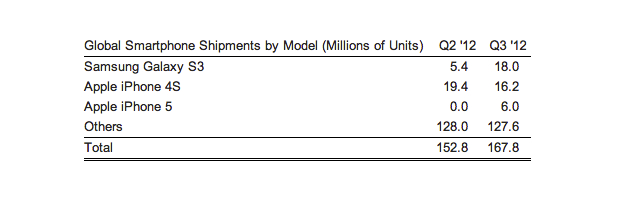
The report comes from research firm Strategy Analytics, and it puts the Galaxy S3 in first place with 18 million devices sold globally, and the iPhone 4S trailing with 16.2 million sold. In third place it’s the iPhone 5 with 6 million sales.

So, its a fanfare for Samsung, a company well on its way to beating Apple in the battle for smartphone supremacy. But is it? Well, as a headline, it is indeed good news for Samsung, but the sales from the third quarter of 2012 tell only a percentage of the story.

Samsung released the Galaxy S3 at the beginning of May 2012, spreading it to as many networks and countries as possible. In the slightly truncated second quarter results, it shifted 5.4 million phones.

But take a look at the iPhone 4S’s performance. The 4S went on sale in October 2011, and still sold 19.4 million in the second quarter, and then 16.2 this quarter. Not bad for a phone that was a fairly unremarkable evolution of the previous model, that has been on sale for, now at least, more than a year.

Strategy Analytics Global Smartphone Sales

These past couple of months have also been filled with anticipation over the iPhone 5, which then arrived at the tail end of September, and it still managed to sell more than the Galaxy S3 did in its opening weeks, and in a shorter time too.

Many potential iPhone 4S buyers decided to wait for the iPhone 5 in the run up to its release, which explains the drop off in 4S sales, and in effect, allowed Samsung to swoop in and grab the “world’s best selling smartphone” crown.

The question is, can it retain its crown in the all-important Christmas period between October and December? Strategy Analytics doesn’t think so, and expects Apple to “soon reclaim the title.”

The Galaxy S3 unquestionably deserves to top the charts, but the figures also highlight the struggle it faces to maintain that position over a longer period of time.


Source : digitaltrends[dot]com

Samsung expecting to lose Apple chip orders, says report

Samsung expecting to lose Apple chip orders, says report

Taylor Swift lyrics now inspire corporate policy

Samsung is reportedly preparing to scale back its chip production in anticipation of losing a good chunk of business from Apple as a CPU customer.

According to Digitimes, which cites unspecified industry sources, Samsung is considering a delay in the construction of a new Line-17 semiconductor plant.

The facility is officially scheduled to begin mass production in early 2014, but may get pushed back as Apple shifts its CPU orders away from Samsung to Taiwanese Semiconductor Manufacturing Company (TSMC).

Digitimes has not always proven to be the most reliable source when quoting anonymous informants, but this is hardly the first time that the future of Samsung and Apple's chip distribution partnership has been brought into question.

Let's call the whole thing off

The bad blood between Samsung and Apple has been boiling for quite some time through constant patent disputes, the latest of which was just filed this week against the Galaxy Tab 10.1 and Android 4.1 operating system.

As a result the relationship between the two firms has reportedly deteriorated, and the companies may part ways after existing contracts expire.

Until recently, Samsung has been the sole supplier of the CPUs Apple uses in all of its iPhones and iPads, along with various other chips and components.

Apple has since scaled back its reliance on Samsung, and expectations throughout the industry suggest TSMC will produce chips to power the next iOS device using its advanced 20-nanometer manufacturing process.

Samsung is soldiering on despite rumblings of losing Apple's patronage, claiming top marketshare among smartphone manufacturers and hinting at a radical new redesign to unveil at the Consumer Electronics Show in January.


Source : techradar[dot]com

Daily Deal: Apple iPhone 5 Bluetooth Qwerty Keyboard Case for $18

Do you love your new Apple iPhone 5 but wish that it had a slide-out physical QWERTY keyboard to make text messages and Facebook status updates that much easier? This case could be the perfect fit.

The MiniSuit iPhone 5 Bluetooth QWERTY Keyboard Case has two purposes. First, it can act as a protective case for your iPhone 5. Much more interesting is the second function, though, since it has an integrated slide-out QWERTY keyboard. Even though it’s physically there with your iPhone, it actually connects wirelessly via Bluetooth 2.0.

The net result is an iPhone 5 with a slide-out keyboard, giving you a similar form factor to what we saw with devices like the original Motorola DROID. There’s an on/off switch to conserve power, raised buttons for tactile feel, and even backlit illumination for typing in the dark. Standby time has been rated at 45 days and you can recharge the case/keyboard via the provided USB cable.


Source : mobilemag[dot]com

Apple adds Android 4.1 Jelly Bean, Galaxy Note 10.1 to Samsung lawsuit

Apple is trying to add Android 4.1, Jelly Bean, and the Galaxy Note 10.1 to yet another patent infringement court case against Samsung in California.

Apple argued yesterday that Samsung’s Galaxy Note 10.1 tablet and the Android 4.1 Jelly Bean operating system infringe on its patents and should be added to an existing California lawsuit against Samsung.

Appearing in a federal court in San Jose, before U.S. Magistrate Judge Paul S. Grewal, Apple’s lawyers sought to expand the lawsuit against Samsung with additional patent infringement claims. This follows Samsung’s attempt to add patent infringement claims against the new iPhone 5 back on October 1.

The judge has not issued a ruling yet.

Most notable among Apple’s claims is the inclusion of Google’s Android 4.1 operating system, also known as Jelly Bean. Apple insisted that the Galaxy Nexus is the only phone with Jelly Bean that it is seeking to add to the patent complaint, for now. The implications of this are serious for Google and it’s the first time that Apple has included the Android platform specifically in its cases against Samsung.

It seems the Cupertino-based company is also now looking to add devices with a stylus, such as the Galaxy Note 10.1, and Apple’s attorney mentioned adding a further 17 devices that could use a stylus, but don’t ship with one.

This case is not scheduled for trial until 2014.

We will find a resolution to the highest profile case so far sooner than that. The jury verdict saw Apple awarded $1.05 billion in damages. As we reported before, Apple is seeking more money while Samsung is claiming juror misconduct. Those arguments will be heard in December and there will also be a decision on Apple’s attempt to get eight Samsung smartphones banned from sale in the U.S.

We’ll keep you posted on all the news about Judge Grewal’s decision and the December hearing as it breaks.


Source : digitaltrends[dot]com

Opera 12.10 adds Windows 8/OS X features, Chrome 23 gets DNT

Opera has released an update today, bringing a handful of new features including improved support for Microsoft and Apple's platforms. Opera users who have purchased new touch-enabled Windows 8 devices will be happy to find enhanced support for finger input. The release notes mention basic touch controls for Windows 7 and Windows 8 classic (presumably referring to the desktop interface).

Folks running Mac OS X 10.8 Mountain Lion can also look forward to some new features, including alerts from Opera in the new Notifications Center and improved support for the high-resolution "Retina" displays on newer MacBooks and iMacs. Opera 12.10 also adds a button to the address bar that makes use of Mountain Lion's integrated social sharing functionality. Other noteworthy changes include:

  • Support for the SPDY protocol to improve and secure connections. Gmail and Twitter have already started using SPDY to supplement HTTP.
  • The WebSocket API is supported and turned on by default in Opera 12.10. Opera now also supports ICC color profiles and color management.
  • Support for Flexbox and and @supports to give website developers more control of how their website appear in the end users’ browsers.

Meanwhile, Google has also unleashed a new build of its browser. Alhough it's not as significant as Opera's update, Chrome 23 finally introduces support for the Do Not Track (DNT) protocol, which has already been added to Internet Explorer, Firefox, Opera and Safari. Google also touted the performance improvements garnered by recently enabling GPU-accelerated video decoding for Chrome on Windows -- particularly in battery life, which lasted about 25% longer with GPU acceleration in the company's tests.


Source : techspot[dot]com

Apple’s patent abuse lawsuit against Motorola has been dismissed

A case in which Apple accused Motorola of an abuse of the patent system, where it was charging Apple more for key patents than it was to other companies, has been dismissed. Apple has the chance to appeal, but Motorola wants to come to an agreement.

A lawsuit brought against Motorola by Apple has been dismissed by a court in Wisconsin, even before the trial had the chance to get underway. Instead, it took a week of pre-trial motions and a two-hour hearing on Monday morning, for Judge Barbara Crabb to cancel proceedings with prejudice. This gives Apple the chance to appeal, but only in the same court.

Apple was claiming that Motorola was abusing the patent system (oh, the irony) by asking unreasonably high license fees, and more than it charged other companies, for some key Wi-Fi and cellular patents used in the iPhone, iPod Touch and iPad.

Motorola’s fee is 2.25-percent of the price of each Apple device sold that uses the technology. Apple, however, only wanted to pay a fraction of that amount, stating $1 per future device was its magic number.

Following the dismissal, Motorola issued a statement saying “We’re pleased that the court has dismissed Apple’s lawsuit with prejudice. Motorola has long offered licensing to our extensive patent portfolio at a reasonable and non-discriminatory rate in line with industry standards.” It also adds that it’s “interested in reaching an agreement with Apple.”

Google-owned Motorola needs to be careful though, as it’s parent company is in-line for an antitrust lawsuit, should be it discovered withholding patents to stifle competition. Apple, on the other hand, is back to square one, with an appeal likely on the way.

This is the second Apple vs. Motorola lawsuit to be thrown out this year. Last time out, Apple accused Motorola of copying the design of the iPhone for its Android handsets, however Judge Richard Posner dismissed it in June after deciding neither company adequately made its case. At the time, Motorola tried to get this dispute with Apple enjoined, but the Judge refused.


Source : digitaltrends[dot]com

Apple – Motorola lawsuit dismissed by US judge

Apple – Motorola lawsuit dismissed by US judge

Apple's ongoing battle with Motorola over patent licensing has been thrown out of court.

Apple has been maintaining that the rate requested for Motorola (and therefore now Google's since the search giant bought out the handset developer) is too high and wanted a court to order a lower rate.

But District Judge Barbara Crabb of the Wisconsin federal court ruled that she does not have the legal authority to make the claims.

That said, Apple is still pursuing the case against Googorola in other US regions, with court dates set for next year to make sure it isn't liable to pay damages on devices with featuring Qualcomm technology, which uses Motorola patents in its designs.

No Crabb-Apples this Christmas

The case being dismissed in Wisconsin is a blow to Apple however, as it was looking to force down the price Motorola is asking to use its essential technology – the company previously said it wouldn't pay more than $1 per handset.

Google, unsurprisingly, issued a statement filled with understated legal glee at the dismissal, claiming that it has always offered what it considers to be a fair price to Apple for the patents.

The bad news for the consumer is that there's no notion of these constant patent wars being settled as the battles continue to play out over many territories and over a number of issues.

The upshot could be higher handset prices, especially in the Android camp, as the likes of Microsoft and Apple attack the OS – hence the reason Google is so intent on leveraging the core assets it has, many of which live within the newly-acquired Motorola stable.


Source : techradar[dot]com

Apple may ditch Intel chips for ARM processors

Though Apple's been using Intel chips in its iMacs and MacBooks since 2005, word is the company is planning to ditch Intel for ARM to create a more unified structure among all of its devices.

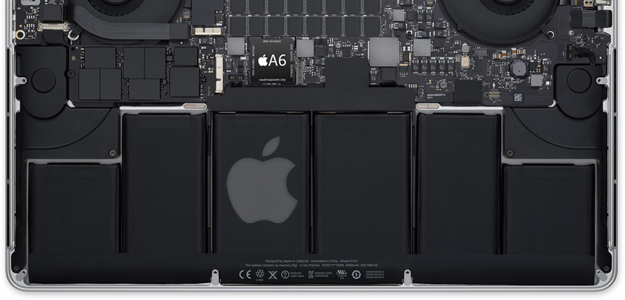
Apple A6

In a late-day news kerfuffle, Bloomberg reports that Apple is considering switching its chips in future MacBooks and iMacs from Intel to ARM. Rumor has it that the company is looking for ways to replace its Intel processors in its Macs with chips based on designs in its iOS devices.

Bloomberg says that the chips used in its iPhone and iPad will some day be powerful enough to run larger machines, like iMacs and MacBooks. And that makes some sense; with tablets and smartphones becoming more or less replacements for computers, Apple may want to unify its chip platform. In five years, according to Bloomberg, if Apple wants a “seamless experience” across all of its devices – including televisions! – it will want all of those disparate devices running the same chip architecture.

Take this information with a grain of salt, since Bloomberg’s source is “people familiar with the company’s research.” We’re a bit skeptical, too. But while we don’t think it will happen overnight, there is a possibility that this could happen within the next five years. We don’t expect Intel to go down without a fight, however. The chipmaker has been furiously trying to break into the smartphone and tablet market, which is now held by rival ARM processors, and has made great strides toward designing powerful chips that suck up less power and don’t require loud fans to stay cool. Apple sold 4.9 million laptops and desktops last quarter. 

What do you think? Will Apple really leave Intel for a unified ARM structure across all its devices, or is this just Apple nerds creating rumors due to sheer boredom between new iPad mini releases and we’re still waiting for new on the iMac’s release?


Source : digitaltrends[dot]com

It's free
index