Samsung has announced a 4G LTE version of the Galaxy Note 10.1 tablet, but so far only for Korea. When the Note 10.1 debuted on August, Samsung teased the arrival of an LTE model in the U.S., so its release may not be far behind.
Samsung has announced the availability of a 4G LTE Galaxy Note 10.1 tablet, but only for the Korean market. As well as the introduction of 4G LTE and VoLTE — that’s voice over LTE — the new Note 10.1 has Android 4.1 Jelly Bean installed along with a few new features added to the S Pen’s functionality.
You’ll remember that the S Pen is Samsung’s name for a stylus, and now it can access a quick launch menu where you can search the web, easily copy and paste content, plus use the same Air View feature seen on the Galaxy Note 2. Here, when you hover the pen over a picture gallery or folder, the contents can be quickly explored, or when watching a video, it becomes a quick way to scrub through scenes.
Otherwise, it’s business as usual for the Note 10.1, which means a 10.1-inch screen with a 1280 x 800 pixel resolution, a 1.4GHz Exynos 4 Quad processor, 2GB of RAM and a 5-megapixel camera with 1080p video recording on the rear.
The Galaxy Note 10.1 was announced back in August, after Samsung took its first attempt off the market to update the device following a less than enthusiastic greeting during Mobile World Congress.
At the time, Samsung released the Galaxy Note 10.1 with Wi-Fi and Wi-Fi plus 3G, but not a 4G LTE model, although it did confirm a Wi-Fi and LTE Note 10.1 would follow later in the year. Now, with the Korean launch set for November 23, a U.S. launch can’t be too far away.
Samsung hasn’t given a price for the Note 10.1 LTE, but as the standard Note 10.1 is around $499 in the U.S., expect it to be more than this when it arrives.
The Samsung Ativ S and Samsung Ativ Tab could both be in stock before the month is out, according to one online retailer.
First to touch down in the UK will apparently be the Ativ S smartphone, with Expansys claiming it will receive stock of the Windows Phone 8 device in two days' time - November 21.
If you have a hankering for a Windows tablet, then Samsung's offering could be less than two weeks away, with an Ativ Tab release date pegged for November 28.
As sure as we can be
We asked Expansys how sure it was of the dates and a spokesperson told TechRadar: "Those are the dates that have just been given to us by our Samsung distributor - so as sure as we can be."
We've already seen the Nokia Lumia 920 and HTC 8X smartphones hit shelves in the UK, with both handsets offering up a different experience to what you find on the iOS and Android handsets also on the market.
The Windows 8 tablet market, like its smartphone platform, is still in its early phases with only a handful or tablets currently on sale, most noticeably the Microsoft Surface.
We hope to get both devices in soon, so keep an eye out for our in-depth Samsung Ativ S review and Samsung Ativ Tab review.
A new report indicates Samsung may debut a full high definition display suitable for smartphones during CES 2013. Could it be destined for the Galaxy S3's successor, or a new device entirely?
Samsung could be preparing to debut its own smartphone-sized 1080p display during CES 2013, hot on the heels of HTC’s Droid DNA. Full high definition displays are all set to be next year’s must-have new smartphone feature, although their size will see them used on hardware that tips over into smartphone/tablet hybrid territory.
A Korean newspaper claims Samsung has developed a 4.99-inch touchscreen with a 1080p resolution and a pixel density of 441ppi. While the resolution is the same as the Droid DNA’s, the pixel density beats it by one point.
It’s unlikely we’ll see the hardware related to Samsung’s new screen at the show though, as it’s not expected to go into production until later in the first quarter of 2013, which means Samsung could follow LG’s example and only show off the panel itself.
There are two logical, future homes for Samsung’s Full HD screen: The successors to the Galaxy S3 and Galaxy Note 2. The slightly odd 4.99-inch screen size could mean it’s destined for the Galaxy S4, as by keeping it under 5-inches — even if it is by a ridiculous 0.01 of an inch — it could still (just) be classed as a true smartphone.
There’s also a chance Samsung could introduce a new device which neatly fits in-between the 4.8-inch Galaxy S3 and the 5.5-inch Galaxy Note 2. An earlier rumor put the Galaxy S4’s announcement for sometime in March, which seemed a little too soon into the S3’s life, however maybe Samsung is planning an event for that time, but it’s for our mystery 1080p phone and not for the S4.
We won’t find out until closer to the time, but provided the talk of a Samsung 1080p screen is correct, we should get to see it in action during CES 2013, which begins on January 8.
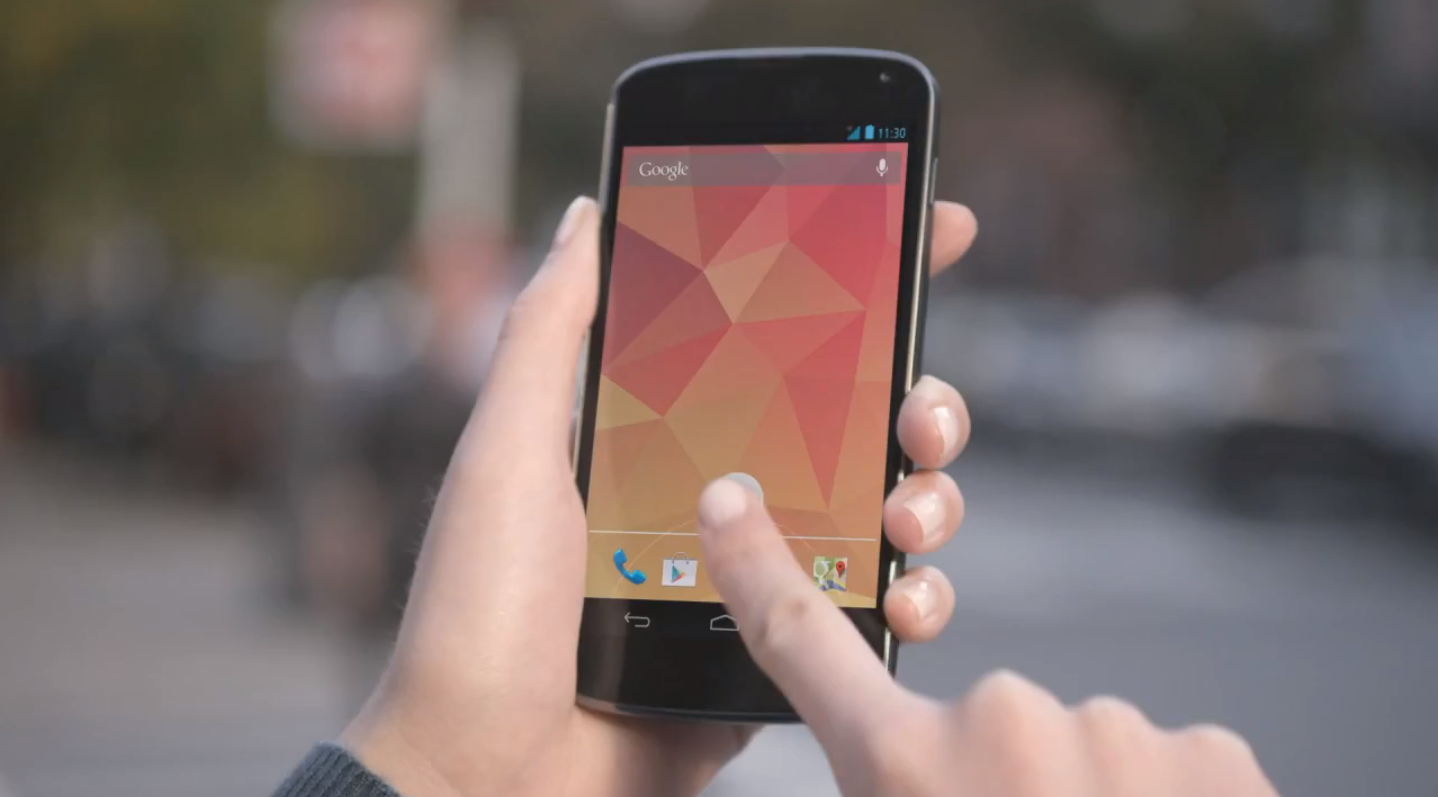
If you're in the market for a new Android smartphone and you want something truly top of the line then the Samsung Galaxy S3 and the Google Nexus 4 are bound to be in your sights. The question is: which is better? We put the Galaxy S3 and Nexus 4 head-to-head in this detailed comparison and try to pick a winner.
The Samsung Galaxy S3 has been the relatively undisputed heavyweight champ on the Android scene for half a year now. It is, quite simply, an awesome smartphone. The new challenger emerging is the Google Nexus 4 and it’s looking lean, mean, and dangerous. Manufactured by underdog LG, the Nexus 4 combines impressive specs with an affordable price tag. The question is – does the Nexus 4 have what it takes to steal the title?
The Galaxy S3 has been on the market for a while now and you can get it from various carriers, although there are some slight differences between versions. The Nexus 4 comes in two flavors – 8GB or 16GB – and it went on sale November 13.
Display quality
Let’s open the bout with the first thing that strikes you about both devices: the screen. The Galaxy S3 has been lauded and derided for having a huge display. At 4.8 inches, the screen size was criticized by some for making the phone too large to handle comfortably. Consumers clearly didn’t agree with the critics because sales have been impressive and there’s a clear trend towards bigger displays in the market generally now. The Nexus 4 has a slightly smaller display at 4.7 inches.
The fact the Nexus 4 has a slightly higher resolution and a smaller screen than the Galaxy S3, means that the pixel density is greater. The Nexus 4 should be sharper. The displays also use different technology. The Nexus 4 display is IPS LCD and the Galaxy S3 is Super AMOLED (if you want to know what that means check out AMOLED vs LCD). Both displays have great color reproduction and good viewing angles and they both have Gorilla Glass 2 protection. The Galaxy S3 might edge it on better viewability in sunlight and that extra size, but the Nexus 4 display is sharper.
Winner: Draw
Design and feel
Neither Samsung nor LG are famed for high quality construction when it comes to smartphones. The Nexus 4 has a rounded form factor and is made of plastic with glass front and back and a chrome style rim. When the light catches the back you’ll see an eye-catching hologram design. It’s a premium look and feel not generally associated with LG, but it is indicative of the company’s push towards the top end of the Android market.
The Galaxy S3 is also rounded with a slightly textured pattern on the border which carries round onto the plastic frame and polycarbonate back cover. There is a single Home button on the front, while the Nexus 4 has no physical buttons on the front. Despite claims that the plastic feels cheap it is very durable and it obviously helps to keep the weight down.
In terms of size the Galaxy S3 is slightly bigger in height and width, but it is also slightly slimmer and it weighs a touch less. Ports and buttons are virtually identical, including right side placement for the power button, which helps you reach it more easily on larger form factor smartphones.
Winner: Draw
User interface and platform
As a Google release the Nexus 4 is vanilla Android and it sports version 4.2 which offers a handful of slight improvements over 4.1, but is still classed as Jelly Bean. There’s a new Quick Settings screen, widget support on the lock screen, improved Google Now, and Voice Search, among a few other new bits and pieces in version 4.2.
The Galaxy S3 launched with Android 4.0 (Ice Cream Sandwich), but the Jelly Bean 4.1 update has rolled out to many devices already. It also has Samsung’s TouchWiz interface, which has already added some features such as a Quick Settings menu in the Notifications bar.
There isn’t a huge difference in usability, but the latest version of Android is always the best. The 4.1 update for the Galaxy S3 brought a very noticeable improvement in speed and performance, alongside great features like expanded Notifications and Google Now. An S3 with Android 4.0 and TouchWiz is definitely behind the Nexus 4 with vanilla Android 4.2.
Winner: Nexus 4
Processor and RAM
Both devices have quad-core processors. The Galaxy S3 has a 1.4GHz Exynos 4412 and the Nexus 4 is sporting a Qualcomm Snapdragon S4 Pro clocked at 1.5GHz. The Nexus 4 has 2GB of RAM, which outperforms the 1GB of RAM in the European and international versions of the S3. The U.S. version of the Galaxy S3 matches the Nexus 4′s 2GB of RAM but lags behind with a dual-core processor.
Winner: Nexus 4
Storage
The Nexus 4 comes in 8GB and 16GB versions and in typical Nexus-style there is no microSD slot. You’ll need a screwdriver if you want to open it. The Galaxy S3 comes in 16GB, 32GB, and 64GB varieties and you can expand by a further 64GB thanks to the microSD slot which you can get to by removing the back cover. There is no contest here.
Winner: Galaxy S3
Cameras
When it comes to the main camera, both devices have excellent 8-megapixel rear-facing cameras that can record 1080p video at 30 fps. They also both have the usual LED flash, face detection, and a host of other features. Android 4.2 brings a cool new Photo Sphere feature for panoramas to the Nexus 4, but the Galaxy S3 camera app has some nifty features, too.
It’s easier to separate the two phones on the front-facing camera because the Galaxy S3 has a 1.9-megapixel camera and the Nexus 4 has a 1.3-megapixel camera. Do many people really care about the front-facing camera? For those that do, the S3 wins out.
Winner: Galaxy S3
Battery
Both phones have batteries rated at 2,100mAh. The Galaxy S3 battery is removable while the Nexus 4 battery isn’t, but few people will carry around a second battery anyway. We’ll need to wait for more extensive hands-on testing to see if there’s any real difference in actual use, but . It’s probably worth mentioning that the Nexus 4 does support wireless charging and has a nifty Wireless Charging Orb accessory, although you do have to buy it separately.
Winner: Draw
Connectivity
You’ve got NFC, Wi-Fi, Bluetooth, DLNA, and everything else you would expect to find on both smartphones. The widely noted difference is that the Nexus 4 doesn’t support 4G LTE. It’s debatable how much that matters, because HSPA+ can be very fast, but if you live in the right area then LTE is the fastest mobile network connection you can have right now so it was a surprising omission.
Winner – Galaxy S3
Price
This is where some of the losses above for the Nexus 4 can be cancelled out because it is significantly cheaper than the Galaxy S3. It is basically $300 for the unlocked 8GB Nexus 4 or $350 for the 16GB version. That compares to around $600 for an unlocked 16GB Galaxy S3.
On contract you can get the Nexus 4 for $200 while the Galaxy S3 is closer to $300.
Winner – Nexus 4
Overall Winner: Nexus 4
If we add up the scores it actually turns out to be a tie with 3 wins apiece and 3 draws, but hopping off the fence we’ll give this one to the Nexus 4 because it manages to offer more value for your money. The wins that the Nexus 4 racked up will probably be more important to most people – it’s faster, it has the latest version of Android, and it’s cheaper. However, if you’re on a carrier with a robust 4G LTE network, or you heavily value storage or the quality of your front-facing camera, the Galaxy S3 may be the phone for you.
Making solid-state drives sound interesting is an advertiser's Everest. However, Samsung's latest ad for its SSD 840 series made us chuckle thanks to Internet star Laina Walker, the Overly Attached Girlfriend.
Solid-state drives (SSD): they’re tough, fast, silent … and inherently difficult to advertise. While you’d want them in your computer, they’re not exactly the feature-rich eye candy you’d want to ogle over on your screen. So when Samsung launched its SSD 840 line, the company decided the best way to drum up publicity for a boring product is to release a hilariously creepy viral video starring Laina Walker, otherwise known as Overly Attached Girlfriend. And lo and behold, the ad has over 1 million views on YouTube.
“Hey, it’s me your computer,” the ditty begins, as Walker’s large, Stepford-Wife-like eyes hold you captive with their unblinking stare. Walker, known for the funny yet slightly unsettling Overly Attached Girlfriend Internet meme, takes on the role of a wayward computer, threatening you to get her a Samsung SSD if you don’t want to lose your files or have sensitive data leaked. “There’s tons I stopped from getting out: passwords, credit cards, bank account. These days, I’m so clumsy, I need your love to calm me,” she sings in part of lyrics.
But all creepiness aside, the Samsung SSD 840 Pro series is designed for use by IT professionals, heavy computer users, and serious gamers. They’re slightly more expensive than the regular SSD 840 products, which are meant for everyone else who just wants an SSD. Both the Pro and regular options feature super-fast load and read speeds – the Pro more so than the regular variant. The Samsung SSD 840 Pro series is available in 128GB, 256GB, and 512GB configurations, with prices starting at $189.99. The regular SSD 840 series is available in 120GB, 250GB, and 500GB configurations, with prices starting at $139.99.
Check out the video below and let us know what you think.
Samsung's flexible AMOLED screens could arrive early next year
Though delays have seemingly slowed production of Samsung's flexible AMOLED screens, a new report points to production of the screens starting in early 2013.
An anonymous source told the Wall Street Journal the screens were in the final stage of development at Samsung Display, and that the manufacturer hoped to release the screens by the midpoint of next year.
Samsung debuted the first footage of the technology last December, and originally expected to deliver the first flexible screen products in 2012.
Made from plastic instead of glass, the prototype screens Samsung has shown off to this point reveal an incredibly flexible and durable display.
To this point, no company has been able to mass produce the displays, but Samsung has been pushing to move from the prototype to commercialization over the course of the past year.
The Wall Street Journal suggested Samsung's ability to invest heavily in the research and development of mass marketing the flexible screens comes from the recent profit windfalls Samsung Electronics has received.
With a 91 percent increase in net profits resulting in earnings totalling $6 billion (UK £3.78, AUD $5.78), Samsung clearly had the money to put behind the R&D.
Whether or not the manufacturer will be able to succeed remains to be seen, as Samsung had previously promised the OLED panels would be ready by now, and are still unavailable.
Just how Samsung plans on using the flexible screens is anyone's guess, but the applications could revolutionize both smartphones and tablets for the foreseeable future should they ever move beyond the concept stage.
Samsung and Android continue to outpace Apple and iOS
A look inside the quarterly sales numbers showed smartphones are up 46.9 percent over the same period in 2011, and revealed Android phones outpaced Apple's iOS phones by 5:1 during the third quarter.
The sales figures, as reported by the analysts at Gartner, show mobile phone sales have decreased by 3 percent overall, continuing a trend started earlierthis year.
Despite the overall sales dipping, smartphone sales bolstered by Samsung, Nokia, and Apple have continued to escalate, and are now responsible for almost 40 percent of all mobile phone sales.
Samsung holds lead
During the third quarter, Samsung was able to maintain its lead over Apple in smartphone sales, largely due to the Galaxy lineup, including the Galaxy SIII.
With a 32.5 percent share of the smartphone market, Samsung was able to hold off second-place Apple, which earned 14 percent of the sales.
Research in Motion was able to slip into third place, with HTC following closely behind, as Nokia's smartphone sales slipped to seventh.
Samsung still found itself in the overall lead with 97.9 million phones sold (22.9 percent), a narrow margin of victory over Nokia's 82 million total mobile phones sold (19.2 percent).
Apple was able to solidify third place by selling 23.5 million iPhones (3.9 percent), which was a 36.3 percent jump from 2011, and accounted for the largest increase in year-over-year sales.
Gartner expects Apple to have another traditionally strong fourth quarter due to the expanding availability of the iPhone 5, but doesn't think holiday sales will impact the overall market all that much.
Android still king of the hill
Even though iPhone sales increased tremendously during the third quarter, Apple's iOS still had trouble catching up to Android.
With 122 million Android phones sold during the third quarter, Google's OS increased it's share to 72.4 percent of the market.
Despite Android earning 20 percent more users during the third quarter, iOS was still able to garner 13.9 percent of all users, a drop of just one percent from Q2.
Apple was able to maintain second place largely due to the decreasing numbers of Symbian and Microsoft's Windows Phone 7, as both OS were being phased out for Windows Phone 8.
iOS is expected to increase its numbers during the fourth quarter according to Gartner analysts, but all that depends on how strong Apple's final quarter turns out from a sales perspective.
It certainly feels like Samsung is taking over the world right now – at least, the Android world. There's no doubt that last year's Galaxy S2 was arguably the phone of the year.
And not in recent times, discounting Apple of course, can we remember the anticipation and expectation of a phone as much as the Galaxy S3.
If you needed a barometer of this, just look at how it was unveiled. Not at MWC like lots of others, but its own event. Yep, the Galaxy line has reached the level where it can guarantee hoards will come just for an unveiling. Very Cupertino.
But despite the whooping masses and the queues on launch day, it wasn't the five star phone we hoped it would be... there's still very much room for improvement. So here's what we'd like to see for next year's SIV.
Samsung Galaxy S4 screen
This was the main source of criticism. The Galaxy S2 had an amazing Super AMOLED Plus display – and boy, was it vibrant. The S3 upped the screen size from 4.3-inches to 4.8-inches and the pixel density went from 217 to 306 to take a run at the iPhone's Retina Display.
But, Samsung also opted for a PenTile approach, to the chagrin of geeks. What does that mean for the end user?
Well, the screen looks great but you can make out pixels if you really, really strain. And some of the vivacity and colour saturation is lost. On the plus side, Samsung reckons the screen will last longer – but we'd rather see a much more S2-like screen with a sharper resolution - and given that's now appeared on the Samsung Galaxy Note 2, we're pretty hopeful we'll get it on the Samsung Galaxy S4 too.
It seems more than likely that Samsung will eschew MWC 2013 once more for the release of its top handset, instead focusing on the launch in May 2013, which we'd really like to see.
This makes sense for a number of reasons: time to allow the current customers to buy the S3, being able to scoop up all the customers about to come out of contract from the S2 and also not making its fans feel like its throwing out a new flagship phone every three seconds.
However, that didn't stop the rumour mill deciding that the Galaxy S4 launch was set for March 2013, based on something a Samsung 'representative' said to the media. The brand quickly took to Twitter to discredit the rumours, so it looks like the middle of the year launch is still firmly on the cards.
Beam and beam again
Samsung may be setting up its Galaxy Beam smartphone as an individual entity but we'd love the ability to be able to beam stuff straight from our S4 onto a wall and truly show off the eight-core and Super HD capabilities. Imagine the faces of iFans when it's a spec-off and you shine THAT (literally) in their faces.
The fact of the matter is that the S3 has the processing power to run graphically-intense offerings and the Google Play store lets you download movies. As long as there was some way of also booming out the sound, we think this would be a great addition
Samsung Galaxy S4 battery
Ok, we admit we always want more. The S2's 1,650mAh was manageable and the S3's 2,100mAh blows that out of the water. But it's still only OK.
You can get by on a day of moderate use but if you use this phone heavily (and we're talking watching TV shows on the morning and evening commute alongside your normal tinkering), this handset will still want a plug in at some point.
Motorola has proven it can be done by whacking a 3,300mAh power pack into the RAZR Maxx which can still be considered a skinny Minnie. Something of that size – along with ICS and Samsung's power management abilities – would really be the icing on the Ice Cream Sandwich.
Samsung Galaxy S4 design
We've lost count of the amount of people we've shown our device off to who've replied with the words: "Yeah, it's great but looks like a bit of a toy." It's a double-edged sword: the plastic is used to keep this handset nice and light, but does detract from what should be a premium device.
A bit of glass wouldn't go amiss. Android users, say what you like about the iPhone 4/4S (and we know you won't be short of words), but aside from being smash-tastic, the glass really adds that premium and expensive feel that the S3 just doesn't have.
Forget what your mum told you – it's what's on the outside that counts too, so the Samsung Galaxy S4 needs to step it up in the design stakes.
Better S-Voice
S-Voice just isn't there. At least Siri had the nous to call itself a BETA so that it could be excused for not getting things right at times. The problem we have with S-Voice is it just doesn't seem to be able to do much.
Sure, it can tell you what the weather is like if you really can't be bothered to look out the window. And it'll save you 10 seconds by setting an alarm.
But it's just not powerful enough - and is, frankly, awful for something that's supposed to be a headline feature on one of the world's best smartphones.
We've actually been using Speak To It Assistant far more often because it's superior. Samsung could do worse than buy a company like this to give the Galaxy S4 a real chance of being the best voice-controlled mobile out there.
Better Mac support
Yep, we know many consumers believe Mac users account for only 0.000001% of Android owners (why wouldn't they just buy an iPhone, right?)
But there are lots who like Apple computers as well as Android devices. And up until the S3, they got on famously.
But Android has changed the rules and how storage works so that it follows the MTP Protocol which plays along brilliantly with Windows but can't stand Macs.
Yes, we know this is a Google issue and not something that Samsung can be blamed for. But having said that, the HTC One X also runs Ice Cream Sandwich and it has managed to tweak the code enough for there to not be a problem.
Please Samsung – don't shut them out. Ice Cream Sandwich may be frozen – but we shouldn't be, so when you bring out the Jelly Bean or Key Lime Pie-powered Galaxy S4, let's get some support.
Samsung Galaxy S4 accessories
Samsung unveiled the SIII alongside a raft of accessories – the usual things like cases were complimented by the C-Pen (like the Note 2's S-Pen but smaller) and the dongle for connecting to your TV to stream stuff.
The problem is, they're all so expensive: £20 for the C-Pen and the best part of £70 for the AllShare Dongle. They're not mainstream accessories – and little wonder.
If Samsung made these cheaper – or even threw them into the box for the Galaxy S4 (highly unlikely, but we can dream) then it would make for a much happier customer.
Perhaps a premium package where you spend a little more but get the accessories at the same time would work... people like to get the most out of things when they get their shiny new device.
Better charging
Plug it in and charge until it's full. That's always been the way. But we'd love to see a more advanced version of charging - ditching the wires should be more prevalent.
Maybe something similar to the conductive methods used by Palm in the Pre which never really caught on. The idea being that you don't have to plug the phone in to charge, just place it on a particular mat or place and it does it automatically.The S3 has that functionality, but it's hardly been well-publicised since launch.
The likes of Nokia with the Lumia 920 have been banging on about the amazing world of wireless charging for ages now, with a range of accessories too. Given that it will all be based on the Qi wireless charging standard, we'll soon see reams of coffee shops and airports with these charging stations littered around - just don't forget to watch your phone.
Or how about something really radical – like a battery that can also charge kinetically on the S4. Sure, it would be slow but wouldn't it be great if you could go for a run and manage to gain an extra 10 or 20% just by doing so to get you through the day? Radical – yes. But Samsung is known for its innovation.
Improved speakers
As beautiful and wonderful as the S3 is, the speaker still sounds tinny. Ringtones sound cheap and when it is on its back, they're also muffled. At least the iPhone has a bit of bass.
But what about going a bit further? Have three or four powerful but small speakers around the rim so when you play music, it comes out loud and with a bit of bass.
Hell, even make it so strong that it negates the need for a travel dock so you can play music at a decent volume when you nip away for the weekend or are sitting on the beach. That'd be a real selling point.
Better media offerings
The range Samsung has in its various hubs is admirable - the Music Hub has a lot of functionality with streaming and radio recommendations, and the Video Hub... well, it has some videos. But it's bitty and on top of that you've got all of Google's media offerings too. This is one of Apple's strengths – it just all works as one ecosystem.
Maybe Samsung could look at teaming up with Google or even Amazon to create a 'super media store' that would really knock the socks off Apple when it launches the S4 - imagine a service where you got unlimited movie streaming each month as part of your contract.
But even if it's just incorporating a Samsung Galaxy Store, open to all, into Google Play, that would at least be an improvement. Some say Android is fragmented. Why not lead the way, Samsung, and end that by pushing to have it all in one place?
Samsung will not follow HTC's lead and come to a peaceful conclusion to its ongoing legal battle with Apple, vowing not to negotiate with the firm.
HTC and Apple shook hands earlier this week, having decided to put all their patent disputes behind them, and get on with building smartphones instead. This was good news for us, as it’s one less lawsuit to hear about, good news for HTC, as it avoids any costly court judgements and finally, good news for Apple as it will make money from each HTC Android phone sold.
Samsung however, will not be following HTC’s lead, and will instead continue to battle it out with Apple both in stores and in the courtroom. In an interview with Yonhap News in Korea, Samsung’s President of Telecoms and IT, Jong-Kyun Shin said “we don’t intend to negotiate at all” when asked if Samsung would settle any dispute in a similar way to HTC.
The various legal battles between Apple and Samsung have captured headlines throughout the year, particularly regarding Apple’s $1 billion win against the company, and Samsung’s controversial win in the UK. Shin’s comments indicate we’ll be seeing more of the same in the future.
HTC has signed a 10-year licensing contract with Apple, believed to include a payment of around $6 to $8 per HTC handset sold, which could total up to a figure of approximately $275 million per year, based on HTC’s current smartphone sales performance.
It’s an interesting turn of events too, as Apple has long been viewed as the aggressive one when it comes to litigation, but this shows Samsung is equally committed to continuing the patent war in a courtroom setting.
Samsung has filed an appeal against its $1 billion judgement, which is currently being assessed by the courts, while Apple has asked for more damages, saying Samsung has harmed the iPhone’s “distinctive product identity.” As Samsung won’t be signing an agreement with Apple anytime soon, expect more legal fireworks from the pair over the coming months.
Samsung has said that it is not looking to negotiate with its fierce rival Apple, with an HTC-style settlement looking increasingly unlikely.
Speaking to the Korean media, Samsung's mobile president Shin Jong-kyun revealed the firm was sticking to its guns in its continuing battle with its Cupertino-based rival.
Jong-kyun was quoted by Yonhap News saying: "It may be true that HTC may have agreed to pay 300 billion won (£173 million/$276 million) to Apple, but we don't intend to [negotiate] at all."
Say no to negotiation
At the start of the week Taiwanese manufacturer HTC announced that it had resolved its patent disputes with Apple, agreeing a 10 year licensing deal with the iPhone maker.
The ongoing game of one-up-manship between Apple and Samsung in the courts is well documented, and becoming ever more tedious, and this latest revelation will not help a resolution arrive any quicker.
We now lay in wait for Apple's sarcastic response, possibly in a similar fashion to the way it "apologised" for accusing Samsung of copying its products.
Verizon could be planning to introduce a free Windows Phone 8 device to its line-up of smartphones, potentially made by Samsung, as it continues to put its weight behind Microsoft's new operating system.
Verizon never really took to Windows Phone 7 and last year offered just one phone with Microsoft’s operating system onboard. This has changed with the introduction of Windows Phone 8 though, as the carrier has already announced two devices — the exclusive Nokia Lumia 822 and the HTC 8X — and according to a new report, a third is on the way.
Rather than add another high-end Windows Phone, Verizon may be looking in the opposite direction, and could introduce a free Windows Phone 8 device soon. This comes from Verizon’s marketing officer Tami Erwin, who spoke to TheVerge.com this week, saying “there will be a $99 and a $199 option, and ultimately before the end of the year we will have a device that comes in at the free price point.
We already know the Lumia 822 is the $99 option, and the HTC 8X costs $199, so what device will Verizon choose as its entry-level handset? The Samsung Ativ Odyssey is the obvious choice, as it has already been partially confirmed for the network after making an appearance during the Windows Phone 8 launch event.
The Odyssey is rumored to be a re-branded Samsung Ativ S, but as this is far from a basic phone, it’s unlikely to be made available for free. So, either the spec will be completely different, or another phone will take its place.
Samsung Marco
There could also have been a change of plan at Samsung. Back before Windows Phone 8 was fully revealed, there were two Samsung Windows Phone 8 devices rumored — the Odyssey and the Marco. The names of which became known as part of the documents released during the Apple/Samsung legal battle taking place at the time.
The specs put the Odyssey with a 4.65-inch screen and an 8-megapixel camera, and the Marco with a more modest 4-inch screen and a 5-megapixel camera, although both featured Qualcomm’s 1.5GHz dual-core processor. A tweet from @evleaks, the account responsible for the leaked Odyssey image, states the phone may be the Marco after all.
If so, this puts it in the same category as the HTC 8S. As HTC’s second Windows Phone has yet to appear on any US or UK networks, it’s difficult to compare prices, but the SIM-free cost is half that of the 8X.
There’s also a chance Verizon may chose Huawei’s Windows Phone 8 device, which has yet to be announced but will almost certainly be cheap when it does eventually surface. Although Verizon hasn’t really worked with Huawei yet, the Chinese manufacturer indicated a deal with Verizon was “happening” during an interview in October.
A free Windows Phone 8 device could be quite a big deal, not only for Verizon, but for Microsoft too. At the moment, neither AT&T nor T-Mobile list a free WP8 device, and Microsoft needs a cheap option if it’s to effectively combat Android.
Earlier this year, Verizon’s CFO Fran Shammo said the network viewed Windows Phone 8 as a “differentiator,” and planned to help the OS become a “strong” third software competitor to iOS and Android. Offering its customers a free phone (with a contract, of course) would certainly be an important step in that direction.
It all comes down to this (maybe): during a Dec. 6 hearing, Calif. Judge Lucy Koh will examine Samsung's claim that the jury foreman in the ongoing patent suit with Apple "concealed information."
After Apple's $1.05 billion victory in August, Samsung appealed the decision with a slew of new arguments, chief among them one of jury misconduct.
Samsung alleged that Vel Hogan, the jury foreman in the case, failed to disclose that he was sued by Seagate, his former employer, and driven to bankruptcy in 1993.
Seagate and Samsung have a "substantial strategic relationship," according to Samsung, and it seems Samsung believes that could have swayed Hogan to influence the jury against it.
That's the idea at least
Samsung also claimed that Apple knew about Hogan's connection to Seagate, and failed to disclose it.
Judge Koh wrote, "At the December 6, 2012 hearing, the Court will consider the questions of whether the jury foreperson concealed information during voir dire, whether any concealed information was material, and whether any concealment constituted misconduct.
"An assessment of such issues is intertwined with the question of whether and when Apple had a duty to disclose the circumstances and timing of its discovery of information about the foreperson."
Here's the kicker
CNET reported on Thursday that "legal experts" maintain that it's difficult to get a trial thrown out based on jury misconduct alone.
Further (and here's the kicker): Hogan did disclose that he had been involved in litigation "with a former partner."
He did not disclose who that partner was, but as Hogan reportedly noted, he was not asked to.
Even if this juror misconduct claim won't stick, Samsung will surely have half a dozen more up its sleeves, so don't expect an end to this case any time soon (especially since Apple still wants another $707 million from Samsung).
The release of the Samsung Ativ S has been delayed in the UK, moving from mid-November to mid-December. A similar fate has befallen the Ativ Tab, Samsung's entry into the rapidly shrinking Windows RT tablet market.
Samsung was the first to announce a Windows Phone 8 device, when it revealed the Ativ S at a packed IFA 2012 event. It was also joined by a 10.1-inch tablet named the Ativ Tab, which runs Windows RT. Unfortunately, despite this early lead, it’s possible the Ativ S will end up being the last of this first wave of Windows Phone 8 handsets to arrive.
Since the Ativ S’s debut, other manufacturers have not only announced, but launched their Windows Phone 8 hardware, with HTC beating the competition on to the shelves with the 8X. Samsung was expected to put the Ativ S on sale very soon, with November 19 being accepted as the UK release date.
This has now changed, as according to UK online retailer Clove Technology, the Ativ S has been pushed back to the second week of December, with stock expected to arrive on December 10. A glance at Amazon UK’s page tells a similar story, with a five to seven week despatch date quoted.
In the US, the Ativ S — a phone which impressed us — hasn’t found a network interested in stocking it yet, but Verizon has been rumored to be coming up with a version named the Odyssey, and that it could possibly arrive in November. A look online reveals Expansys USA expects the Ativ S to arrive on November 23. We’ve contacted them to see if this still stands, and will update here if we hear back.
So, it’s not looking like good news for the Ativ S, and worse still, the Ativ Tab has also suffered the same delay. Clove has added the same December 10 date for the tablet, which makes the whole affair sound like supply or production issues, however it’s not the first Windows RT tablet to have its release pushed back.
Microsoft’s Surface tablet has caused problems for Acer and Asus, with the former deciding not to release its tablets at all, while the latter has cut the price of its Vivo Tab RT in order to better compete in the market. Is Samsung having similar concerns, and held its own tablet back while it considers its position?
Samsung hasn’t made any official statement about the Ativ S and Ativ Tab’s delay.
The Samsung Galaxy S3 Mini has finally turned up at stores and the handset is being shipped from today.
Announced at the beginning of October, the Galaxy S3 Mini brings the styling of its older, larger brother the Galaxy S3, but don't expect to find the same power and performace.
Online retailer Unlocked-Mobiles has confirmed it is now shipping the Galaxy S3 Mini, which can be yours for the rather princely sum of £294.98 SIM-free, while elsewhere on contract you can pick it up free starting at £25 per month.
Sure you want this?
Why do we reckon the Galaxy S3 Mini price is a little on the steep side? Well thanks to Google and LG, there's a more powerful alternative on the market.
That handset is the Google Nexus 4 – which is £55 less, although you'll have to wait until November 13 to get your grubby little mitts on it.
If you're still interested the Samsung Galaxy S3 Mini sports a 4-inch Super AMOLED display, 1GHz dual-core processor, 1GB of RAM, 5MP rear camera, NFC and comes running Android 4.1 Jelly Bean.
On paper it doesn't sound like a bad phone, but it's got the almost impossible task of trying to match the excellent Nexus 4.
You will be able to find out how well it does in our Samsung Galaxy S3 Mini review, which we'll have up soon.
The phablet world started with one device, the Samsung Galaxy Note. Since then, it looks like the market is exploding. The LG Intuition (Vu), the HTC Droid DNA (J Butterfly), Oppo Find 5 and now a Sony Phablet as well?
The so-called Yuga is a 5-inch quad-core Sony handset that is believed to arrive sometime in early 2013. The above image comes from a Swiss Android site and apparently is a prototype for the Sony flagship phablet. According to the source, the device will run on a 1.5GHz quad-core CPU, 2GB of RAM, 12MP camera and a 5-inch 1080p display— from the sounds of it the specs are very close to the HTC J Butterfly (aka Droid DNA).
Keep in mind that the somewhat boring design of the Yuga doesn’t necessarily represent its final form. Considering the device isn’t arriving until sometime in early 2013, this is likely just pre-production hardware that could dramatically differ from the actual finalized production model.
Don’t be shocked if we officially see this the Yuga by Sony at CES 2013. What do you think, would you be interested in a Sony-made 1080p phablet?
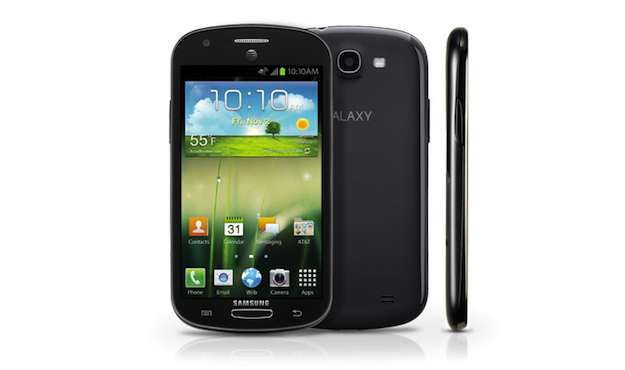
AT&T has provided more details about the Samsung Galaxy Express, set to be released onto the network next week. Aimed at first-time smartphone owners, it has 4G LTE connectivity and a sensible price tag.
Previously announced in September, AT&T has now provided some more details about the Samsung Galaxy Express, it’s latest mid-range Android smartphone. The network is pushing the Galaxy Express as being suitable for first-time smartphone owners, or those who’re planning to upgrade from a basic device.
It’s making it an attractive proposition too, as it has slapped a $100 price tag on the front, provided you scrawl your signature on the bottom of a two-year contract. For that, you’ll get a curvy, Galaxy Ace 2-alike device that will happily connect to AT&T’s 4G LTE network.
The specification, while not quite up to the standard of the current crop of superphones, is still intriguing, particularly the screen. It measures 4.5-inches, a fairly unusual size, and one that’s shared by devices such as the Nokia Lumia 920, the Motorola Atrix HD and the Huawei Honor 2. It’s a Super AMOLED Plus panel too, meaning it’s the same as that seen on the Galaxy S2, and not the often unfairly maligned PenTile display used on the Galaxy S3.
Inside is a 1.5GHz, dual-core processor of currently unknown parentage, which should see the Android 4.0 Ice Cream Sandwich operating system perform well. There’s no information on the amount of RAM, nor any clues on how much internal memory will be found inside the Galaxy Express, although a microSD card slot is present.
A 5-megapixel camera sits on the real panel, and other features include GPS, Bluetooth and a 2,000mAh battery.
Anyone interested in the Galaxy Express will be pleased to know it’s going to be available from AT&T on November 16. It’s also part of an AT&T offer where you’ll get $100 off a second Samsung smartphone when you buy a Galaxy-branded device with a new contract.
Want to get the Samsung Galaxy S3 on the cheap? Now is your chance. It seems that Sam’s Club is offering the Galaxy S3 for just 96 cents on Black Friday.
As expected, the smartphone will require a two-year service agreement, though the ad doesn’t clarify if you get to choose the carrier or if this promo is for a specific cellular service provider. Unsurprisingly, this deal is not available over the net and requires you to go the stores yourself. It is also worth noting that this is Sam’s Club so you will need a membership. If you want a new Android smartphone this holiday season, Black Friday is generally the day to get it— if you don’t mind camping out and fighting lines.
What do you think, will you attempt to camp out at Sams’ to get your hands on the Samsung Galaxy S3 for just 96 cents?
According to the latest research, the Samsung Galaxy S3 has become the world's most popular smartphone, after it outsold the Apple iPhone 4S and the iPhone 5 between July and September 2012.
Research into global smartphone sales for the July to September period of 2012 has revealed that the world’s number one smartphone was the Samsung Galaxy S3, knocking the Apple iPhone 4S into second position.
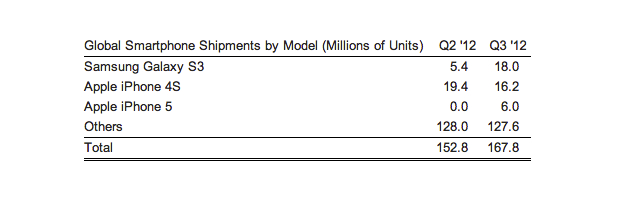
The report comes from research firm Strategy Analytics, and it puts the Galaxy S3 in first place with 18 million devices sold globally, and the iPhone 4S trailing with 16.2 million sold. In third place it’s the iPhone 5 with 6 million sales.
So, its a fanfare for Samsung, a company well on its way to beating Apple in the battle for smartphone supremacy. But is it? Well, as a headline, it is indeed good news for Samsung, but the sales from the third quarter of 2012 tell only a percentage of the story.
Samsung released the Galaxy S3 at the beginning of May 2012, spreading it to as many networks and countries as possible. In the slightly truncated second quarter results, it shifted 5.4 million phones.
But take a look at the iPhone 4S’s performance. The 4S went on sale in October 2011, and still sold 19.4 million in the second quarter, and then 16.2 this quarter. Not bad for a phone that was a fairly unremarkable evolution of the previous model, that has been on sale for, now at least, more than a year.
These past couple of months have also been filled with anticipation over the iPhone 5, which then arrived at the tail end of September, and it still managed to sell more than the Galaxy S3 did in its opening weeks, and in a shorter time too.
Many potential iPhone 4S buyers decided to wait for the iPhone 5 in the run up to its release, which explains the drop off in 4S sales, and in effect, allowed Samsung to swoop in and grab the “world’s best selling smartphone” crown.
The question is, can it retain its crown in the all-important Christmas period between October and December? Strategy Analytics doesn’t think so, and expects Apple to “soon reclaim the title.”
The Galaxy S3 unquestionably deserves to top the charts, but the figures also highlight the struggle it faces to maintain that position over a longer period of time.
Samsung is reportedly preparing to scale back its chip production in anticipation of losing a good chunk of business from Apple as a CPU customer.
According to Digitimes, which cites unspecified industry sources, Samsung is considering a delay in the construction of a new Line-17 semiconductor plant.
The facility is officially scheduled to begin mass production in early 2014, but may get pushed back as Apple shifts its CPU orders away from Samsung to Taiwanese Semiconductor Manufacturing Company (TSMC).
Digitimes has not always proven to be the most reliable source when quoting anonymous informants, but this is hardly the first time that the future of Samsung and Apple's chip distribution partnership has been brought into question.
As a result the relationship between the two firms has reportedly deteriorated, and the companies may part ways after existing contracts expire.
Until recently, Samsung has been the sole supplier of the CPUs Apple uses in all of its iPhones and iPads, along with various other chips and components.
Apple has since scaled back its reliance on Samsung, and expectations throughout the industry suggest TSMC will produce chips to power the next iOS device using its advanced 20-nanometer manufacturing process.
Apple is trying to add Android 4.1, Jelly Bean, and the Galaxy Note 10.1 to yet another patent infringement court case against Samsung in California.
Apple argued yesterday that Samsung’s Galaxy Note 10.1 tablet and the Android 4.1 Jelly Bean operating system infringe on its patents and should be added to an existing California lawsuit against Samsung.
Appearing in a federal court in San Jose, before U.S. Magistrate Judge Paul S. Grewal, Apple’s lawyers sought to expand the lawsuit against Samsung with additional patent infringement claims. This follows Samsung’s attempt to add patent infringement claims against the new iPhone 5 back on October 1.
The judge has not issued a ruling yet.
Most notable among Apple’s claims is the inclusion of Google’s Android 4.1 operating system, also known as Jelly Bean. Apple insisted that the Galaxy Nexus is the only phone with Jelly Bean that it is seeking to add to the patent complaint, for now. The implications of this are serious for Google and it’s the first time that Apple has included the Android platform specifically in its cases against Samsung.
It seems the Cupertino-based company is also now looking to add devices with a stylus, such as the Galaxy Note 10.1, and Apple’s attorney mentioned adding a further 17 devices that could use a stylus, but don’t ship with one.






 S-Voice just isn't there. At least Siri had the nous to call itself a BETA so that it could be excused for not getting things right at times. The problem we have with S-Voice is it just doesn't seem to be able to do much.