Showing posts with label motorola. Show all posts

Motorola gives you the keys to its Atrix HD with the new Developer Edition

Motorola Atrix HD Review hardware android screen

Motorola has announced a special Developer Edition of its Atrix HD Android phone. Designed for those who want to customize their Atrix HD, it comes with the option of unlocking the bootloader, allowing the installation of custom software.

Motorola is sure to please developers and those amongst us who like to customize our Android phones with its latest device, the Atrix HD. “Hold on,” you’re probably thinking, “that’s already been announced once.” Indeed it has, but this time it’s a special Developer Edition.

What makes the phone special is its unlockable bootloader, which in English, means once Motorola has provided a unique code to unlock the handset, owners are free to install their own custom versions of Android, run test versions of apps, and generally customize the phone to their heart’s content.

This isn’t the first time Motorola has offered such a phone either, with both the Razr, Razr M and the Razr HD all receiving Developer Editions in the past. Being given the keys to the Android kingdom isn’t without its price though, as once you’ve started fiddling with the bootloader, you can say goodbye to your warranty. Our advice is, be sure you know what you’re doing before you start.

Motorola’s Atrix HD was announced in July this year, and we gave it an impressive 8/10 in our review, highlighting in particular the excellent $100 price tag with AT&T. For that you get a 4.5-inch touchscreen with a 1280 x 720 pixel resolution, a 1.5GHz Snapdragon processor and an 8-megapixel camera. A relatively untouched version of Android 4.0 Ice Cream Sandwich is installed as standard, but there’s no word on when 4.1 Jelly Bean will arrive.

Don’t expect to pick up the Developer Edition as cheaply as AT&T’s deal though, as it’s not available on contract. It won’t be priced as low as the new Nexus 4 either — a phone that’s also easily unlocked.

Motorola hasn’t provided a release date or a price for the Atrix HD Developer Edition, and suggests those interested should register for updates on its website.


Source : digitaltrends[dot]com

Google and Microsoft showing 'extreme' interest in UK airwaves

Google and Microsoft showing 'extreme' interest in UK airwaves

Look at all the wasted space! (credit: Ofcom)

The technology heavyweights could be looking to nab spectrum to start offering new services.

Google and Motorola have expressed 'extreme interest' in acquiring currently unused UK airwaves, possibly in a bid to offer broadband in the UK or begin to connect remote devices together, according to The Telegraph.

The unused spectrum – known as 'White Space' by Ofcom, which is looking to license out the frequencies – is currently used to make sure high power TV signals don't interfere with one another.

No worries – we'll have it

However, this means that lower-power devices operating in a short range would be able to make use of the space, enabling Wi-Fi routers with wider ranges or allowing things like appliances or utility meters to be better-connected within the home and through thicker walls.

The Telegraph's senior government sources have claimed that the two companies see this technology as a chance to offer something very different to Apple, with the possibility being that Wi-Fi would be available as part of the bundle when buying a top-end smartphone, thus saving consumers money and increasing speeds.

The technology, which exists in the sub 1GHz frequencies rather than the faster but shorter range 2.4GHz and 5GHz bands Wi-FI traditionally operates in, may not be able to carry data as quickly as the home router but would be able to extend the range of the signal to benefit more users.

Ofcom is also looking to extend the scheme to do the same with the white spaces in between the FM frequencies which act as buffers for the UK's radio stations, although it will likely be looking into that scheme after the TV signal repurposing is complete in 2013.


Source : techradar[dot]com

Apple’s patent abuse lawsuit against Motorola has been dismissed

A case in which Apple accused Motorola of an abuse of the patent system, where it was charging Apple more for key patents than it was to other companies, has been dismissed. Apple has the chance to appeal, but Motorola wants to come to an agreement.

A lawsuit brought against Motorola by Apple has been dismissed by a court in Wisconsin, even before the trial had the chance to get underway. Instead, it took a week of pre-trial motions and a two-hour hearing on Monday morning, for Judge Barbara Crabb to cancel proceedings with prejudice. This gives Apple the chance to appeal, but only in the same court.

Apple was claiming that Motorola was abusing the patent system (oh, the irony) by asking unreasonably high license fees, and more than it charged other companies, for some key Wi-Fi and cellular patents used in the iPhone, iPod Touch and iPad.

Motorola’s fee is 2.25-percent of the price of each Apple device sold that uses the technology. Apple, however, only wanted to pay a fraction of that amount, stating $1 per future device was its magic number.

Following the dismissal, Motorola issued a statement saying “We’re pleased that the court has dismissed Apple’s lawsuit with prejudice. Motorola has long offered licensing to our extensive patent portfolio at a reasonable and non-discriminatory rate in line with industry standards.” It also adds that it’s “interested in reaching an agreement with Apple.”

Google-owned Motorola needs to be careful though, as it’s parent company is in-line for an antitrust lawsuit, should be it discovered withholding patents to stifle competition. Apple, on the other hand, is back to square one, with an appeal likely on the way.

This is the second Apple vs. Motorola lawsuit to be thrown out this year. Last time out, Apple accused Motorola of copying the design of the iPhone for its Android handsets, however Judge Richard Posner dismissed it in June after deciding neither company adequately made its case. At the time, Motorola tried to get this dispute with Apple enjoined, but the Judge refused.


Source : digitaltrends[dot]com

Apple – Motorola lawsuit dismissed by US judge

Apple – Motorola lawsuit dismissed by US judge

Apple's ongoing battle with Motorola over patent licensing has been thrown out of court.

Apple has been maintaining that the rate requested for Motorola (and therefore now Google's since the search giant bought out the handset developer) is too high and wanted a court to order a lower rate.

But District Judge Barbara Crabb of the Wisconsin federal court ruled that she does not have the legal authority to make the claims.

That said, Apple is still pursuing the case against Googorola in other US regions, with court dates set for next year to make sure it isn't liable to pay damages on devices with featuring Qualcomm technology, which uses Motorola patents in its designs.

No Crabb-Apples this Christmas

The case being dismissed in Wisconsin is a blow to Apple however, as it was looking to force down the price Motorola is asking to use its essential technology – the company previously said it wouldn't pay more than $1 per handset.

Google, unsurprisingly, issued a statement filled with understated legal glee at the dismissal, claiming that it has always offered what it considers to be a fair price to Apple for the patents.

The bad news for the consumer is that there's no notion of these constant patent wars being settled as the battles continue to play out over many territories and over a number of issues.

The upshot could be higher handset prices, especially in the Android camp, as the likes of Microsoft and Apple attack the OS – hence the reason Google is so intent on leveraging the core assets it has, many of which live within the newly-acquired Motorola stable.


Source : techradar[dot]com

Motorola Electrify M announced for U.S. Cellular

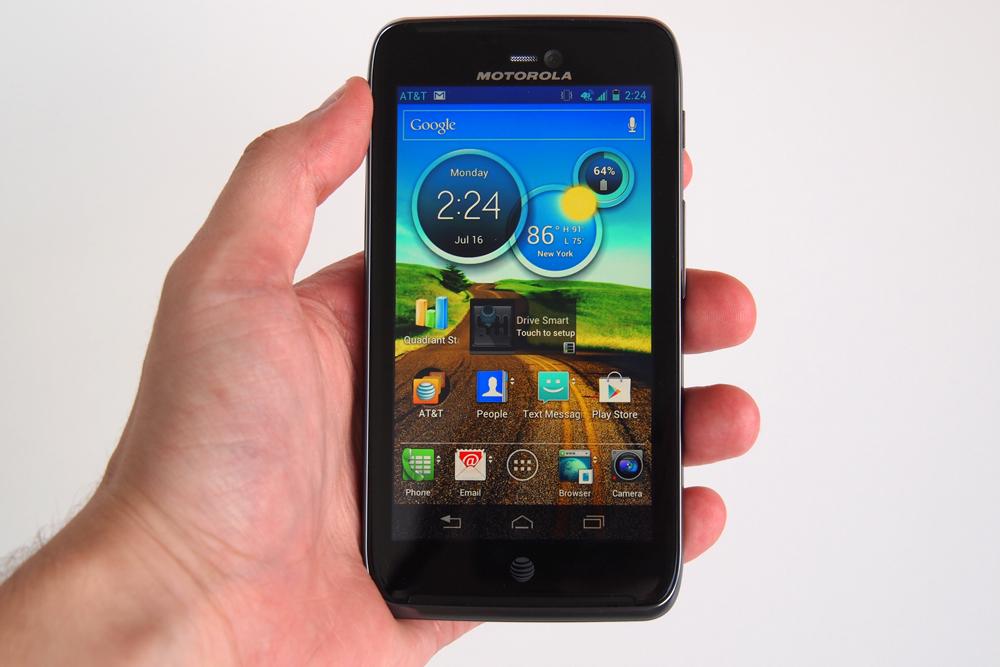
It seems like the Motorola Droid RAZR M is getting a cousin. Today U.S. Cellular announced the Motorola Electrify M, which has an edge-to-edge display and other features that fit very closely with the Verizon-only Droid RAZR M.

The new smartphone has a 1.5GHz dual-core processor, 4G LTE, an 8MP rear cam, 1.3MP front cam, NFC, 2000mAh battery and is loaded up with Android 4.0.4. U.S. Cellular suggested it was more than capable of getting in on the Jelly Bean action, though they have given no specific date regarding when.

The Electrify M will come to U.S. Cellular’s website starting November 8th and in-store by the 9th. The new Motorola smartphone will cost $99 with a two-year contract and a $100 mail-in-rebate for those in LTE markets. Unfortunately, those of us in less-speedy 3G markets aren’t getting as good of a deal and will be paying $149.99 after a $100 rebate.

The good news is that U.S. Cellular has plans to bring its 4G LTE service to 30 new markets by November 5th, and to about 58% of their customer based by the end of the year. So how about it, any U.S. Cellular customers interested in getting their hands on the new Motorola Electrify M?


Source : mobilemag[dot]com

Motorola Droid RAZR M Review

The Motorola Droid RAZR M might not be the “top offering” from Motorola, but it is a decent-sized phone with an attractive design that is certainly worth checking out. For those of you looking for a phone that isn’t a pushover but still manages a screen that isn’t larger than the state of Texas, you’ll probably like what Motorola has to offer in this affordable package that features a 4.3-inch screen size.

Let’s dive right in and check out the RAZR M.

We will start by checking out the brief video that shows off the look, feel and some of my initial impressions about the device.

Design

The Razr M falls somewhere between sexy and practical. The design isn’t too flashy, but it is far from boring. The 4.3-inch screen size is really impressive when you stop to really look at how thin, light and compact the body on this phone is.

Only 8.3mm thick, which isn’t bad at all. This phone is also really comfortable in your hands. A video or written review can’t do justice on this point. It might not scream “touch me” like devices such as the S3 and iPhone 5 do, but once it is in your hands– you won’t want to let it go. It isn’t as awkward to hold as many devices and it really feels solid, strong and well-built.

For a more detailed look at the sides and angles of the phone, we have a few pictures above or you can simply check out the video.

Hardware

The Droid RAZR M is more than capable when it comes to specs. It’s 1.5GHz dual-core Snapdragon S4 won’t blow you away in a benchmark test, but it real-life use it is extremely capable. This is the same processor found in the flagship Samsung Galaxy S3, by the way. It also has 1GB of RAM, a 540 x 960 pixel display, 8GB of internal storage, 2000 mAh battery, an 8MP rear cam and a .3 front cam.

Other goodies in the Droid RAZR M include microSD, NFC, DLNA, Wi-Fi, Bluetooth 4.0, GPS and 4G LTE.

I used the Droid RAZR M for several calls and found the call quality great, no fuzziness or distortion at all. This includes its speakerphone as well.

While I didn’t get 4G LTE from home, I didn’t have to travel more than 20 minutes to get it and found it quite snappy offering about 6-12 mbps for downloads.

Best of all, I love the battery in this thing. While Motorola claims 20 hours of talk time, I found that I was able to use this with moderate use for about two days, so that’s certainly not bad. My current smartphone requires charging every single day or it is totally dead— so this was a nice change.

Software

Android 4.0 ICS is running on the RAZR M, so no Jelly Bean here. Considering Google and Motorola’s close relationship, I find that a bit odd. Still, 4.1 is supposedly on its way in the future. For now, you get a near-clean version of Android 4.0 that includes a custom lock-screen, a dock and a few other small changes.

The software is very responsive and capable. The on-screen navigation keys were also great and worked as expected. I have yet to have a smartphone that didn’t have some kind of capacitive or physical button, but I really like the feel and function on the RAZR M and I’m totally sold on the idea of nothing but a screen on the front of a smartphone.

If you HATE customized UI experiences, you should be fine with what Motorola did. They didn’t modify much, and what they did change makes sense. As someone who hates resource-hogging shells, I didn’t have a problem with the RAZR M at all.

Camera

How did the camera fare? A picture says more than anything I can write. The picture above is crisp and clear. Perfect? No, but not bad at all. Still, if you really LOVE photos, you will probably prefer shooters found in competitors like Samsung, Apple or HTC.

If you take a few pictures now and again but don’t need “the best”, this will suite your needs without a problem. Also, the video taking abilities aren’t half bad either.

Bottom Line

Let’s face it, the Droid RAZR M isn’t a powerhouse, especially when compared to the DROID RAZR HD and HD MAXX. It’s camera isn’t the best and it might not compare to devices like the iPhone 5 when it comes to raw power. What you do get is a great everyday performer that feels great in your hands. There isn’t much bloatware and you get a near-stock version of Android 4.0. You also get microSD for expansion, features like NFC and a reasonably good battery life.

Probably the most impressive part about the Motorola Droid RAZR M is the price tag. While it might not be perfect, I’d honestly expect this to cost at least $150 with a two-year commitment. Nope, it’s just $99. This handles almost every game and program you’d throw at it and it looks and feels great.

You get a mid-range device at a near-budget price. In short, this is a steal. Camera lovers, won’t like it. Those that want giant screens might find it small. On the other hand, if you like the idea of edge-to-edge screens and a small-yet-sexy design, you are likely going to walk away impressed.

Pros:

  • edge-to-edge display
  • extremely reasonable $99 price with contract
  • attractive overall design
  • comfortable grip

Cons:

  • Not the best camera around


Source : mobilemag[dot]com

Microsoft brings Motorola, Google to German court over Maps

Microsoft brings Motorola, Google to German court over Maps

Microsoft drags Motorola back into German courts today

Microsoft is readying itself for the next round of court battles, as it fires off another patent lawsuit aimed at Motorola and its owner, Google.

This marks a return to German courts today, where Microsoft now claims Motorola infringed on patents involving Google Maps overlaying multiple map data.

The case could not only affect Motorola's phones in Germany, but how its people use Google Maps as well.

The lawsuit claims the Razr maker violated a patent for taking one set of map data and overlaying it with another set of map information. For example, overlaying data of street geography with information about what businesses are on that street.

Tough case for Motorola?

All digital maps overlay multiple sets of data now-a-days, so Google and Motorola will have a hard time circumventing the patent if they lose.

However, the beginning rounds of this court case did produce a bit of surprise. At today's hearing, Microsoft announced it will add Google to the list of defendants in the case. This is the first time Google is directly involved in the Microsoft/Motorola matter.

Microsoft usually fights its patent battles with proxy companies like Motorola. So the case presents a unique opportunity to watch the two tech giants duke it out in the same patent lawsuit.

Wheels, deals and court battles

Motorola is one of the few Android makers who doesn't pay a licensing fee to Microsoft for the mobile OS, unlike HTC and Samsung. Meanwhile, Microsoft takes a cut on half of all Android phones sold.

This is just the latest round of court skirmishes between the two companies. Microsoft has won three cases resulting in German sales bans of Motorola smartphones including the Droid Razr, Droid Razr Maxx and the Motorola Atrix.

What's more, the German court ruled Motorola infringed on patents involving a FAT file system, a SMS patent and one that described a method of handling communication between the keyboard and applications.

But, Motorola was cleared last week in a case involving a radio interface patent.

We'll see how this case affects the Motorola vs Microsoft scoreboard as the Germans mull over multiple map issues.


Source : techradar[dot]com

The QWERTY is back with the LG Mach

LG Mach

Sprint has announced the LG Mach, a new QWERTY slider Android smartphone that sits just below the Motorola Photon Q in the network's range.

The QWERTY slider form factor still has its fans, and Sprint wants to make sure they’re well catered for on its network, so it has introduced the new LG Mach. Now, with a name like that, you’re probably expecting incredible performance, but while the Mach isn’t a basic phone, it’s not quite up there with the range-toppers of today.

What we’ve got is a 4-inch touchscreen with an 800 x 480 pixel resolution, which slides to the side to reveal a big QWERTY keyboard, providing users with the best of both worlds. You’ll have to be prepared to compromise on size and weight when comparing it to its touch-only peers though, as the LG Mach is a chunky beast at 12mm thick and 168 grams.

Deep inside the phone is a 1.2GHz, dual-core processor and 1GB of RAM, while the operating system is Android 4.0 Ice Cream Sandwich. Although LG doesn’t talk about it in the press release, CNet.com says the Mach will be upgradeable to Android 4.1 Jelly Bean, but doesn’t offer any timescale.

There is a 5-megapixel camera on the rear of the phone, which can also shoot 1080p video, plus a basic 0.3 megapixel forward-facing video call lens above the screen. LG makes a point of highlighting the Mach’s eco-friendliness, saying it’s 56-percent recyclable, and has been given the seal of approval by a couple of environmental foundations too.

The Mach will connect to Sprint’s 4G LTE network and other features include Bluetooth 4.0, a 1700mAh battery, 8GB of internal storage memory, GPS, a microSD card slot and NFC.

As unusual as the LG Mach’s form factor may be these days, it’s not alone on the market, and one of its closest rivals is also offered through Sprint. The Motorola Photon Q has a slightly larger screen at 4.3-inches, an 8-megapixel camera and a 1.5GHz, dual-core processor, so the LG Mach will likely come in at a slightly lower price. It does win over in one key area though, as the Mach is ever-so slightly lighter and slimmer than the Photon Q.

Sprint hasn’t provided any release information or pricing structure at all, so if you’re interested in the phone, you’ll need a little patience.


Source : digitaltrends[dot]com

Motorola not getting 'special treatment' in Google Nexus race

Motorola not getting 'special treatment' in Google Nexus race

No Moto Nexus on the horizon then

It may own the phone-maker, but Google won't be giving Motorola any special treatment when it comes the new Nexus.

Google's next Nexus device is still under wraps, but rumour has it that LG has been given the chance to join HTC and Samsung up at the Android prefects table.

That makes Samsung the teacher's pet with two Nexuses to its name (Nexus S, Galaxy Nexus) compared to one from HTC (Nexus One) and Asus (Nexus 7) and this possible LG addition.

Shunned

So why not Motorola? "We're operating as an independent OEM, so there's a firewall between us and the Android team," Motorola's SVP of product management, Rick Osterloh, said.

"It's very important to the company that Android remain an open playing field.

"We will absolutely be one of the people considered the next time Google delivers its Nexus phone… but we're not going to receive special treatment."

It's quite important to Google that the other Android manufacturers believe this; when the buyout became public last year, Google's Andy Rubin strongly stated that Motorola wouldn't have any advantage in the Nexus bidding system over any other manufacturers.


Source : techradar[dot]com

A BlackBerry partnership could help Intel battle ARM

Intel Offices

Motorola's Razr i is a good start for Intel's attack on the mobile chip market, but it'll need a few more big-name partners if it wants to succeed.

Recently, Motorola announced its first smartphone powered by Intel’s Medfield processor, the Razr i, and it’s an important device for both companies. For Intel, it represents the very first Atom-powered phone to come from a “big-name” manufacturer, and for Motorola it marks a return to Europe, a market it has neglected in recent years. Motorola signed a “multi-year, multi-device” partnership with Intel in early January and so far it has the best end of the deal, as the Razr i is not only good-looking, but it’s capable too.

Intel however, doesn’t seem to be making in-roads into the ARM-controlled mobile chipset market, and thanks to the Razr i’s limited initial release — it’s out in the UK, Germany, France, Brazil, Argentina and Mexico next month — the only Intel phone that people might actually want to buy may not be available where they live.

What Intel needs is a new best friend — someone who is also trying to break into a market with which it has lost touch. Right now, that company is Research in Motion, which is doing a decent job of talking up BlackBerry 10, but neatly avoiding the subject of the accompanying hardware. Both it and Intel have challenging times ahead and a partnership could be mutually beneficial.

A huge mountain to climb

One could argue that it’s still early days for Intel, but is it? Intel shouldn’t have missed the smartphone boat. We’re talking about the best known PC chip manufacturer on the planet, with decades of experience here. Medfield wasn’t announced yesterday either. Intel has been chatting about its Lenovo and Motorola partnership as far back as CES in January and MWC in February.

If Intel wants its processors to challenge the dominant ARM mobile chips, then it needs to get its act together, because the mountain it needs to climb is huge. ARM controls 95-percent of the mobile market and more than 270 companies are licensed to use its architecture. Its performance reflects this, and its 2011 revenue climbed 24-percent over 2010 to $785 million, exceeding expectations.

To make matters worse for Intel, ARM is slowly but surely pushing its way into the PC market too, thanks in no small part to Microsoft’s decision to support ARM architecture with Windows 8 RT. ARM’s CEO has stated he wants to own between 10 and 20-percent of the notebook market by 2015.

Unsurprisingly, ARM has played down Intel’s move into its primary business, saying it expects the company to take only about 5 to 10-percent of the smartphone market share “within a few years.” Intel has remained tight-lipped concerning its own expectations, but as forecasters are predicting a downturn in its PC business over the coming years, mobile is only going to become more important.

Intel dominates the PC processor market in the same way ARM does with mobile, with estimates putting Intel’s share at around 80 percent; however, analysts are predicting tough times ahead, with an Endpoint Technologies researcher quoted as saying “the outlook looks grim right now through the new year.” Smartphone and tablets though, are experiencing considerable growth.

So, it’s clear that one device from one manufacturer, plus a few others scattered around the globe, probably won’t bring the success Intel desires. Motorola is a great partner to have, especially because of its new owner, but Intel needs to split the Atom between a few other big companies too.

Samsung and LG were linked with Intel last year, but nothing has come of it, and HTC has remained quiet as well. Research in Motion has always used a variety of processor manufacturers, so why not Intel? After all, it needs all the help it can get right now.

Could Intel save RIM, and vice versa?

Research in Motion is nervously treading water ahead of BlackBerry 10’s eventual release. If it’s not in talks with Intel, or at the very least considering a switch, then it should be.

A long time ago, RIM used Intel 386 chips in its early BlackBerry 950 and 957 handsets, then in 2005 trumpeted another deal with Intel, where it would use its XScale architecture (which is ARM-based anyway) and “Herman” chips in future BlackBerry devices. BlackBerry 10 phones are expected to use ARM architecture and chips from Texas Instruments or Qualcomm, but imagine for a moment the impact of the news that RIM had switched to Intel.

The relationship is there, it just needs to be reinvigorated. The mobile industry thrives on partnerships, from Sony and Ericsson to Microsoft and Nokia. Right now, a new friend would go a long way to helping Research in Motion overcome public perception, and Intel to add another big name to its list.

It makes good sense for Intel too, as RIM is placed third — and rising — in terms of market share in India — an important emerging market — behind Nokia and Samsung. It also made it very clear during BlackBerry 10 Jam that emerging markets were high on its list of priorities, and as Intel has already partnered with Lava to produce the Xolo Android phone in India, we’re assuming it is for Intel too. The combination of both Atom-powered BlackBerrys and Android phones could see them on their way to a significant slice of the market.

RIM on the other hand, needs a differentiator, something to make its BlackBerry 10 phones standout in amongst iPhone 5s, Jelly Beans and Windows Phone 8. Packing in a 2GHz Atom chip could do exactly that. Plus, with Texas Instruments taking a step back from the mobile market, a gap has opened up at RIM into which Intel could neatly slip.

Yes it would be a risk for both parties, and would require plenty of adjustment on RIM’s side, but that could be exactly what’s needed to push forward in today’s fiercely competitive mobile market.


Source : digitaltrends[dot]com

Online retailers confirm Motorola Razr i release date

Online retailers confirm Motorola Razr i release date

Razr i coming early next week

It looks like the Motorola Razr i release date will be October 1, as several online retailers post stock information on their sites.

Both Clove and Unlocked Mobiles have revealed they will be shipping the Razr i on Monday, while Expansys claims it will have units in five days.

UK highstreet store Phones4U will also be stocking the Razr i, however it's yet to announce when it expects to receive the handset.

Edge to edge

The Motorola Razr i boasts an impressive edge-to-edge 4.3-inch display, 2GHz single-core Intel processor and super quick 8MP camera.

You'll be able to get the Razr i on T-Mobile, Orange and Virgin Media, with contracts starting at £23 per month with Virgin, but if you want to get the handset free opt for the T-Mobile/Orange £31 per month deal.

Motorola is still in talks with the likes of O2, Three and Vodafone about the possibility of ranging the handset.


Source : techradar[dot]com

Google brings Chrome browser to Intel smartphones

Google brings Chrome browser to Intel smartphones

Chrome has made friends with Intel

You can now enjoy Chrome for Android on your Intel-powered smartphone, as the browser now supports x86 devices.

In the UK, the Motorola Razr i will be the first phone to take advantage of the new app, as its Ice Cream Sandwich software is compatible with Google's own-brand browser.

However anyone with an Orange San Diego won't be able to reap the rewards of the updated browser, as it only runs Android Gingerbread, and the Chrome app demands ICS or higher.

Limited appeal

Although this is a positive step forward from Google, the reality is that there are just a handful of smartphones with Intel inside in the world, but we expect more handsets to arrive next year.

Intel phones still suffer from app compatibility issues, as a number of applications in Google Play have been specifically coded to run on handsets with ARM chips.

This means only about 70 percent of apps in Google Play work with Intel phones, however we're told Intel is working closing with developers on porting over the remaining 30 percent.

The Intel-compatible version of Chrome is now available to download in the Play store for free.


Source : techradar[dot]com

Intel smartphone processors currently don't support 4G

Intel smartphone processors currently don't support 4G

Intel is working hard to keep up

Intel has confirmed that its current Medfield processor found in the likes of the Orange San Diego and Motorola Razr i (Droid Razr M in the US) does not offer support for LTE.

However Intel is working on a solution, and Sumeet Syal, Intel's director of product marketing told Tech Crunch that it was planning on "shipping some LTE products later this year and ramping into 2013".

As 4G becomes more and more popular around the world, Intel needs to get a move on with its LTE-enabled handsets, otherwise it risks being left behind by the already well-established Nvidia, ARM and Texas Instruments.

Dual-core to rival quad-core

Alongside 4G-enabled processors, Intel is also reportedly working on a dual-core version of the Medfield chip – which could rival the quad-core chips found in the likes of the international versions of the HTC One X and Samsung Galaxy S3.

Syal said: "Our next gen product will be a dual-core but again that product will also have hyper threading so essentially… you will also have dual-core with four threads.

"So again just like we demoed that a single core hyper-threaded can outperform dual-core/quad-core I think we'll do it again when we introduce the dual-core product with four threads."

Currently there's no information regarding the 4G or dual-core handsets Intel has up its sleeve, but we'll keep our eyes and ears open for any more information.


Source : techradar[dot]com

Motorola Razr i price: networks announce tariffs

Motorola Razr i price: networks announce tariffs

Are you eyeing up an i?

The Motorola Razr i was announced last week and several networks have now released pricing details for the phone.

From launch the Razr i will be available on T-Mobile, Orange and Virgin Media from October, with Motorola still in talks with the likes of O2, Three and Vodafone about the possibility of ranging the handset. A Moto spokesperson told us, "Further partners will be announced in due course".

Both T-Mobile and Orange are offering the Motorola Razr i for free on two year contracts starting at £31 per month, while Virgin contracts start at £23 per month – but you'll probably need to pay some money up front for the handset.

More to come

High-street retailer Phones4U has an info page on its website for customers to register their interest for the Razr i, however pricing is yet to be announced, while Tesco is also a confirmed reseller but is yet to release any details.

The Motorola Razr i is the first smartphone to pack a single-core 2GHz processor, and its maker Intel reckons it matches and even surpasses other dual-core phones.

As well as that nippy chip, you also get a 4.3-inch, 540 x 960 edge-to-edge display, 1GB of RAM, 8GB internal storage, Android 4.0.4 Ice Cream Sandwich (with a Jelly Bean update coming in the near future), 8MP rear camera with LED flash and HD video recording, plus a beefy 2,000mAh battery.

Check out our hands on Motorola Razr i review to find out what we think of the phone, and keep an eye out for our full review, coming soon.


Source : techradar[dot]com

Motorola and Samsung triumph over Apple in German patent battle

Motorola and Samsung triumph over Apple in German patent battle

Motorola and Samsung took a bite out of Apple

The patent gods have smiled on Motorola and samsung - for once.

After suffering some disheartening defeats, the two companies have been cleared of any wrongdoing in a dispute with Apple in a German court.

Apple claimed that several of Motorola and Samsung's Android handsets violated its patent dealing with an OS's responses to "touch events" - i.e. how the devices respond to users' touch inputs.

The full details of the court's decision have yet to be revealed, but German lobbyist and patent law blogger Florian Mueller suggests that Apple's patent is simply too vague to be enforced.

That's reportedly how Apple lost its claims in similar cases in the Netherlands and the UK, and it may be that the court in Germany concurred.

A losing streak

This victory should provide both Samsung and Motorola with some much-needed time to lick their wounds, as both companies suffered some serious losses recently in the patent space.

Google's Motorola was found in violation of a Microsoft-owned patent on Thursday, earning Microsoft the right to demand licensing fees or even a ban on certain Android devices.

And last month, a jury awarded Apple more than $1 billion in damages from a victory over Samsung in a landmark patent case.

On Wednesday, it was revealed that Apple is seeking even more money from Samsung - up to $3 billion.

War, war never changes

Of course, Samsung and Motorola are not free from blame in the tech industry's absurd and childish maelstrom of back-and-forth patent disputes.

Motorola has spent most of 2012 attempting to get Microsoft's Xbox 360 gaming console banned from shelves, and Samsung attempted to draw out its own trial with Apple with a massive spate of counter-claims.

What's clear is that the patent war is far from over.

TechRadar reached out to both companies to learn of their responses to their victories over Apple, but they have yet to reply.


Source : techradar[dot]com

Apple iPhone 5 vs. Motorola RAZR Maxx HD: Spec showdown

product comparison pedestals motorola header iphone 5 motorola droid razr maxx hd

How does Apple's new iPhone hold up against Motorola's edge-to-edge RAZR Maxx HD? Check the specs here to find out.


Full Coverage From Apple's 9/12 iPhone 5 Launch Event While Apple is getting the spotlight today for its new iPhone 5, the spiffy new handset will soon have to stand up against the competition. And one of the potential heavy-hitters out there is the (Google-owned) Motorola RAZR Maxx HD. Sporting an edge-to-edge, 4.7-inch display, and massive battery life, the RAZR Maxx HD is looking to be one of the silent heros in the Android camp. So, how does the shiny new iPhone 5 stack up against one of Motorola’s flagship handsets? Take a look at the spec breakdown below to find out.

iphone spec comparison razr droid maxx hd specs apple iphone 5 announcement motorola razr droid maxx hd


Source : digitaltrends[dot]com

Motorola 2011-2012 Devices Should Get Jelly Bean, or $100 if the Device Can’t

Recently, Mobile Magazine reported that Motorola had plans to bring Jelly Bean to every device possible that was made in 2011 or later. While this was enough to get somewhat excited about, the biggest news was that Motorola promised that if it couldn’t bring Jelly Bean to your 2011-2012 Motorola device it would instead give you an $100 credit towards a new Motorola device.

Not a whole lot of details about the program were announced at first, and it seemed likely that the program wouldn’t start to roll out for quite a while. That being said, Motorola now has a website that has gone live with the deal.
Wait, but how do you know if your phone will eventually get Jelly Bean or not? For the moment, no official list on which devices will and won’t get Android 4.1 exists. Instead, the site allows you to sign up for information about how to update your device or how to claim the rebate if your device isn’t getting the upgrade.

The master list of device upgrades will likely surface sometime this year, though. Keep in mind that this ‘rebate’ isn’t a cash offer. Instead you can either get a gift card, carrier credit or possibly a cash equivalent of Motorola’s choice- though this would likely be a dollar amount that is less than $100.

To be perfectly honest, I think this is a brilliant move on Motorola and Google’s part. It shows a clear commitment to bringing the best that Android has to offer to all of Motorola’s offerings going forward.
What do you think?


Source : mobilemag[dot]com

Motorola Razr M first impressions: Maximized screen real estate at its finest

Droid Motorola Razr M

Here's our first look at the budget-friendly model of Motorola's new Droid Razr line ahead of its September 13 release date.

Droid Motorola Razr M sim sd slot
Droid Motorola Razr M side
Droid Motorola Razr M screen
Droid Motorola Razr M box
Droid Motorola Razr M back
Droid Motorola Razr M


Motorola announced an updated line of its Razr smartphone family this week, and the first of the three to be released is the Motorola Razr M — otherwise known as its budget-friendly edition. At $100 (with a 2-year contract,) the phone stacks up competitively to other budget phones on the market such as the HTC One V. Here’s our first look at what Motorola has in store for its Razr line.

It’s funny to think that a 4.3-inch screen phone these days is considered “compact,” but that’s exactly how Motorola described the Razr M during its press conference Wednesday. The near edge-to-edge design offers more screen per square inch — which makes the advertised 4.3-inch screen bigger than it sounds. The 960 x 540 resolution display itself is truly vivid especially under the gorilla glass, and the whole device feels more expensive than your average budget phone. Thanks to its Kevlar back, the anti-scratch and added grip makes for a beautifully-designed phone that feels like it’s worth a ton more than one Benjamin.

While the Motorola Razr M comes with an internal memory of 8GB and 1GB of RAM, storage is expandable with the micro-SD slot placed right on the side of the phone. The SIM card slot is also right next to it, so no more opening the back of your phone and digging your nails in to remove either chips. The device is runs on Android 4.0 Ice Cream Sandwich, which is a bit of a disappointment, but Motorola says all the new Razr phones should be getting Jellybean by the end of the year.

The Razr M also comes with a dual-core Qualcomm MSM8960 Snapdragon S4 processor, 8 MP back camera, and a 3 MP front-facing shooter. The dual-core processor makes the Razr M run extremely fast. Switching between screens is swift, and you can program your own pages and add them as needed. To delete, simply hold and drag the app icon or page to the trash can.  

What’s new about the Razr M is a circle interface that allows you to customize shortcuts. For example, new text messages can appear on the most prominent circle while the second circle is dedicated to weather. For each city you add, you can flip the circle to navigate through the cities and get updated weather information for each location.

According to Motorola, one full charge can deliver an impressive 20 hours of battery life but we’ll see if that claim holds true. Be on a lookout for our full review shortly. In the meantime, the Motorola Razr M is available for pre-order now at Verizon with an official release date of September 13. To get the $100 price, you will have to mail in a $50 rebate through Verizon.


Source : digitaltrends[dot]com

Motorola RAZR M Offiically Announced, Launches Next Week

The Motorola RAZR M 4G LTE is finally official, though it certainly wasn’t a secretive launch at all. The newly announced device is a pretty decent looking midrange device, though it’s nothing to get all that excited about either.

Next to the RAZR HD, this device isn’t nearly a powerhouse, but it’s still capable enough.

What kind of specs do we get with the RAZR M? The Razr M run on a dual-core Snapdragon S4 and features an 8-megapixel camera, 8GB of internal storage and 1GB of RAM. It also has NFC and a resolution of 960×540. The phone will launch with Android ICS, but a Jelly Bean update is expected to arrive shortly after.

If you aren’t much into having a large bezel around your phone, you may end up loving the RAZR M. The device is nearly edge-to-edge with glass, which means you get a good deal of screen real estate space in a very thin and light package.

The official launch date for the RAZR HD and MAXX HD are yet to be announced, but the RAZR M is coming very soon. Verizon should have the device available starting next week for just $99 with a two year contract.

Interested in the RAZR M? Preorders start today.

m1
m2
m3
m4
m5


Verizon Wireless and Motorola Add Three New and Exclusive 4G LTE DROID RAZR™ SmartphonesAll the power, battery life and cool design of DROID RAZR™ with the speed of 4G LTE three times over

Sept. 05, 2012

BASKING RIDGE, N.J., and LIBERTYVILLE, Ill. – Verizon Wireless and Motorola Mobility today announced that they are adding three new and exclusive smartphones, DROID RAZR™ M, DROID RAZR™ HD and DROID RAZR™ MAXX™ HD, to the DROID RAZR™ by Motorola family on the Verizon Wireless 4G LTE network.

All three devices offer the power and reliability that customers have come to expect from Motorola and Verizon Wireless. DROID devices give customers speed, power and revolutionary technology, while the RAZR design delivers a thin, compact device built with strong, top-of-the-line materials and long-lasting battery life. The new smartphones are powered by the Verizon Wireless 4G LTE network, giving customers the capability to simultaneously talk and browse the Web and also access the blazingly fast speeds that cover more than 75 percent of the U.S. population. With three brand new options, this lineup has something for everyone.

DROID RAZR M: The Full-Screen Phone
DROID RAZR M is an unbelievably compact smartphone that puts the world in the palm of your hand with an edge-to-edge 4.3-inch Super AMOLED™ Advanced display. Customers will be amazed with the DROID RAZR M’s design, which is significantly shorter and narrower than the original DROID RAZR, yet includes the same size display, making it the most compact 4.3-inch 4G LTE smartphone.

DROID RAZR M also features powerful Web browsing capabilities by combining Verizon Wireless’ 4G LTE network with the speeds of Chrome™ for Android™ mobile browser for an unrivaled mobile Web experience.

The DROID RAZR M’s SMARTACTIONS™ feature maximizes battery efficiency with every charge, allowing customers to browse the Web and watch videos without worrying about draining their device’s battery.

DROID RAZR HD: Performance and Power
Building on the DROID RAZR legacy, the new DROID RAZR HD expands the innovation with a new 4.7-inch Super AMOLED HD display that allows movies, photos, magazines and even websites to appear with vivid clarity. DROID RAZR HD provides customers with 78 percent more pixels for a more vibrant display and features 40 percent greater battery capacity than the original DROID RAZR.

The viewdini app is at its best with the HD display and 4G LTE speeds to watch movies, television shows and other video content. Viewdini brings the power of Verizon Wireless’ 4G LTE network to the screen by streamlining access to videos from a wide range of content providers, including cable operators, websites and other popular video sources. The viewdini app can be downloaded from Google Play.

DROID RAZR MAXX HD: Long Live the Battery
Packed with the same leading features as DROID RAZR HD, the DROID RAZR MAXX HD raises the industry standard for battery life with 32 hours of normal use. The DROID RAZR MAXX HD is remarkably thin, yet packs sufficient battery power for 13 hours of straight video playback, enough to watch a movie trilogy without needing a charge. Customers also have enough battery life to talk the day away with up to 21 hours of continuous talk time or browse the Web on 4G LTE for up to a full eight hours.

A Trilogy of Premium Design, Speed and Features:
● 4G LTE – customers can expect fast download speeds of 5 to 12 megabits per second (Mbps) and upload speeds of 2 to 5 Mbps in 4G LTE coverage areas.
● Interactive Circles Widget allows quick access to notifications, weather, time and more
● Quick Settings can be accessed directly from the home screen so customers can easily manage their volume profile, Wi-Fi, Bluetooth®, GPS and more
● Enhanced Help Guides provide interactive tutorials, help topics and tips to become a DROID RAZR expert
● Global Ready so customers can have voice and data service in more than 205 countries
● Business ready with enterprise grade security and data encryption, remote wipe, complex password support, IPsec multi-headed VPN client and Microsoft Exchange ActiveSync® support
● 1.5 GHz dual-core processor and 1 GB RAM
● Mobile Hotspot – Share a 4G LTE connection with up to eight Wi-Fi-enabled devices
● 8-megapixel camera with LED flash and 1080p HD recording
● Front-facing camera for video chatting
● NFC-enabled so customers can send contacts, links, maps and more directly to compatible phones with Android Beam™
● Corning® Gorilla® Glass display, DuPont™ KEVLAR® fiber and water-repellent nanocoating
● microSD™ card slot with support for up to 32 GB

The new DROID RAZRs run Android™ 4.0 Ice Cream Sandwich (upgradeable to Android 4.1 Jelly Bean by end of 2012) and come with the best of Google Mobile Services, including:
● Chrome™ for Android™, giving a personalized Web experience
● Google Play™, apps and games, millions of books and songs, thousands of movies and TV shows
● Google Maps™ for Android (Beta) for voice-guided, turn-by-turn directions
● Voice Actions for Android™, letting customers control their phones with their voice
● Google+™, which can automatically upload photos to a private album online
● YouTube™, watch videos in stunning HD, Preload subscribed channels or individual videos and the YouTube app will automatically download videos over Wi-Fi while the phone is charging – making them ready to watch in an instant

Pricing and Availability:

● DROID RAZR M will be available for pre-order starting today, September 5th, at 5 p.m. ET at http://www.verizonwireless.com/droidrazrm and will be available on September 13th in Verizon Wireless Communications Stores and online at http://www.verizonwireless.com for $99.99 after a $50 mail-in rebate with a new two-year customer agreement. Customers receive the rebate in the form of a debit card; upon receipt, customers may use the card as cash anywhere debit cards are accepted. The DROID RAZR M will be available either Black or White.
● DROID RAZR HD and DROID RAZR MAXX HD will be available before the holidays. The DROID RAZR HD will be available in either Black or White and the DROID RAZR MAXX HD will be available in Black.
● Customers who purchase a DROID RAZR M, DROID RAZR HD or DROID RAZR MAXX HD will need to subscribe to a Verizon Wireless data plan. Share Everything Plans allow customers to add smartphones to their account for $40 monthly access. For additional information, customers should go to www.verizonwireless.com/shareeverything

About Motorola Mobility
Motorola Mobility, owned by Google, fuses innovative technology with human insights to create experiences that simplify, connect and enrich people’s lives. Our portfolio includes converged mobile devices such as smartphones and tablets; wireless accessories; end-to-end video and data delivery; and management solutions, including set-tops and data-access devices. For more information, visit motorola.com/mobility.

Media Contact
Danielle McNally
Motorola Mobility
312.613.7021
danielle.mcnally@motorola.com

About Verizon Wireless
Verizon Wireless operates the nation’s largest 4G LTE network and largest, most reliable 3G network. The company serves 94.2 million retail customers, including 88.8 million retail postpaid customers. Headquartered in Basking Ridge, N.J., with 78,000 employees nationwide, Verizon Wireless is a joint venture of Verizon Communications (NYSE, NASDAQ: VZ) and Vodafone (LSE, NASDAQ: VOD). For more information, visit www.verizonwireless.com. To preview and request broadcast-quality video footage and high-resolution stills of Verizon Wireless operations, log on to the Verizon Wireless Multimedia Library at www.verizonwireless.com/multimedia.

Media Contact
Albert Aydin
Verizon Wireless
908.559.7513
Albert.Aydin@verizonwireless.com


Source : mobilemag[dot]com

Droid Razr M and Razr HD developer's editions incoming

Droid Razr M and Razr HD developer's editions incoming

The new Droid Razr M makes for a compact developer device

On top of announcing three new consumer model Android smartphones for consumers, Motorola has unveiled two new handsets for developers.

Developer editions for both the Droid Razr M and Droid Razr HD are on the way. Both developer editions are identical to the consumer models, with the added bonus of an unlockable bootloader to dive into the device's code.

As announced earlier, the Droid Razr M sports a 4.3-inch qHD Super AMOLED display, a dual-core Qualcomm Snapdragon S4 processor, 1GB RAM, 8GB of storage, NFC support, and an 8MP camera capable of 1080p video capture.

The Droid Razr HD packs a 4.7-inch HD display and is only 8.4mm thick. It is built for speed and battery life, with a dual-core Qualcomm Snapdragon S4 processor and a 2500mAh battery that boasts 16 hours of talk time, 10 hours of video, and 6 hours of web searching.

Droid for devs

Developers can already place their order for the Razr M developer edition directly through Motorola and will start shipping September 13. At $549.99, it is a little bit pricier than the $99 consumer model, but makes up for the difference with the unlockable bootloader.

The Droid Razr HD developer model will be a longer wait, with no information announced about its release date or final price. Those interested in snagging one though can register online through Motorola for updates when the handset is available to order.


Source : techradar[dot]com

It's free
index