Showing posts with label smartphone. Show all posts

Asus Padfone 2 may arrive sooner than expected

Asus Padfone 2 may arrive sooner than expected

Is it a bird, is it a plane? No, it's some kind of smartphone-tablet thing

The Asus Padfone 2 may arrive in stores sooner than expected after reports suggest the smartphone-tablet hybrid will go on sale in Germany on December 1.

According to German site Inside-Handy, it has received confirmation that the Asus Padfone 2 will be in stock from the beginning of December, although we've spoken to the Taiwanese firm and it is yet to confirm or deny this.

The original Asus Padfone failed to make it out of Asia but the Padfone 2 has been pegged for a European launch at least.

Christmas comes early

It's currently thought the Padfone 2 will arrive in Europe at the start of 2013 but this latest news does raise hopes of an earlier arrival.

You'll need some serious cash though if you fancy getting your hands on the Padfone 2 with the 32GB model reportedly sporting a price tag of €799 (around £642/$1020/AU$980), while the 64GB version will set you back €899 (around £720/$1150/AU$1105).

The Padfone 2 smartphone packs a 4.7-inch Super IPS+ HD display, quad-core processor, 2GB of RAM, 4G connectivity, NFC and 13MP camera.

The tablet dock offers up a 10.1-inch HD display and a 5000mAh battery, which will charge the phone when it's docked.

We're still unsure if the smartphone-tablet hybrid concept will be a success - with the high asking price Asus may find it hard to shift the combo.


Source : techradar[dot]com

Google Nexus 4 vs. Samsung Galaxy S3: In-depth comparison

Google Nexus 4 vs samsung galaxy s3 android smartphones

If you're in the market for a new Android smartphone and you want something truly top of the line then the Samsung Galaxy S3 and the Google Nexus 4 are bound to be in your sights. The question is: which is better? We put the Galaxy S3 and Nexus 4 head-to-head in this detailed comparison and try to pick a winner.

The Samsung Galaxy S3 has been the relatively undisputed heavyweight champ on the Android scene for half a year now. It is, quite simply, an awesome smartphone. The new challenger emerging is the Google Nexus 4 and it’s looking lean, mean, and dangerous. Manufactured by underdog LG, the Nexus 4 combines impressive specs with an affordable price tag. The question is – does the Nexus 4 have what it takes to steal the title?

Warm up for the main event with an undercard including our Samsung Galaxy S3 review and a detailed Galaxy S3 vs Nexus 4 spec showdown.

The Galaxy S3 has been on the market for a while now and you can get it from various carriers, although there are some slight differences between versions. The Nexus 4 comes in two flavors – 8GB or 16GB – and it went on sale November 13.

Display quality

Let’s open the bout with the first thing that strikes you about both devices: the screen. The Galaxy S3 has been lauded and derided for having a huge display. At 4.8 inches, the screen size was criticized by some for making the phone too large to handle comfortably. Consumers clearly didn’t agree with the critics because sales have been impressive and there’s a clear trend towards bigger displays in the market generally now. The Nexus 4 has a slightly smaller display at 4.7 inches.

The fact the Nexus 4 has a slightly higher resolution and a smaller screen than the Galaxy S3, means that the pixel density is greater. The Nexus 4 should be sharper. The displays also use different technology. The Nexus 4 display is IPS LCD and the Galaxy S3 is Super AMOLED (if you want to know what that means check out AMOLED vs LCD). Both displays have great color reproduction and good viewing angles and they both have Gorilla Glass 2 protection. The Galaxy S3 might edge it on better viewability in sunlight and that extra size, but the Nexus 4 display is sharper.

Winner: Draw

Design and feel

Neither Samsung nor LG are famed for high quality construction when it comes to smartphones. The Nexus 4 has a rounded form factor and is made of plastic with glass front and back and a chrome style rim. When the light catches the back you’ll see an eye-catching hologram design. It’s a premium look and feel not generally associated with LG, but it is indicative of the company’s push towards the top end of the Android market.

The Galaxy S3 is also rounded with a slightly textured pattern on the border which carries round onto the plastic frame and polycarbonate back cover. There is a single Home button on the front, while the Nexus 4 has no physical buttons on the front. Despite claims that the plastic feels cheap it is very durable and it obviously helps to keep the weight down.

In terms of size the Galaxy S3 is slightly bigger in height and width, but it is also slightly slimmer and it weighs a touch less. Ports and buttons are virtually identical, including right side placement for the power button, which helps you reach it more easily on larger form factor smartphones.

Winner: Draw

User interface and platform

As a Google release the Nexus 4 is vanilla Android and it sports version 4.2 which offers a handful of slight improvements over 4.1, but is still classed as Jelly Bean. There’s a new Quick Settings screen, widget support on the lock screen, improved Google Now, and Voice Search, among a few other new bits and pieces in version 4.2.

The Galaxy S3 launched with Android 4.0 (Ice Cream Sandwich), but the Jelly Bean 4.1 update has rolled out to many devices already. It also has Samsung’s TouchWiz interface, which has already added some features such as a Quick Settings menu in the Notifications bar.

There isn’t a huge difference in usability, but the latest version of Android is always the best. The 4.1 update for the Galaxy S3 brought a very noticeable improvement in speed and performance, alongside great features like expanded Notifications and Google Now. An S3 with Android 4.0 and TouchWiz is definitely behind the Nexus 4 with vanilla Android 4.2.

Winner: Nexus 4

Processor and RAM

Both devices have quad-core processors. The Galaxy S3 has a 1.4GHz Exynos 4412 and the Nexus 4 is sporting a Qualcomm Snapdragon S4 Pro clocked at 1.5GHz. The Nexus 4 has 2GB of RAM, which outperforms the 1GB of RAM in the European and international versions of the S3. The U.S. version of the Galaxy S3 matches the Nexus 4′s 2GB of RAM but lags behind with a dual-core processor.

Winner: Nexus 4

Storage

The Nexus 4 comes in 8GB and 16GB versions and in typical Nexus-style there is no microSD slot. You’ll need a screwdriver if you want to open it. The Galaxy S3 comes in 16GB, 32GB, and 64GB varieties and you can expand by a further 64GB thanks to the microSD slot which you can get to by removing the back cover. There is no contest here.

Winner: Galaxy S3

Cameras

When it comes to the main camera, both devices have excellent 8-megapixel rear-facing cameras that can record 1080p video at 30 fps. They also both have the usual LED flash, face detection, and a host of other features. Android 4.2 brings a cool new Photo Sphere feature for panoramas to the Nexus 4, but the Galaxy S3 camera app has some nifty features, too.

It’s easier to separate the two phones on the front-facing camera because the Galaxy S3 has a 1.9-megapixel camera and the Nexus 4 has a 1.3-megapixel camera. Do many people really care about the front-facing camera? For those that do, the S3 wins out.

Samsung Galaxy S3 review screen taking photo horizontal recording

Winner: Galaxy S3

Battery

Both phones have batteries rated at 2,100mAh. The Galaxy S3 battery is removable while the Nexus 4 battery isn’t, but few people will carry around a second battery anyway. We’ll need to wait for more extensive hands-on testing to see if there’s any real difference in actual use, but . It’s probably worth mentioning that the Nexus 4 does support wireless charging and has a nifty Wireless Charging Orb accessory, although you do have to buy it separately.

Winner: Draw

Connectivity

You’ve got NFC, Wi-Fi, Bluetooth, DLNA, and everything else you would expect to find on both smartphones. The widely noted difference is that the Nexus 4 doesn’t support 4G LTE. It’s debatable how much that matters, because HSPA+ can be very fast, but if you live in the right area then LTE is the fastest mobile network connection you can have right now so it was a surprising omission.

Winner – Galaxy S3

Price

This is where some of the losses above for the Nexus 4 can be cancelled out because it is significantly cheaper than the Galaxy S3. It is basically $300 for the unlocked 8GB Nexus 4 or $350 for the 16GB version. That compares to around $600 for an unlocked 16GB Galaxy S3.

On contract you can get the Nexus 4 for $200 while the Galaxy S3 is closer to $300.

Winner – Nexus 4

Overall Winner: Nexus 4

Google Nexus 4, Nexus 10 announced

If we add up the scores it actually turns out to be a tie with 3 wins apiece and 3 draws, but hopping off the fence we’ll give this one to the Nexus 4 because it manages to offer more value for your money. The wins that the Nexus 4 racked up will probably be more important to most people – it’s faster, it has the latest version of Android, and it’s cheaper. However, if you’re on a carrier with a robust 4G LTE network, or you heavily value storage or the quality of your front-facing camera, the Galaxy S3 may be the phone for you.


Source : digitaltrends[dot]com

Android 4.2 Jelly Bean hits Nexus 7 and Galaxy Nexus

Android 4.2 Jelly Bean hits Nexus 7 and Galaxy Nexus

Coming to a Galaxy Nexus and Nexus 7 near you

The latest version of Android is hitting the Google Nexus 7 tablet and Galaxy Nexus smartphone right now.

So if you're the proud owner of either, you should be able to get your hands on Android 4.2 Jelly Bean.

It's not all quite as simple as one rollout though. No, that would be too easy.

Selected models

Android 4.2 Jelly Bean is only available for the unlocked HSPA+ model that's sold through Google Play. So far, anyway.

But if you've no qualms about flashing a ROM yourself, you can download the files you need from Google and get fiddling. It shouldn't be long until the update hits other Galaxy Nexus handsets though.

Things are a bit simpler with the Nexus 7. You should get a notification of the update any day now, but if you can't wait, you can prompt it yourself manually.

To do so, turn off the Wi-Fi, go to Settings > Apps list > All > Google Services Framework. Clear the cache, and hit Force stop. Reactivate the Wi-Fi, go to Settings > About tablet > System, and the update should be there staring back at you, ready for download.

So what will Android 4.2 get you? Improved stability and performance are the order of the day, as well as user profiles, so everyone can log in under their own name and personalise settings to their liking. Gesture typing means you just slide your finger across the keyboard rather than hitting keys, a bit like Swype.

Have you downloaded the update yet? How are you getting on? Let us know.

Via Pocketnow, Phandroid, The Verge


Source : techradar[dot]com

Motorola DROID RAZR MAXX 4G for just $50

You don’t have to wait until Black Friday to get the best deal on a new smartphone. In fact, you can get the DROID RAZR MAXX 4G for just $50, which is a significant savings from the regular price of $749.00.

Not surprisingly, the RAZR MAXX 4G can only be had for the $49.99 asking price if you sign up for a qualifying two-year service agreement with Verizon Wireless. As far as specs, you get a 4.3-inch AMOLED display, 4G LTE capabilities, dual core 1.2GHz processor, and a massive 3300mAh battery that they say will provide up to 21 hours of talk time and up to 380 hours of standby.

Other key features include the 8MP camera with 1080p video, Bluetooth stereo music, 16GB storage, microSD expansion slot, front-facing camera, GPS, and MOTOPRINT for wireless printing to any postscript printer via Wi-Fi. And yes, it’s compatible with the Lapdock 100 for a 10.1-inch netbook-esque experience too, but that’s an optional additional purchase.


Source : mobilemag[dot]com

This week’s best app updates

App update roundup ios productivity apps

Missed all the new app updates this week? Here's a roundup of the week's best additions that are the clear must-haves on your smartphone.

Man, there were a lot of apps that got some update love this week. Did you manage to download them all? If not, have a look through our roundup and see for yourself whether or not these changes seem urgent to your needs. We know, data gets expensive, so feel free to spread them out as you see fit.

Tumblr

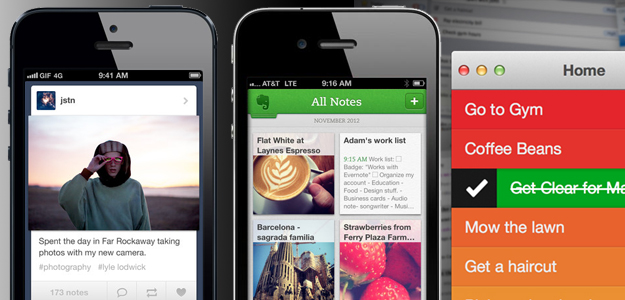
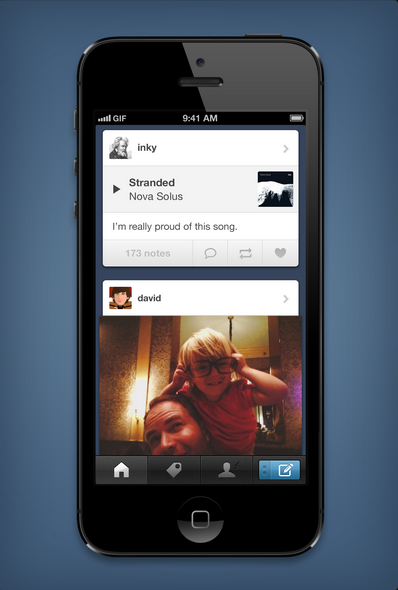
With the latest iOS update, Tumblr is now “completely native,” meaning a faster and more responsive interface for you iPhone users. The update also comes with a new notifications board that lets you see exactly who liked, reblogged, commented, or replied to your posts. One of the more interesting updates, however, is animated GIF playback. This will be great for all you LOLcat lovers now that animated GIFs will play automatically from the dashboard without needing a separate tap. Gesture shortcuts also include right swipe to return to the previous screen, and holding a tap to open up more options.

Evernote

Evernote got a nearly complete refresh with its new update, offering a new homescreen, navigation interface, and existing notes list. “Our goal with the redesign was simple: make all major functions accessible within two taps,” Evernote writes on its blog. You’ll find this with a shortcut navigation to your content, and a tap on the header to browse the section. The Notebook section is one of the most improved aspects, gathering all the notes you’ve ever created or have been shared under one hood. Additionally, you can sort your notes by tags or places – the latter of which will bring up a map of plotted notes according to their location info. There are also shortcuts (“Quick Notes”) on the top of the homescreen to help you quickly add new notes and take photos. This Evernote 5 update will be compatible with the iPad mini as well, and is free across iOS platforms.

Foursquare

You know how Facebook lets you tag friends you’re at an event with when you check into spaces? Well, now you can do the same on Foursquare, even if your friend isn’t a Foursquare user. The hot link will just sync to your friend’s Facebook account instead – where your friend can either approve or hide the Facebook notification for a wall post.

In addition to the social aspect update, users can also rate establishments on a scale of 1 to 10 to help explorers get a gauge on the venue’s rating. The number rank will appear in a color square next to the name of a location under your Explore tab. The update is available only on iOS, but Android users should be receiving the same love shortly.

Clear for Mac

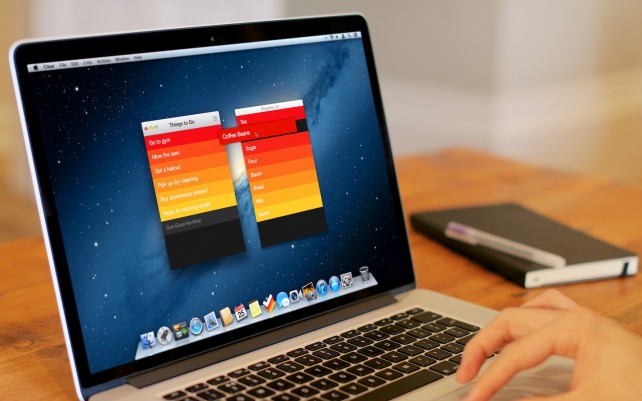
Clear is a hotly popular app on the iPhone, and this week, the beautiful to-do lister app comes to the big screen: your MacBook. The Mac edition will include all the touch gestures available on your iPhone if you own a later edition of MacBooks that have gestures built into the touchpad. This means you can still perform all the left and right swipes to “clear” a task and drag items around to reorder them. After you finish setting up your lists on the Mac, the app also syncs with your iPhone so you can access lists on the go. To make accomplishing tasks even more fun, you can fudge with the preferences to set sounds and theme colors to make you want to use the app more.

Pinterest

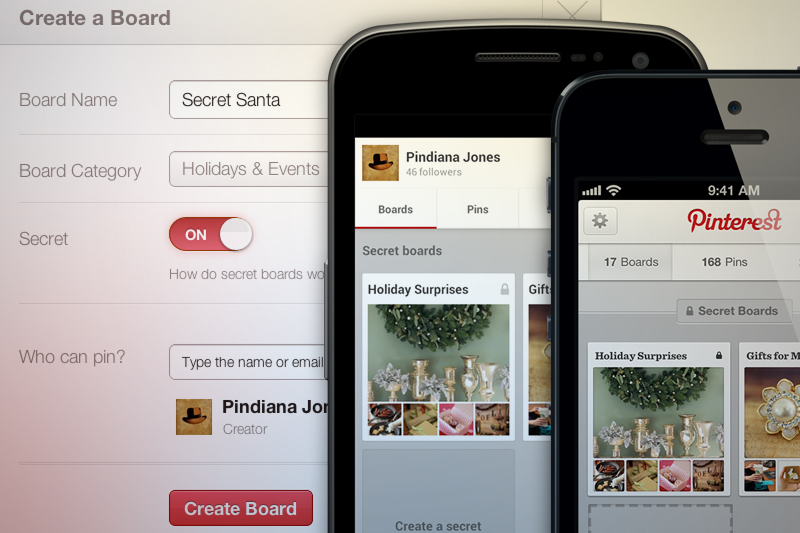
Starting your holiday shopping early but don’t want anyone to find out you’re using Pinterest to save your to-buy lists? The new Pinterest updates for iOS and Android will now include Secret Boards so you can create up to three privatized boards made for your eyes only. You can also share them with a few santa helpers to get the holiday season rolling, or turn the secret boards public after you’re finished putting the last pieces on the board. The option can be found right when you create a new board, or at the bottom of your app homepage.

Pulse News

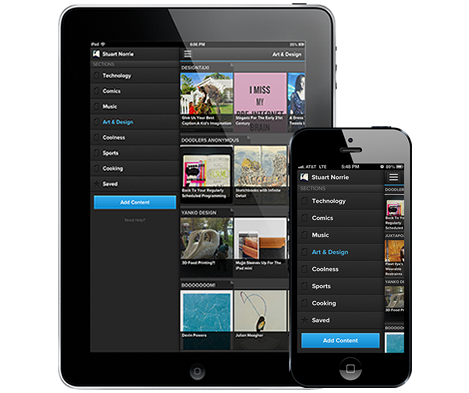
Pulse 3.0 is here for both Android and iOS, complete with a sleeker mobile interface and a new search feature to help you browse more efficiently. With the search side bar, you can sort news by sources (Reddit, Tumblr, Google, Flickr, Facebook, etc.) and there’s an infinite scroll so you can keep dragging down for more stories. Seriously — as many as you can stomach in one sitting.

Editing pages is also simpler thanks to the side bar, which allows you to add, edit, and reorder to your customizable needs. Basically, the mobile version gets the same personalization options the Web service Pulse.me already has, so if you’ve an avid fan of the Web edition, now you’ll have the same features on the go.


Source : digitaltrends[dot]com

Affordable Sony Xperia J goes on sale

Affordable Sony Xperia J goes on sale

Less Bond, more budget

The Sony Xperia J was unveiled as an "affordable" smartphone at IFA 2012, playing second fiddle to the Xperia T – and it is now available to purchase.

Sony claimed the Xperia J would offer consumers "a stand-out screen size for consumers looking to combine great style with affordability" – and it certainly haven't let us down as far a price is concerned.

Three is offering the Sony Xperia J for free on two year contracts starting at just £13, while if you prefer a PAYG plan, you'll need to fork out £149.99 plus a top up – not bad at all.

Value for money

At that price the Xperia J is pretty feature-packed, with a 4-inch 480x854 display, 1GHz processor, 512MB of RAM, 5MP rear camera, 1,750mAh battery and Android 4.0 Ice Cream Sandwich on board.

There's only 4GB of built in storage, but a with a microSD slot hidden behind the removable rear cover, that shouldn't be too much of an issue.

We hope to get a handset in soon for our in-depth Sony Xperia J review, where we'll find out if it can take on the likes of the Orange San Diego and HTC One V.


Source : techradar[dot]com

Samsung Galaxy Express steams into your local AT&T store, where it’s yours for $100

Samsung Galaxy Express

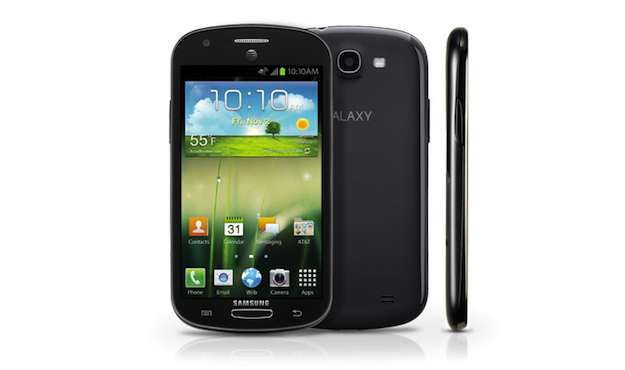
AT&T has provided more details about the Samsung Galaxy Express, set to be released onto the network next week. Aimed at first-time smartphone owners, it has 4G LTE connectivity and a sensible price tag.

Previously announced in September, AT&T has now provided some more details about the Samsung Galaxy Express, it’s latest mid-range Android smartphone. The network is pushing the Galaxy Express as being suitable for first-time smartphone owners, or those who’re planning to upgrade from a basic device.

It’s making it an attractive proposition too, as it has slapped a $100 price tag on the front, provided you scrawl your signature on the bottom of a two-year contract. For that, you’ll get a curvy, Galaxy Ace 2-alike device that will happily connect to AT&T’s 4G LTE network.

The specification, while not quite up to the standard of the current crop of superphones, is still intriguing, particularly the screen. It measures 4.5-inches, a fairly unusual size, and one that’s shared by devices such as the Nokia Lumia 920, the Motorola Atrix HD and the Huawei Honor 2. It’s a Super AMOLED Plus panel too, meaning it’s the same as that seen on the Galaxy S2, and not the often unfairly maligned PenTile display used on the Galaxy S3.

Inside is a 1.5GHz, dual-core processor of currently unknown parentage, which should see the Android 4.0 Ice Cream Sandwich operating system perform well. There’s no information on the amount of RAM, nor any clues on how much internal memory will be found inside the Galaxy Express, although a microSD card slot is present.

A 5-megapixel camera sits on the real panel, and other features include GPS, Bluetooth and a 2,000mAh battery.

Anyone interested in the Galaxy Express will be pleased to know it’s going to be available from AT&T on November 16. It’s also part of an AT&T offer where you’ll get $100 off a second Samsung smartphone when you buy a Galaxy-branded device with a new contract.


Source : digitaltrends[dot]com

Qualcomm's in the money as Snapdragon provides a record year

Qualcomm's in the money as Snapdragon provides a record year

Snappy snaps

With 2012 proving a record-breaking year, Qualcomm's smartphone-powering Snapdragon chips are keeping the company's bank vault nicely stocked with cash.

In its financial year 2012, Qualcomm's revenues were up 28 per cent, its operating income was up 13 per cent, its net income was up 43 per cent and, we hate to sound like a broken record, but its earnings per share were up too.

As a result, the company raked in a net income of $6.11 billion for the year. That's about £3.8 billion or AU$5.9 billion.

Lend us a fiver

It's looking a touch less rosy in the quarter-based results, with income for the final three months of Qualcomm's financial year up only 5 per cent – although, crucially still up.

As tech waves go, Qualcomm is riding a good one with its CEO Dr Paul Jacobs attributing the huge cash harvest to the explosion of wireless data and the smartphone market.

It won't stop there, either, with Dr Jacobs saying that he expects "double-digit revenue growth in fiscal 2013" as a result of a robust Snapdragon and 3G/LTE roadmap. In English? More money coming next year.


Source : techradar[dot]com

The Galaxy S3 is the world’s best selling smartphone, but for how long?

According to the latest research, the Samsung Galaxy S3 has become the world's most popular smartphone, after it outsold the Apple iPhone 4S and the iPhone 5 between July and September 2012.

Research into global smartphone sales for the July to September period of 2012 has revealed that the world’s number one smartphone was the Samsung Galaxy S3, knocking the Apple iPhone 4S into second position.

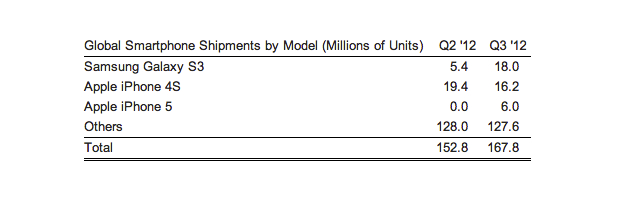
The report comes from research firm Strategy Analytics, and it puts the Galaxy S3 in first place with 18 million devices sold globally, and the iPhone 4S trailing with 16.2 million sold. In third place it’s the iPhone 5 with 6 million sales.

So, its a fanfare for Samsung, a company well on its way to beating Apple in the battle for smartphone supremacy. But is it? Well, as a headline, it is indeed good news for Samsung, but the sales from the third quarter of 2012 tell only a percentage of the story.

Samsung released the Galaxy S3 at the beginning of May 2012, spreading it to as many networks and countries as possible. In the slightly truncated second quarter results, it shifted 5.4 million phones.

But take a look at the iPhone 4S’s performance. The 4S went on sale in October 2011, and still sold 19.4 million in the second quarter, and then 16.2 this quarter. Not bad for a phone that was a fairly unremarkable evolution of the previous model, that has been on sale for, now at least, more than a year.

Strategy Analytics Global Smartphone Sales

These past couple of months have also been filled with anticipation over the iPhone 5, which then arrived at the tail end of September, and it still managed to sell more than the Galaxy S3 did in its opening weeks, and in a shorter time too.

Many potential iPhone 4S buyers decided to wait for the iPhone 5 in the run up to its release, which explains the drop off in 4S sales, and in effect, allowed Samsung to swoop in and grab the “world’s best selling smartphone” crown.

The question is, can it retain its crown in the all-important Christmas period between October and December? Strategy Analytics doesn’t think so, and expects Apple to “soon reclaim the title.”

The Galaxy S3 unquestionably deserves to top the charts, but the figures also highlight the struggle it faces to maintain that position over a longer period of time.


Source : digitaltrends[dot]com

LG Optimus L9 arrives in Europe

LG Optimus L9 arrives in Europe

Put with the Nexus 4 for company, who would buy it?

The LG Optimus L9 has touched down in Germany, where consumers can purchase the smartphone online SIM-free.

Available for €299 (around £240) on Amazon, LG has been slow to roll out the Optimus L9 to Europe, making it available in Asia and the US first.

It's the most powerful handset in the Korean firm's L-Style range, with the disappointing LG Optimus L7, and rather uninspiring Optimus L3 already on sale in Britain, while the Optimus L5 remains pretty anonymous.

Middle of the road

LG lifted the lid of the Optimus L9 at the end of August, revealing its 4.7-inch True IPS display, 1GHz dual-core processor, 1GB of RAM, 5MP camera and Android 4.0 innards.

There's nothing here to get the heart racing, but if LG keep the Optimus L9 at a competitively low price it could turn out to be a decent mid-range phone – we just hope it works better than the L7.

LG may have cannibalised the Optimus L9's sales though; with the Google Nexus 4 boasting far superior specifications and starting at just £239 SIM-free, we're not sure who would plump for the L9.

We have contacted LG to find out if the Optimus L9 will make it across the channel to Britain, and we'll update this article once we hear back.


Source : techradar[dot]com

Super-sized ZTE Windows Phone 8 handset appears online

Super-sized ZTE Windows Phone 8 handset appears online

Would you like fries with that?

ZTE could be readying a huge Windows Phone 8 smartphone, after an employee posted a photo of a previously unseen handset online.

The picture appeared on China's version of Twitter, Weibo, and was posted by ZTE's head of market strategy Lu Qian Hao.

There are two handsets in the image, one white and one black, and according to the message which accompanied the post the phones boast a super-sized 5.9-inch display with a full HD resolution.

ZTE Windows Phone 8 handset

Phablet wars

If genuine this huge ZTE handset will have the likes of the Samsung Galaxy Note 2 and LG Optimus Vu 2 for company at the smartphone-tablet hybrid end of the mobile market.

Something which does raise our suspicious though is that Windows Phone 8 doesn't currently support full HD displays, so unless Microsoft has an update on the way, it's unlikely this ZTE handset will be able to boast such as high resolution screen.

There's no word on a name for this mega smartphone, nor is there any sign of a release date, but previous reports have suggested the Chinese manufacturer will look to launch its first Windows Phone 8 in early 2013 – so watch this (huge) space.


Source : techradar[dot]com

Analysts: 1.2 billion smartphones, tablets to be sold in 2013

Analysts: 1.2 billion smartphones, tablets to be sold in 2013

1.2 billion smart devices is enough for entire population of India

Analysts are predicting that it's wise to be in the smartphone and tablet business right now, with a forecast of 1.2 billion "smart devices" to be sold worldwide in 2013.

This figure is up from the 821 million devices that technology research firm Gartner is predicting for this year.

Crossing that billion-sold mark will be due in part to businesses and IT departments being influenced by their workers' demands.

"BYOD [is] becoming a part of the devices policy," said Gartner Research Vice President Carolina Milanesi in a press release.

"We have seen consumer preferences shaping not only the vendors' landscape but also the way IT departments need to think about devices in the enterprise."

Predictions into 2016

Gartner analysts predict that 70 percent of total devices sold in 2012 will be "smart devices," which is defined as smartphones and tablets.

"In 2016, two-thirds of the mobile workforce will own a smartphone, and 40 percent of the workforce will be mobile," said Milanesi.

Tablets will be the key accelerator to mobility, according to analysts who are meeting in at the Gartner Symposium/ITxpo 2012 in Barcelona this week.

The firm estimates that businesses will purchase 13 million tablets this year and more than triple that number by 2016, reaching 53 million units sold.

"For most businesses smartphones and tablets will not entirely replace PCs," explained Milanesi.

"But the ubiquity of smartphones and the increasing popularity of tablets are changing the way businesses look at their device strategies and the way consumers embrace devices."

The smart money Android smart devices

Google's Android operating system will be the biggest beneficiary of this ever-increasing smart device sales trend.

By 2016, Gartner estimates that the Android OS will account for 56 percent of smartphones sold to businesses in North America and Europe.

That is up from 34 percent in 2012 and virtually no penetration in 2010, says the firm.

"Today the wide range of brands and price points that the Android ecosystem is offering is winning over users," said Milanesi.

"While Apple remains the heartbeat by which the market moves, Google has rapidly become its archrival."

Windows 8 the third wheel as RIM loses ground

Gartner sees Windows 8 as a strong No. 3 tablet OS by 2016, with demand coming from businesses as opposed to consumers.

"Tablets and convertibles will be the way into businesses for Windows 8," predicted the firm.

Windows 8 tablets and ultramobiles in businesses will reach 39 percent in 2016, estimated Gartner.

Milanesi didn't lay out such a rosy forecast for RIM and its line of Blackberry devices.

"As businesses are looking for a multi-device strategy and a rich application portfolio it is clear that RIM has a huge challenge ahead in regaining its key presence in the enterprise."


Source : techradar[dot]com

Analyst: 1.2 billion smartphones, tablets to be sold in 2013

Analyst: 1.2 billion smartphones, tablets to be sold in 2013

1.2 billion smart devices is enough for entire population of India

Analysts are predicting that it's wise to be in the smartphone and tablet business right now, with a forecast of 1.2 billion "smart devices" to be sold worldwide in 2013.

This figure is up from the 821 million devices that technology research firm Gartner is predicting for this year.

Crossing that billion-sold mark will be due in part to businesses and IT departments being influenced by their workers' demands.

"BYOD [is] becoming a part of the devices policy," said Gartner Research Vice President Carolina Milanesi in a press release.

"We have seen consumer preferences shaping not only the vendors' landscape but also the way IT departments need to think about devices in the enterprise."

Smartphone, tablet sales predictions into 2016

Gartner analysts predict that 70 percent of total devices sold in 2012 will be "smart devices," which is defined as smartphones and tablets.

"In 2016, two-thirds of the mobile workforce will own a smartphone, and 40 percent of the workforce will be mobile," said Milanesi.

Tablets will be the key accelerator to mobility, according to the analysts who are meeting in at the the Gartner Symposium/ITxpo 2012 in Barcelona this week.

The firm estimates that businesses will purchase 13 million tablets this year and more than triple that number by 2016, reaching 53 million units sold.

"For most businesses smartphones and tablets will not entirely replace PCs," explained Milanesi.

"But the ubiquity of smartphones and the increasing popularity of tablets are changing the way businesses look at their device strategies and the way consumers embrace devices."

The smart money Android smart devices

Google's Android operating system will be the biggest beneficiary of this ever-increasing smart device sales trend.

By 2016, Gartner estimates that the Android OS will account for 56 percent of smartphones sold to businesses in North America and Europe.

That is up from 34 percent in 2012 and virtually no penetration in 2010, says the firm.

"Today the wide range of brands and price points that the Android ecosystem is offering is winning over users," said Milanesi.

"While Apple remains the heartbeat by which the market moves, Google has rapidly become its archrival."

Windows 8 plays the third wheel, as RIM loses ground

Gartner sees Windows 8 as a strong No. 3 tablet OS by 2016, with demand coming from businesses as opposed to consumers.

"Tablets and convertibles will be the way into businesses for Windows 8," predicted the firm.

Windows 8 tablets and ultramobiles in businesses will reach 39 percent in 2016, estimated Gartner.

Milanesi didn't lay out such a rosy forecast for RIM and its line of Blackberry devices.

"As businesses are looking for a multi-device strategy and a rich application portfolio it is clear that RIM has a huge challenge ahead in regaining its key presence in the enterprise."


Source : techradar[dot]com

Mom uses BlackBerry to write novel – no ‘BlackBerry thumb’ reported

You'd think that writing a book day and night on a BlackBerry smartphone would eventually render your thumbs useless, but a woman from London has done just that, and now her novel is selling on Amazon.

If you were going to write a book, the chances are you’d sit yourself in front of a full-size keyboard connected to a full-size computer screen before you embarked on your full-size project. Not so Brit Georgina Campbell.

She bashed out a 55,600-word book on, of all things, her BlackBerry smartphone. The 41-year-old Londoner said the idea to put thumb to keyboard came about after watching the 2011 sci-fi movie Attack the Block. While daughter Lorra loved it, Georgina thought it was abysmal and so bet Lorra she could write something better. It was then she grabbed her writing tool of choice and started work on her novel.

In an interview with the Daily Mail, Georgina said it took four months to complete the gritty tale of a group of girls growing up in inner-city London, writing it entirely on the phone’s native MemoPad app.

“When I started writing the book I would normally do it after a 12-hour shift at work and it would be a breeze – I loved it and wrote through the night,” she told the Mail. “It was almost like a holiday – I’d just sit down and start typing the book out on my BlackBerry using my two thumbs.”

Georgina said the phone was the ideal writing tool simply because it was with her all the time. “I was writing on the train, on breaks at work, waiting for a bus, having a bath, when I was walking around – anywhere. It completely took over my life – all I thought about morning to night was writing the book.” Four months after tapping out the first word, The Kickdown Girls made it  to Amazon.

Possibly the most remarkable part of the story, however, is that despite her round-the-clock commitment, her thumbs are still fully operational instead of finishing up as mere worn-down stumps; she didn’t even develop BlackBerry thumb, the repetitive strain injury linked to excessive use of the physical keyboard so beloved by BlackBerry users.

Whether Georgina’s work is better than the script of Attack the Block is something for readers to decide, though at the time of writing the publication is languishing at 257,164 in Amazon’s book chart and has no reader reviews.


Source : digitaltrends[dot]com

Comparing the Galaxy Nexus to the Upcoming LG Nexus 4

Nexus

The recently announced LG Nexus 4 is here in just a little over a week. So how does the most recent Nexus smartphone compare with the aging Galaxy Nexus? Is the upgrade massive enough to warrant tossing out the Samsung Nexus device and moving over to the latest and greatest Nexus?

This is a great question, and something we will take a look at by comparing the overall hardware of the Galaxy Nexus next to its younger sibling.

As you read this article, keep in mind that this comparison is just looking at the specs “on paper” and isn’t a direct hands-on comparison of the two phones. We’ll do our best to accurately represent the features and options on both the phones– if we miss anything, just politely add to the comparison through the comments section.

Alright, so let’s jump in!

Size and Weight

The Samsung Galaxy Nexus originally sported a weight of 135g and had overall dimensions of 135.5mm x 67.94 mm x 8.94mm. Did the Nexus 4 rock the boat here or is it sporting a similar size and weight? It’s pretty close, for the most part.

The LG Nexus 4 is a few grams heavier at 139g. As for the dimensions, the Nexus 4 is 133.9 x 68.7 x 9.1mm. The bottom line here is that the phones are quite similar in size and shape, it shouldn’t be much of an adjustment for you if you plan on upgrading to the Nexus 4.

The Nexus Display

While the Samsung Galaxy Nexus had a 4.65-inch 1280 x 720 HD super AMOLED display, the Nexus 4 brings the screen size up to 4.7-inches and has an WXGA IPS Plus display with a resolution of 1280 x 768. While the LG Nexus 4 does have a better display, it’s not really THAT huge of a jump.

Samsung Galaxy Nexus

Processor & Ram

So far what we’ve seen of the Samsung Galaxy Nexus and the LG Nexus 4 paint the picture of a marginal upgrade. The good news is that this isn’t true when it comes to what really matters, things like processing power and RAM.

When the Samsung Galaxy Nexus debuted, its 1.2GHz dual-core OMAP 4460 processor and 384MHz PowerVR SGX540 GPU were rather impressive. The 1GB of RAM was also more than enough to get the job done. Since then, more and more budget devices are moving to dual-core processors and most of the high-end Android smartphones rock quad-core power.

The LG Nexus 4 leaps ahead with an impressive 1.5GHz Qualcomm quad-core Snapdragon S4 Pro processor and an Adreno 320. As for the RAM? This time around the newest Nexus smartphone packs 2GB.

By today’s standards, the Samsung Galaxy Nexus is still quite capable and should run just about every app you throw at it. That being said, the Nexus 4 is a major hardware upgrade when it comes to processing, graphics and RAM.

Storage

Probably one of the biggest complaints for the Samsung Galaxy Nexus was the lack of microSD. The Samsung Galaxy Nexus instead simply had 16GB or 32GB versions that couldn’t expand the memory.

If you were hoping that the Nexus 4 would change all of that— bad news. Not only is there no microSD on the Galaxy Nexus 4, the storage options are simply an 8GB and 16GB version. If you are heavily invested in cloud streaming, 8GB will probably get the job done okay, but it is still a little disappointing that we don’t have larger storage options.

Connectivity

Not a lot of change here. Both devices have expected connectivity options like Bluetooth, NFC, Wi-Fi and more. The only additions are the support for wireless charging and the added SlimPort-HDMI.

Strangely enough, a version of the Galaxy Nexus did support 4G LTE while the Nexus 4 takes away 4G LTE altogether. It’s fastest supported mobile broadband speed is now the HSPA+ 42.

There is still the possibility of 4G LTE variants in the future though.

Battery

On paper, the Samsung Galaxy Nexus has a 1750 mAh battery versus the bigger 2100 mAh battery in the LG Nexus 4. Unfortunately bigger battery doesn’t tell us how much more battery power the LG Nexus 4 actually has— more processing power and graphics probably means need for a better battery to keep up.

Still, I wouldn’t be surprised if they are relatively comparable in actual battery length.

Cameras

The Samsung Galaxy Nexus originally had a 5MP rear cam and a 1.3MP front cam. For those that are hoping for improvements in the camera department, don’t worry — the camera is better this time around, though not by a ton.

The LG Nexus 4 features an 8MP rear cam, though the front cam stays the same at 1.3MP.

LG Nexus 4

Operating System

Both being Nexus devices, you get a vanilla Android experience here. It is worth noting that the Samsung Galaxy Nexus has now managed to update to Android 4.1 Jelly Bean (I believe) in all major markets.

If the latest version of Android is important to you, the Nexus line is well known for keeping up here. The LG Nexus 4 will be the first smartphone to ship with Android 4.2 Jelly Bean which includes several new features such as an improved keyboard, a Photo Sphere camera feature, improved notifications, improved Google Search and Google Now functionality and more.

Summing it up…

While I may have missed a few other crucial areas of comparison, this should give you a pretty good idea of how the LG Nexus 4 stacks up against its older brother.

If you have the Galaxy Nexus, should you rush out and buy the latest version? It depends. If you have the cash to spare and want the improved camera, better graphics/processor and RAM—sure, why not. Honestly though, if cash is rather tight and the Galaxy Nexus still seems to get the job done when it comes to apps and overall speed, you might want to hang on to the Galaxy Nexus a little longer.

Where the Nexus 4 really shines is for those that don’t have a Nexus device at all, or are still rocking the older Samsung Nexus S. Another MAJOR reason to consider a Nexus device is that it is a powerful yet affordable option for those that use a prepaid carrier that is compatible with the upcoming smartphone. The LG Nexus 4 will be available on November 13th in the US, Canada, Germany, UK, Australia, Spain and Germany. The US pricing is set at $299 unlocked for the 8GB version or $349 for the 16GB version.


Source : mobilemag[dot]com

HTC Opera UL could be the first Facebook phone

HTC Opera UL could be the first Facebook phone

Don't get your hopes up just yet though

The HTC Opera UL will be the first official Facebook smartphone, so says a "very reliable source".

According to Pocket-Lint, an unnamed insider spilled the beans on social network's first handset, claiming that it was indeed in development and that we'd already got the first glimpse of it in a benchmark test.

It's claimed the HTC Opera GL is the name for the handset which is being developed specifically for Facebook, although little else is known about it at this time.

Delays

The benchmark result which the informant refers to reveals the Opera UL sports a 1.4GHz processor, 720x1280 HD display and comes running Android 4.1.1 Jelly Bean.

The source did reveal the Opera UL has been subject to delays, it's not clear what the reason is behind this, or indeed how long the handset has been pushed back.

There have been many, many rumours about a potential Facebook phone, none of which have come to fruition, so we're taking this latest news with a heavy dosage of salt.


Source : techradar[dot]com

Samsung sells 3 million Galaxy Note 2 devices while it waits for the competition to catch up,

samsung galaxy note 2 hardware screen

Samsung has announced that it has sold 3 million Galaxy Note 2 tablet/smartphone hybrid devices, despite it only have been on sale since September. That's a lot of sales for a niche product, so where is its competition?

Samsung must be looking at the latest sales figures for the Galaxy Note 2, which it has just made public, shaking its head and then having a good laugh. It has released a device nobody thought they wanted and critics instantly took against, then went on to sell millions of them. So why is it laughing? Because there still isn’t any competition.

The Galaxy Note 2 went on sale during September in Korea, reached the UK on October 1, and has steadily made its way to the US and other regions around the world since. According to Samsung, in 37 days it has racked up more than 3 million sales.

The original Galaxy Note arrived in September 2011, but didn’t reach 1 million sales until the end of December, so the Note 2‘s performance is impressive going, particularly when you take into account the Note 2 is still a niche device.

But is it so niche that it doesn’t need some competition? Who does Samsung think it is? Apple? Has it really produced an initially derided product that in reality, just caught other manufacturers napping?

Rumors and half-releases

It seems so, as viable alternatives to the Note 2 are few and far between, despite the product line having been on sale for more than a year. There’s the LG Optimus Vu, or the LG Intuition if you buy it from Verizon; but in its infinite wisdom, LG hasn’t bothered to give it a wide release, so its sales are unlikely to impress.

HTC’s bizarrely named J Butterfly phone has a 5-inch, 1080p screen, but it’s only available in Japan, while Panasonic has picked up its 5-inch Eluga Power and taken it home, after it failed to gain any traction in the European market. At least these have seen a release, as phones such as the LG Optimus Vu II, the Oppo Find 5, Lenovo’s S880 and the Thomson X-View 2 are all seemingly in some kind of release date limbo.

Huawei and ZTE have woken up and started talking about their own tablet/smartphone hybrid machines. For Huawei, it will be the Ascend D2 and the rumor is it will be equipped with a quad-core chip and a 720p 5-inch display. ZTE’s Nubia Z5 will have the same specification, but will add a 13-megapixel camera too. Neither are confirmed though, and both are likely to do the rounds in China before possibly going international sometime next year.

There are also a few other rumored devices with 5-inch-plus sized screens coming soon. HTC may adapt the J Butterfly for international release — possibly to be named the Droid DNA and launched on the Verizon network — while the Sony C650X, codename Odin, may arrive next year too, along with a 6-inch screen version codename Yuga. Both of these and the Droid DNA are said to have 5-inch, 1080p screens.

All this gives the Galaxy Note 2 an almost entirely open playing field until well into 2013. How many Note 2 handsets will it have gone on to sell before a true alternative finally goes on sale?


Source : digitaltrends[dot]com

Samsung Galaxy Note 2 now transforms into desktop PC

Samsung Galaxy Note 2 now transforms into desktop PC

Ready, steady, dock!

The Samsung Galaxy Note 2 is currently the most powerful smartphone on the market, but would you really want to use it as your desktop PC?

The Galaxy Note 2 Smart Dock lets you connect the phone to a HD monitor, keyboard, mouse and speakers, so you can use the beefy quad-core processor and 2GB of RAM inside to provide you with an all-in-one computing experience.

The dock itself is relatively unassuming, nothing like the Lap Dock you got with the Motorola Atrix, but at $99 (around £60/ AU$95) it's not exactly the cheapest of accessories.

Money, money, money

The price only covers the dock itself so you'll need to provide you own HD monitor as there's no VGA port in play here, as well as an HDMI cable, keyboard and mouse.

While we can't see ourselves using the Smart Dock to replace our laptop for business activities, we can certainly appreciate the advantages when it comes to media playback and sharing – providing an easy way to watch movies stored on the Note 2 on a bigger screen.

The Samsung Galaxy Note 2 Smart Dock only appears to be available in the US at the moment, but we wouldn't be surprised if it made its way to other markets soon.


Source : techradar[dot]com

Huawei teases cheap quad-core Android thrills with the Honor 2

Huawei Honor 2

Huawei has announced the Honor 2 Android smartphone, a quad-core device that could cost between $300 and $370 if it makes it to US shores. Its predecessor did, so there's a good chance it will do too.

Huawei has recently had more headlines dedicated to it allegedly posing a threat to US national security than its cut price, great spec Android smartphones for which it was once best known. With the announcement of the Honor 2, it could turn this around, provided it sees an international release sometime soon.

News of the Honor 2 seems to have originated from Huawei’s Weibo account, where the phone is named the Glory, a name repeated on the Chinese version of the manufacturers own website, where just to confuse matters it also listed as the “Glory Quad-core Love Shared Exclusive Edition.” Now that’s a memorable name for a smartphone.

So why are we calling it the Honor 2? Well, the original Huawei Glory U8860 was renamed the Honor in the USA and other regions (as well as the Mercury if you grabbed it from Cricket, or the Honour if you live in the UK), and Huawei’s CEO has also referred to the phone under this name, when he hinted at its impending release late last week.

Hopefully that’s cleared up any confusion over the name, so on to the most interesting part — the specification. Inside the Honor 2 is a 1.4GHz, quad-core Hass K3V2 processor of Huawei’s own design, plus 2GB of RAM. The screen measures 4.5-inches and has a 1280 x 720 pixel resolution, providing an excellent 326ppi pixel density.

Android 4.0 is its operating system, and there is also an 8-megapixel camera with 1080p video, 8GB of internal memory and a 2230mAh battery that could offer 72 hours of standby. This does make it a little larger than its competitors, as it measures 10.5mm thick and weighs 145 grams. Some may consider this to be a small price to pay for the bigger battery though.

Talking of small prices, there’s confusion over the Honor 2′s possible cost, with Engadget.com saying it will come in at a little over $300 — a bargain if so — while pocketdroid.net says it will be around $370. Whichever turns out to be correct, the Honor 2 will go on sale early next month, and given that the original Glory/Honor made it out of China, there’s a good chance its sequel will do as well.


Source : digitaltrends[dot]com

Samsung Galaxy Q to Feature Foldable Display, Debuts in 2013?

The idea of foldable and flexible smartphone screen from Samsung is nothing new. We’ve been hearing rumors about the technology for a while, though we’ve yet to see an actual product utilizing the technology. This might be changing beginning next year with the introduction of the Samsung GT-B9150.

So what is the GT-B9150? It is a 5.3-inch sAMOLED HD Dual display device that runs Android and will likely officially be called the “Samsung Galaxy Q”. The rumor mill suggest it will run on an EXYNOS 5250 processor and will have 2GB of RAM. Other specs are believed to be an 8MP back cam, a 2MP front cam, NFC, Wi-Fi, Bluetooth and a 3500mAh battery.

If this proves to be true, this could be huge news. We’ve heard about flexible foldable displays for a long time but we have to realize the dream, yet. What’s the big deal? Basically you get a smartphone when you need it and a tablet when you need more screen real-estate.

Would you consider a flexible phone or not? Do you think it will come out in early 2013 or will yet another delay keep the technology out of public hands?


Source : mobilemag[dot]com

It's free
index