Halo 4: Forward Unto Dawn’s producers talk about what it took to bring Master Chief to life

halo 4 forward unto dawn

We got the chance to talk to the Executive Producers of Halo 4: Forward Unto Dawn, Lydia Antonini and Josh Feldman, about the fans' reception to the series, the challenges with the production of this high-budget web series, and the future of Halo 4: Forward Unto Dawn.

With three episodes of the widely anticipated Halo 4: Forward Unto Dawn web series released and the fourth set to debut this Friday, Digital Trends got a chance to talk to the show’s executive producers, Lydia Antonini and Josh Feldman about the making of it, how fans have been responding so far, and where the future lies for the series. With the help of Machinima, 343 Industries, and others, the first episode has rocketed to over five million views since the October 5 premiere, and leads up to the launch of the Halo 4 game for Xbox on November 6.

Set during the first days of the Covenant’s attack on humanity, the series follows a group of UNSC cadets training at a base on a remote human colony, unaware that they will soon be at war. Principle among the cadets is Thomas Lasky (played by Australian actor Tom Green), who is destined to become a leader in the fight against the Covenant, as well as an important figure aboard the UNSC Infinity, a ship that will play a crucial role in Halo 4. When the Covenant strikes, Lasky, along with several others including cadet Chyler Silva (The Chronicle of Narnia series’ Anna Popplewell) and JJ Chen (Osric Chau), find inspiration in the Spartan, John-117, who will soon be known more famously as Master Chief (played by Twilight‘s Daniel Cudmore). 

What’s the setting for the series and will we recognize some of the multiplayer maps seen in the previous Halo games?

Josh: The timeframe of the series goes back to the introduction of the human-Covenant conflict; we’re talking about an insight into a timeframe that to date hasn’t been explored. So we’re introducing some areas. We’re not revisiting areas that multiplayer gamers have previously seen.

Lydia: If you watched episode one, there’s the opening sequence with Master Chief and Cortana on Forward Unto Dawn, and that is a sequence bridge between [Halo 3] and [Halo 4]. The opening sequence picks up where they are and moves us along to the beginning of [Halo 4], and helps bring together the most sophisticated story line that we’re weaving with Thomas Laskey toward [Halo 4]. Forward Unto Dawn is a ship that preexisted.

Forward unto Dawn's Tom Green and Anna Popplewell (center)

What were the production challenges?

Lydia: Forward Unto Dawn couldn’t feel like a separate interpretation of Halo. This needed to be a complete, and parcel with the mythology. This was a collaboration with 343 Industries in the truest sense. So the story was broken with us and our writers, and 343, and they were completely involved in every iteration of the script. The biggest challenge is that there hasn’t been this length of live action. Fans have high expectations when it comes to the visual quality of Halo so we knew we had to have a stellar visual effects team that had to work quickly in order to have this launch before the release of Halo 4. So that challenge was aided by the immense design work that had existed by the virtue of the Halo franchise being around for 10 years. Each of the kinds of challenges is important. We had to respond to them by making sure we hired the best people for the job.

Can you divulge Microsoft’s budget for the production of Halo 4: Forward Unto Dawn?

Lydia: We can’t say, but you can tell that Microsoft gave us the resources to make something very special. They were not cheap at all about making sure that we can do everything that the brand deserves. But with that said we took every dollar and still stretched it much further than anybody thought it could go. So for example the long-form of all of the episodes will be available on Xbox Live on November 6, and plays as a movie, but I think you’d be astounded with what we pulled off with the money.

Was there a difference in the way you approached the development of the series, compared to a full movie for example?

Lydia: Because Halo is such an important franchise to many people and it has such an active fan base, we had to be extremely NDA. We had to be very, very secretive. I’ve heard stories about when they’re shooting an Apple commercial; they’ll actually have two different commercials going on. I personally never had to be that secretive of anything in a long time until this.

Josh: Microsoft had ambitious distribution plans. The first being that it’s going to be distributed as five episodes, and then it’s going to be available as part of the limited edition of the game as a long form piece, where it plays essentially in a feature style. And it’s going to be on Blu-ray and DVD.

Does the storyline follow a younger group of characters with a new target demographic in mind?

Josh: Master Chief is definitely in Forward Unto Dawn and he’ll do all of the things that fans expect of Master Chief, and that was an area that we paid a lot of attention to in building the suit with legacy effects and having a great actor who’s also a really skilled stunt performer to be able to do all of the things Master Chief could.

In terms of the series focusing on younger cadets, I think it adds an element that’s very relatable. Yes, our main characters may be of a similar age group to some of the fans of Halo. I think it’s an opportunity to look at characters that are on the verge of adulthood, when their identity is being forced. And to have a character like Thomas Laskey appear in Halo 4, it’s an opportunity to see the seminal moments in his life that would make the audience and players of Halo 4 that much more interested because they know this back story. This just happens to be that time, and that age that the events take place.

Halo 4: Forward Unto Dawn Master Chief

How have fans received the series so far?

Lydia: Overwhelmingly positive. It’s exciting as producers to be able to put something out into the world directly to the consumers and to have them comment and write and view and talk back to you in real-time, which is what YouTube allows. I’ve been reading people’s comments and they’re so supportive. They’ve been picking up on the little details that you knit into a story and that make you ask, “Gosh will anyone notice those?” But they noticed them, they loved it, and they appreciated it. They expect the best, and they really pay attention.

Josh: We were hired by 343 and followed their marching orders, and we know where the buck stops, and that’s with the fans. That was constantly in the back of our minds.

After your experience with Forward Unto Dawn and based on your background in traditional film and TV, what’re your feelings on original programming and would you distribute future content as a TV show or as a web series?

Lydia: Personally I’d like to experiment with doing both simultaneously. I still watch television and I watch shows digitally. They’re both great viewing experiences and they both offer a different amount of interaction, so it would be really fun to play at the intersection of the two to give people a really full 360 degree experience of being able to watch and engaged with the show on their own terms with the environment they choose.

Do you think a web series at the caliber of Forward Unto Dawn can replace a consumer’s TV viewing habit?

Josh: I think in some way there are some people who are going to look at this and be motivated to become a cord cutter, or any of the terms used for people who like access content via digital means, but that’s not a bad thing. But I personally think it speaks more to giving consumers choices with how they access the shows that they love, and each of the different formats offer a different viewing experience. When you watch something digitally or something online, you’re immediately thrust into a forum to debate, talk, compare, argue, critique, and praise alongside fellow members of the community. When you watch something in other formats, you trade some of that interactivity for a greater emphasis on the presentation quality. At a point there’s a convergence to all those things. Until we hit that convergence each venue has attributes that make it appealing to different people.

343′s Kiki Wolfkill mentioned in an interview that Forward Unto Dawn is supposed to make Halo accessible to its users. Was he hinting at changes to Halo 4’s game play?

Halo 4 campaign

Lydia: A lot of that detail is really under wraps, but one of the goals that we agreed upon when it was just Josh and I working on the project with 343 is that we wanted a show that could excite the core fan base that plays the games and gets excited that could also evolve and be relevant to the casual Halo player, who doesn’t maybe know all the granular details. There’s a third audience of people, those who don’t know Halo at all but who should enjoy the story for what it is.

And is that why you took the character development approach to the series?

Josh: Absolutely. [We had the] opportunity to convey more of the life-changing events of a character, and the people who see this and never played Halo before will have a really cool perspective. We’ve checked out the game and the people at 343 have outdone themselves, and so it’s a real thrill to be a part of something that adds a little insight into one of the characters that’s going to be featured in Halo 4.

How about the Covenant’s appearance? We see a glimpse of them in episode three, but what will they actually look like?

Forward unto Dawn EliteJosh: Whatever you see, we knew the onus was on us to have them exist in the real world and be completely believable.

Is there any validity to the Halo film rumors, and what’s next for the Halo franchise as a web series?

Lydia: We certainly can’t speak for what their plans may be. They haven’t yet indicated to us if we’ll move forward, but my personal feeling is that the fans have been so excited and interested in this particular project… I’d be surprised if there weren’t more things happening in the near future with Halo live action.

Josh: If there’s one thing that history has shown is that 343 is not going to stop innovating and stop finding ways to build out the Halo franchise. So if Lydia and I – we are fans – just get to experience new avenues that Halo goes down as fans that would be great. If we’re lucky enough to be a part of them, we’d be thrilled. This was an amazing year to be very temporary custodians of live action Halo, and there’s just so much there that they’d be crazy enough not to explore.

Are there any games you’d like to translate into a Web series?

Lydia: Red Dead Redemption and Diablo.

Josh: Halo 5.

Lydia: That goes without saying, we’d love to continue working on Halo.

The episodes will be released in full on Xbox Live November 6 as a long-form 90 minute film, and sold on Blu-ray on December 5. Halo 4 will be released as an Xbox 360 exclusive on November 6. You can check out the first episode of the series below:


Source : digitaltrends[dot]com

Lawsuit against Sony over the great PlayStation Network hack of 2011 dismissed

A year and a half after hackers breached Sony security gaining access to user information for 69 million PlayStation Network users, a class action lawsuit against the company has been dismissed by a California judge.

It was only 18 months ago that Sony’s PlayStation Network was hacked, forcing the company to take down its online gaming network and digital retail services for a significant chunk of the spring in 2011. 69 million PSN users’ account information, including credit card numbers, was stolen in the hack. Sony first admitted to the intrusion on Apr. 20, 2011. On Apr. 27, the first federal class action lawsuit was filed against the company. While Sony has apologized repeatedly for the hack, offering users identity theft protection to affected users as well as free downloadable games as compensation, its been up in the air whether the company would have to offer monetary compensation. According to US District Judge Anthony Battaglia, Sony is in the clear.

The class action lawsuit claimed that Sony of negligence, not equipping the PlayStation network with the appropriate security to prevent the hack that brought the network down for so long. It also claimed that Sony violated a number of California consumer protections, the state where the lawsuit was filed.

Judge Battaglia dismissed the lawsuit on Friday after Sony moved to have it thrown out. Battaglia said that Sony didn’t violate any consumer protections because “none of the named plaintiffs subscribed to premium PSN services, and thus received the PSN services free of cost.” Had any PlayStation Plus subscribers joined the suit, maybe Battaglia wouldn’t have acquiesced to Sony’s demands. Than again, he also found that the Sony Privacy Policy signed by all PSN users included at the time “clear admonitory language that Sony’s security was not ‘perfect’” and as a result “no reasonable consumer could have been deceived.”

Sony’s not wholly in the clear just yet, though, since the class does have the option to amend its claims, specifically in regards to Sony violating consumer protection laws.

Back when the lawsuit was originally filed, Rothken Law Firm co-counsel J.R. Parker wrote, “Sony’s breach of its customers’ trust is staggering. Sony promised its customers that their information would be kept private. One would think that a large multinational corporation like Sony has strong protective measures in place to prevent the unauthorized disclosure of personal information, including credit card information. Apparently Sony doesn’t.”

Sony did pay in spades for the hack. Estimates at the time predicted that the hack would cost Sony $171 million in lost revenue, a significant blow following losses from the March 2011 tsunami in Japan as well as declining television sales. That figure no doubt grew as Sony began spending heavily on marketing to rehabilitate its image with consumers.


Source : digitaltrends[dot]com

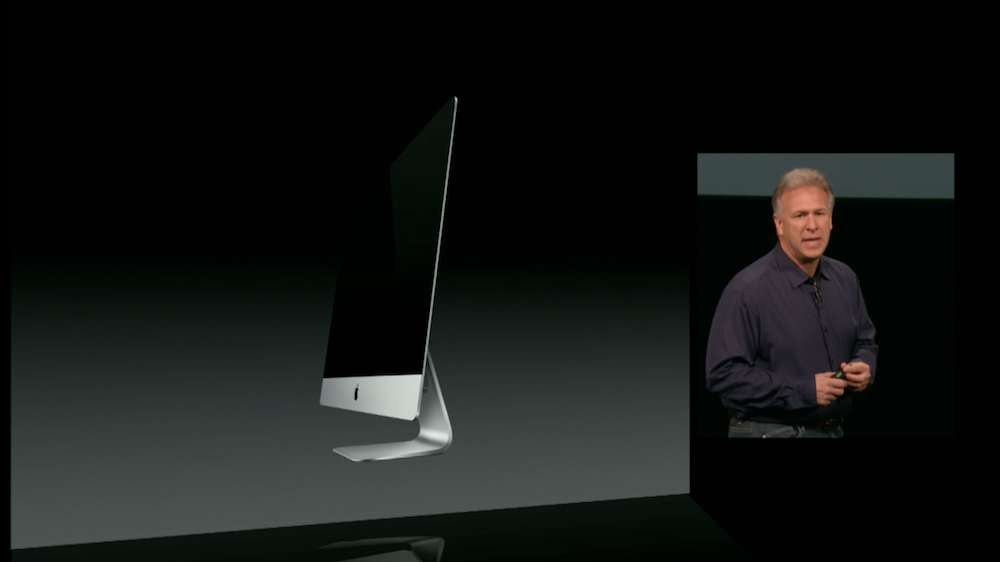
Apple unveils new super-svelte 21.5-inch and 27-inch iMac models

Apple has announced a new version of the iMac with a completely revamped design that ditches the optical drive, but has an edge that's only 5mm thick.

Apple has announced a new stunningly, slim iMac in two sizes – one with a 27-inch display and one with a 21.5-inch display.

The new iMac is 80 percent thinner than the last model with a 5mm edge. Apparently this incredibly trim form factor is thanks to something called “friction stir welding.” The display comes in two sizes: The 27-inch model has a 2560 x 1440 pixel resolution, and the 21.5-inch model has a 1920 x 1080 pixel resolution.  There’s a 178-degree viewing angle and over 300 nits of brightness (that’s really bright). It’s also fully laminated so it’s less reflective. It’s not a Retina display, but it looks good.

This svelte all-in-one is sporting a built-in FaceTime HD camera (720p), dual microphones, and left and right speakers. The specs make it a tempting proposition. The 21.5-inch model comes with a 2.7GHz quad-core Core i5 with 8GB of RAM, a GeForce GTX 640M, and a 1TB HDD for $1,300. The 27-inch model has a 2.9GHz quad-core Core i5 with 8GB of RAM, a GeForce GTX 660M, and a 1TB HDD for $1,800.

There’s a 128GB of flash storage and 1TB or 3TB of HDD storage in the form of an Apple Fusion Drive. You get the speed benefits of SSD and bags of space for file storage in this hybrid drive. Core apps and the OS remain on the SSD for fast launching and documents and files will go on the HDD. It can even switch your most used apps on to the SSD to maximize speed and performance.

There are also 4 USB 3.0 ports, a headphone port, SD card slot, Gigabit Ethernet port, and two Thunderbolt ports. Naturally, it comes with a wireless keyboard and mouse. It is also energy efficient and Apple claims it uses 50 percent less power than its predecessor when idling.

It’s been a while since Apple updated the iMac line. The iMac is the best-selling desktop model in the US, according to Apple. There have now been seven generations of iMac. The last one came out in May 2011 so this new version will be a welcome release for many.

The smaller iMac ships in November, the larger model will start shipping in December.


Source : digitaltrends[dot]com

Microsoft: Smartphone-style contracts will be the Xbox 720′s bread and butter

xbox 720

In discussing the expansion of the Xbox brand, Microsoft explains that future consoles like the oft-rumored Xbox 720 will be sold at a low price alongside subscription contracts just like the average smartphone.

A new Xbox won’t be the only key to reigniting Microsoft’s stagnating game console business. According to the Windows 8 company, the mobile market will also redefine its living room entertainment business. How? Pricing.

The video game business is changing at speed. Video game retail sales have plummeted year-on-year over the course of 2012. The decline in disc-based game sales is reflective of an increasingly digital market; people are still spending on video games, they’re just downloading them in greater numbers and publishers typically don’t share digital sales data. The decline in devoted gaming machines is the real concern hidden in those poor retail numbers. Microsoft in particular is feeling the heat, with Xbox 360 sales in the last quarter falling 29 percent year-on-year. A brand new console might not reignite Microsoft’s game console business though. All devoted gaming machines are feeling squeezed: The Nintendo 3DS portable’s sales fell 18 percent in September. How do you fix this business?

By subsidizing sales with subscriptions, just like smartphones. Rather than charge $400 or $500 for a new game console upfront, Microsoft plans to sell the Xbox 720 at a low price with an accompanying subscription.

In a discussion with the Wall Street Journal, Microsoft interactive general manager for marketing Matt Barlow said that subscription programs will be the core of future Xbox releases. “This type of program is pivotal to our business,” said Barlow.

Microsoft began testing the subscription market back in May when it released a $99 Xbox 360 that through its chain of Microsoft Stores. The console is cheap, but it comes with a mandatory two-year contract requiring monthly payments of $14.99. That includes Xbox Live Gold, but at $180 per year, the device and service end up costing significantly more than if they were purchased individually at flat rates. Following that test, Microsoft began offering the same package at Best Buy, Toys ‘R’ Us, and GameStop.

Since Microsoft only sold 1.7 million Xbox 360s over the period when the program first went into effect, it clearly didn’t help the aging console. It didn’t need to though. All it needed to prove was that the model was viable for Xbox going forward into the next generation.

The question now: Who will be controlling and collecting that subscription fee? Will it be Microsoft or cable companies like Time Warner and Comcast as a number of industry analysts like Morgan Pachter suspect?


Source : digitaltrends[dot]com

Microsoft Windows RT vs. Windows 8: What’s the difference?

On Thursday, Oct. 26, Microsoft is releasing its Windows 8 RT Surface tablet, but what's the difference between Windows 8 RT and Windows 8 Pro, and what do you need to know before buying a Windows 8 tablet?

Microsoft Surface RT tablets are set to hit shelves this week. The tablet is beautifully designed and competitively priced to go head-to-head with the iPad, Kindle Fire HD, and the legions of Android tablets currently on the market. But buyer beware: Microsoft and other Windows partners also plan to release Windows 8 Pro tablets that run the full version of Windows 8. To the untrained eye of a consumer looking to buy a new tablet, the differences between the two types of devices may be a bit confusing. We break down the difference between Windows RT and Windows 8 Pro tablets to help you avoid buyer’s remorse. Let’s take a deeper look at the two tablets to help you choose the right one for your needs.

Processor

When Windows RT was announced, it was originally called “Windows on ARM,” denoting the type of processor it uses. In short, the ARM processor enables RT tablets to be cheaper and use less power when running — which means a longer battery life for your tablet. Microsoft touts 8 to 13 hours of battery life for its Surface RT tablet. The Windows 8 Pro tablets will have Intel or AMD processors that are more powerful and can run more applications, but will be more expensive than an RT tablet with just an ARM processor. The battery life of Pro devices also won’t be as good as RT devices, with an estimate of 6 to 8 hours of battery life.

Software and apps

Microsoft claims that both RT and Pro devices are extensions of the PC, but to make things less muddy, RT is the “tablet OS” that only runs touch-friendly mobile apps available through the new Windows Store. This means that an RT tablet will only be able to use apps downloaded from the Windows Store, in which there are currently about 5,000 apps (90 percent of which are compatible with RT). RT users won’t be able to download any third-party apps from the Web, which currently includes popular apps such as Facebook and Spotify. There will be developers that only create apps for RT, and there will be some developers that will also make an RT version of their desktop applications so people with RT devices can use a streamlined mobile app version instead of the full-blown software application.

Microsoft will offer a mobile version of its popular Microsoft Office suite that includes Word, Excel, PowerPoint, and OneNote for its RT tablets, which will give those who choose an RT tablet the ability to do many (but not all) of the operations they’ve come accustomed to on their desktop or laptop running the full software. 

Pro tablets will run the full desktop version of Windows 8 (32 and 64 bit), so consumers can use all of the RT apps, plus any of the software they currently have on previous versions of Windows all the way back to XP. Windows 8 Pro will allow users to download any third-party app, as well as anything from the Windows Store. 

Price

If you’re looking for a price-point comparable to that of the third-generation iPad, Microsoft Surface RT will be $499 with 32GB of storage without a Touch Cover or Type Cover. No word on how Microsoft will price the Surface Pro when it arrives in approximately three months, but Windows partners who have thumbed their noses at Microsoft and will compete with Win 8 Pro tablets of their own (in all sorts of shapes, fashions, and forms) are starting around $800, which puts Pro tablets directly in competition with traditional laptops. Is this the real start of the post-PC era?

Windows RT or Windows 8 Pro?

Since Apple redefined the tablet category three years ago, people have primarily used tablets as media consumption devices — with a smidge of productivity thrown in. Tablet screens are larger than smartphones (with the exception of some Samsung mobile devices), so doing things like Internet browsing, shopping, reading, and viewing videos and movies is ideal on a tablet. There are some pretty powerful apps out there that will help you get some work done and even create content, but a tablet hasn’t come along that has made us rethink the idea of a tablet being more than a consumption device… yet. So for those people who use tablets just as a means to break away from the daily grind, a less-expensive Windows RT tablet with strong mobile roots will be the best bet for their needs.

With all the power that current mobile devices are packing, there appears to be an evolution on the horizon, where a desktop or laptop may not be the only way to get real work done. Consumers want speed and power, but in a lightweight and compact form factor. A tablet with all the capabilities of a laptop may just be what people are referring to when they mention the post-PC era. For those who are looking forward to that do-it-all, all-in-one device that’s a workhorse at the office — but still has the convenience of consumption device — a Windows 8 Pro tablet capable of handling all of what Windows 8 has to offer is the obvious choice.

Whichever side you’re on, it looks like Microsoft and its device partners have you covered. Remember, you do have a choice if you decide to purchase a tablet powered by Windows, and you may just have to calmly convince the retail associate, who is determined to sell you an extended warranty plan, of that choice.


Source : digitaltrends[dot]com

It's free
index