Judge rejects Fox's request for injunction against Dish's Hopper DVR

Earlier this year Fox Broadcasting filed a lawsuit against Dish Network alleging the satellite television provider’s Auto Hop feature on their Hopper DVR was guilty of copyright infringement and breach of contract. The network asked for an injunction to disable the feature that allows customers to skip commercials in certain scenarios simply by pressing a button.

As The Verge points out, Auto Hop allows viewers to watch recorded primetime content commercial-free after 1 a.m. the following day. Fox says this constitutes copyright infringement and breach of contract because they are making illegal copies of their programming. Dish believes the Auto Hop feature doesn’t violate copyright because it doesn’t alter the broadcast’s signal.

Furthermore, Fox and several others say the technology could ultimately destroy an industry that relies on advertising dollars earned through selling commercial spots. This money is typically used to help pay for producing some of your favorite network shows.

Judge Dolly Gee for the US District Court for California’s Central District has rejected the request for injunction but did determine that the service breaches contract and constitutes copyright infringement. The severity of those two rulings is still unknown at this hour as the case file is still sealed.

Fox has confirmed they plan to appeal the rejected injunction but was grateful on the other two findings. General Counsel Stanton Dodge released a statement saying Dish was gratified that the court sided with consumer choice and control by rejecting Fox’s efforts to deny customers access to the feature.


Source : techspot[dot]com

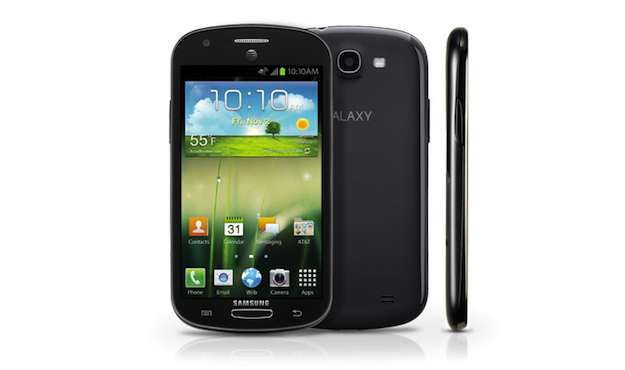
Samsung Galaxy Express steams into your local AT&T store, where it’s yours for $100

Samsung Galaxy Express

AT&T has provided more details about the Samsung Galaxy Express, set to be released onto the network next week. Aimed at first-time smartphone owners, it has 4G LTE connectivity and a sensible price tag.

Previously announced in September, AT&T has now provided some more details about the Samsung Galaxy Express, it’s latest mid-range Android smartphone. The network is pushing the Galaxy Express as being suitable for first-time smartphone owners, or those who’re planning to upgrade from a basic device.

It’s making it an attractive proposition too, as it has slapped a $100 price tag on the front, provided you scrawl your signature on the bottom of a two-year contract. For that, you’ll get a curvy, Galaxy Ace 2-alike device that will happily connect to AT&T’s 4G LTE network.

The specification, while not quite up to the standard of the current crop of superphones, is still intriguing, particularly the screen. It measures 4.5-inches, a fairly unusual size, and one that’s shared by devices such as the Nokia Lumia 920, the Motorola Atrix HD and the Huawei Honor 2. It’s a Super AMOLED Plus panel too, meaning it’s the same as that seen on the Galaxy S2, and not the often unfairly maligned PenTile display used on the Galaxy S3.

Inside is a 1.5GHz, dual-core processor of currently unknown parentage, which should see the Android 4.0 Ice Cream Sandwich operating system perform well. There’s no information on the amount of RAM, nor any clues on how much internal memory will be found inside the Galaxy Express, although a microSD card slot is present.

A 5-megapixel camera sits on the real panel, and other features include GPS, Bluetooth and a 2,000mAh battery.

Anyone interested in the Galaxy Express will be pleased to know it’s going to be available from AT&T on November 16. It’s also part of an AT&T offer where you’ll get $100 off a second Samsung smartphone when you buy a Galaxy-branded device with a new contract.


Source : digitaltrends[dot]com

Running a country? There’s an app for that

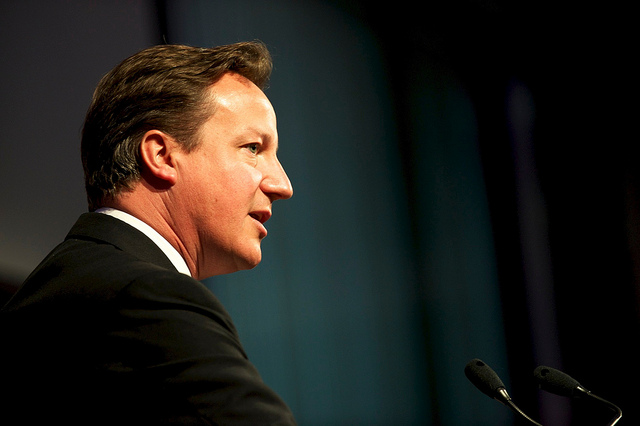
David Cameron app

Civl Servant developers in the U.K. have created a Web app that incorporates government data with trending topics from around the Internet and social media to help elected leaders make better decisions.

Believe it or not, governing a nation is tough work. There’s special interests to consider, tax plans to wrestle, budgets to contemplate, wars to run, opponents to blackmail. It’s almost too much for the human mind to handle. Or, in the case of British Prime Minister David Cameron, it is too much to handle. Which is why he did what any computer programmer would do when faced with a pesky problem: He got a computer to do the work for him.

The BBC reports that Cameron has begun testing a mobile Web app “to aid in decision-making and day-to-day government affairs.” The app, dubbed simply “Number 10 Dashboard,” was developed by British civil servants in the “Technology in Business Fast Stream” program. According to the app’s developers, Number 10 was designed to give government leaders “an at-a-glance overview of everything that’s happening in government and elsewhere.”

“With a few taps or swipes of his fingers, [Cameron] can see very quickly what important new information has come to light, how certain government services are performing, and a selection of relevant and important news reports,” according to those involved with the project.

According to the BBC, Number 10 will also keep its high-powered users informed about trending topics around the Web, and on social media outlets in order stay on top of events that might require government action, like “markets crash” or “bomb threat.”

Alice Newton, one of Number 10′s developers, says that Cameron likes the app, which he uses on his iPad, so much that he plans to give U.S. President Barack Obama a demo at the 39th annual G8 summit, which will take place in the U.K. next year.

“He in particular liked the statistical side, where we could give him quotable facts about what was going on,” said Newton. “He found it useful to have a hard evidence base.

“He liked it so much, he was looking forward to showing it to President Obama at the G8 summit.”

Chances are, Obama will be receptive to the app. His administration has been one of the most technology-focused in U.S. history, with initiatives concerning everything from increasing access to high-speed Internet to cyberwarfare and robotics.

Unfortunately, there’s no indication that the rest of us will have a chance to peep Number 10 anytime soon. But we imagine it working something like Apple’s Siri, but the answers take 20 times longer to appear thanks to stifling bureaucracy.

Image via DFID/Flickr


Source : digitaltrends[dot]com

iOS 7: 12 things we want to see

iOS 7: 12 things we want to see

What will Apple introduce in iOS 7?

The latest major update for Apple's mobile devices, the iPad, iPhone and iPod touch, was mostly hit, but with a Maps-shaped miss.

Lots of people were rightly angry about Apple ditching Google data, but beyond that mis-step there were things to like: a more useful Siri (App launching plus the recognition that a world exists outside of the USA), shared Photo Streams, handy Phone app controls such as 'send to voicemail', and major improvements to Mail, Safari, accessibility and the Camera app.

But regardless of what Apple achieves, it's never really enough. As soon as you've sat there playing with the latest iOS, ideas pop into your head regarding what you'd like to see next. This article explores a dozen of the features we're clamouring to see in iOS 7. (And by 'clamouring', we of course mean 'asking really nicely'. C'mon, Mr Cook - pretty please?)

1. Hide Apple apps

Pretty much everyone we know with an Apple device has a folder entitled 'Apple'. This isn't filled with must-have apps from the geniuses at Cupertino, but all the junk Apple installs that you can't get rid off. To be fair, what each individual considers junk is different, and these apps—Compass, Stocks, Voice Memos, Passbook, and so on—have their fans; but is it too much to ask for a switch in Settings that will hide those we don't use?

Hide Apple apps

2. Better app management

Change for change's sake is rarely a good thing. Recognition is key to satisfying experiences with technology. That's why we're not yelling at Apple to change how iOS home screens work. What we would like to see is improvements to app management: more screens; by default saving app data on delete; and an alphabetical list of installed apps, perhaps accessible from Spotlight.

3. Change app defaults

We're pretty certain this request would be met with wide-eyes from Apple CEO Tim Cook, swiftly followed by a full twenty minutes of belly laughing, but we want the ability to use non-default apps for important things like email and calendaring. Apple's own apps would remain the defaults, but you should also be able to pick your own in Settings.

Want a browser other than Safari as your default? Maybe in iOS 7

4. Provide a guest account

It's extremely unlikely that Apple's ever going to enable multiple user accounts on iOS devices—they are, after all, designed as extremely personal computers. What is perhaps more realistic is some kind of guest account you could switch to when handing your device over to someone for a short while; something similar already exists on the Mac in OS X.

5. Change Siri's voice

OS X is blessed with dozens of high-quality voices that witter away to you in various dulcet tones. By contrast, Siri is Siri. In the US, you get a slightly robotic woman; in the UK, Siri's that bloke who did The Weakest Link for a decade. It'd be great if you could choose the voice your device uses to speak. (Possible exception: Yoda voice.)

6. Provide App Store demos

Apps and games might be cheap, but that doesn't figure cheapskates into the equation. Too often, people are unwilling to risk 69p on the latest release, forcing devs into irritating freemium models or making them clutter up the App Store with 'lite' versions of their output. Apple should just allow demos: 24 hours from first launch and then you buy or the app won't run. Boom.

7. Power up 'Do Not Disturb'

Fed up of getting woken up in the middle of the night by the marketing efforts of [redacted, but quite possibly a well-known mobile network] or Game Center fanfares? Do Not Disturb is a great feature that enables you to time when your phone will quit bugging you. But you can define only a single schedule, and we want to see alternative options for weekends.

Do Not Disturb: a great start, but it needs separate settings for weekends

8. Make locking location-aware

Locking is a great thing on iOS devices, making it at least a little harder for some scallywag to get at your data if they pinch your shiny Apple joy. But it could be more intelligent, locking on a location-aware basis, and not when you're, say, happily sitting at home on the sofa.

9. Improve the lock screen

There's something to be said for Apple's minimalism regarding the iOS lock screen, and it's mostly that it's too minimal. We're not sure we want to see Android-style widgets sprayed everywhere, but a little more functionality wouldn't go amiss. For example, artwork from a currently playing song is displayed on the lock screen, but there are no controls for pausing or skipping to the next track, until you double-press Home, which isn't hugely discoverable. And beyond notifications, nothing else shows up there at all.

The lock screen, showing currently playing audio which we can't pause

10 Cut all iTunes ties

In recent years, Apple's made great leaps away from iTunes, and you can technically get away with never using the monstrous jukebox. However, there's still no way to easily get your existing music collection nor your photographs on to your device, and there should be. (Alas, with Apple wanting to push iTunes Match and the iTunes Store, there almost certainly never will be for the first of those.)

11. Make more icons dynamic

We're hesitant at arguing Apple's home screen icons should be more like Windows 8 tiles, but there's something to be said for dynamic updates when such things work well. With iOS, you get update badges and a live calendar. It'd be nice at the least if Apple made its own Clock and Weather icons dynamic.

The calendar shows the date, but why can't other icons be this useful?

12. Enable cross-platform installs

On a device, you now often see iOS-style banners on websites that when tapped take you right to the equivalent App Store app. But if you're browsing elsewhere, you have to email yourself a reminder and then install later. How good would it be if you were surfing on your PC, saw a great app and could install it across your devices without going near them, nor even to iTunes?


Source : techradar[dot]com

Dead Space 3 preview: A hope for horror

dead space 3

Electronic Arts offers up a brief sample of 2013's Dead Space 3, and while the presence of another player and overly familiar combat threatens to deflate the series, a hallucinatory twist signals potential for new scares.

Dead Space was the last great hope for horror video games when it came out four years ago. Can Dead Space 3 do the same thing in 2012? The first game faced an uphill battle, and it was hamstrung by 2008 being the year that the “survival horror” genre died. After ten plus years of the Resident Evil series and its many descendants and imitators that tried to scare you by limiting supplies and skills while surrounding you with monsters, ghosts, and demons, big game publishers decided that what people really wanted was balls to the wall action. Add in a bit of atmosphere and the odd moment where something jumped out at you, and a new survival horror genre seemed destined to take over. Just look at that year’s line up: Condemned 2: Bloodshot from Sega dropped the taut psychological fear of the first in favor of gore, Silent Hill: Homecoming traded atmosphere and the surreal for slick melee combat, and Atari’s Alone in the Dark ended up an unplayable mess after attempting to include action movie tropes like driving.

For fans of horror it was a rough time, but the action-ifying of fright wasn’t all bad news: EA and Visceral Games’ Dead Space turned out to be excellent. Even through Dead Space’s then-silent protagonist Isaac Clarke could slice and dice the mutated freaks surrounding him with a wealth of guns and construction tools, the game was scary as hell. It was also a success with gamers, and spawned several cross-media projects, including animated movies, comics, and more. 

Dead Space had two things going for it: Isolation and patience. It locked you in the dark bowels of a broken spaceship (or right out in space) and let you wait for something bad to happen all on your lonesome. When the baddies showed up you were ready for them, but the waiting, as Tom Petty says, was the hardest part. 2011’s Dead Space 2 ruined that magic formula, bombarding Isaac with a constant stream of enemies in a forgettable space city. There were a few moments of awe, but the atmosphere was more focused on action than survival. That game had no patience, and unfortunately Dead Space 3 is doing away with isolation altogether.

As touted by Electronic Arts at E3 2012, Dead Space 3 is now a co-op shooter. Sergeant John Carver joins Isaac on the planet frozen planet of Tau Volantis, where the two have to fight new hordes of the pointy-limbed Necromorph monstrosities. Continuing the story from Dead Space 2, Issac and Ellie meet up with Carver and follow a trail to what may be the source of the Markers responsible for transforming people into the Necromorphs. The group discover a ruined planetcracker on the icy surface, similar to the USG Ishimura from the original game. 

The differences between Isaac and Carver are minimal, both cosmetically and functionally. In the level demoed by EA at a recent event, the game looked just like what it was: Co-operative Dead Space. Both players wandered through grimy, dim hallways – the icy surface of Tau Volantis didn’t make much of an appearance – shooting up bad guys in tandem. If you start to die, you call the other player over to help you up like in every third-person shooter since Gears of War. It’s fun, but since loneliness was such a key component of the original, it’s hard to think of Dead Space 3 as anything but another action game in a nicely atmospheric environment.

That environment looks great. It calls back to Dead Space and its Wii offshoot Dead Space: Extraction, returning to dank industrial tunnels rather than the almost BioShock-esque hallways of Dead Space 2’s city, The Sprawl. Familiar as it is though, it’s graphically spectacular. I mistook the game for a Frostbite 2 engine game since developer Visceral Games is also busy making co-op Frostbite 2 third-person shooter Army of Two: The Devil’s Cartel. Not so. Dead Space 3 is actually running on a modified version of the studio’s own Visceral Engine which powered Dead Space 2. You’d never be able to tell given how detailed the new sequel’s characters and monsters look by comparison.

It will be interesting to see how the co-op aspect fares with a single player. In most games designed around co-op, the second character is just an AI controlled assistant, sometimes helpful, sometimes good only as bait. But for Dead Space 3 Visceral is promising that when you are playing it by yourself, the second character will make several appearances, but the majority of the game you will be alone. Apparently there will also be gameplay mechanics and story elements that can only be accessed as Carver. How this all plays out with the drop-in/drop-out co-op is something we’ll have to judge for ourselves when the game is released on PC, PS3, and Xbox 360 on February 5, 2013.

There is hope for Visceral’s new sequel. At the end of Dead Space 3’s demo, the game is shaken out of its familiar formula. Dementia has always played a role in the series; Isaac suffered from repeated hallucinations in the first two games, haunted by visions of his dead lover. His psychosis, caused by the alien artifact MacGuffin (The Marker) fueling the series, never affected you outside of cutscenes though. Now Isaac will start hallucinating in the middle of a fight, confused by what’s actually an enemy and what’s a friend, and what in the environment is even there. It creates an interesting scenario for co-op: One player sees a psychedelic wash and people that aren’t there, while the other player just sees them flailing around getting attacked by a very real monster. It has the potential to create a wholly different sort of isolation, using cognitive dissonance to separate players empowered by having back up nearby.

The idea’s not a new one. Eidos’ Kane & Lynch series has played with pairing co-op players where one character is unstable and hallucinating. In that case, it didn’t add up to much. Dead Space 3’s success will be determined on how much Visceral Games is willing to experiment with perception. If the game skews too heavily towards standard shootouts, it could kill what makes the series special for good.


Source : digitaltrends[dot]com

It's free
index