Google improves Flash sandbox, Chrome safer than ever

Google silently rolled out an update to Chrome which featured an unusual change, apparently one worthy of an announcement on the Chrome Blog: improved Adobe Flash plug-in sandboxing. The company claims its new method of fortifying Flash makes Adobe's plug-in every bit as secure as Chrome's native sandboxing techniques.

To harden Flash against would-be Chrome hackers, Google says it's been working closely with Adobe to create a custom solution. The fruit of this partnership has yielded a Flash plug-in which -- if attacked -- will relegate a hacker's exploits to a single Chrome process. Unless hackers discover a method to escape Google's improved Chrome-Flash sandbox, the security measure will insulate the host operating system from virtually any threat posed by Flash.

Of course, if there is a way to escape Chrome's newest Flash sandbox, hackers will find it eventually. Google actually counts on this though, utilizing its Pwnium contest as a way to transmogrify this inevitable truth into better Chrome security. Last year, controversial security firm Vupen was thought to have a working Flash sandbox exploit for Chrome.

Currently, Google awards Chrome hackers $60,000 for disclosing their zero-day recipes. Partial and conciliatory hacks net those same security nerds a cool $40,000 or $20,000, respectively. Although exposing a Flash vulnerability would only qualify for the $20,000 reward, escaping the sandbox which attempts to isolate the plug-in and utilizing that vulnerability to attack the host operating system would most certainly qualify for the sixty grand.

The improved Flash sandbox has made its way to all platforms, including Windows, Mac OS, Linux and Chrome OS.


Source : techspot[dot]com

Microsoft has "no plan" to release DirectX 11.1 for Windows 7 (Updated)

According to a reply from an engineer on Microsoft's Developer Network forum, DirectX 11.1 will be available exclusively for flavors of Windows 8 only. There are apparently no plans to release 11.1 for Windows 7 or Vista. "DirectX 11.1 is part of Windows 8, just like DirectX 11 was part of Windows 7. DirectX 11 was made available for Vista .... but at this point there is no plan for DirectX 11.1 to be made available on Windows 7", the post reads.

Update (11/14): A slight change of plans may be in the works as Neowin reports that some DirectX 11.1 features have been quietly included on the "Platform Update for Windows 7 Service Pack 1" that is part of this week's IE10 preview release, but is limited to WDDM 1.1 drivers on Windows 7.

Although this information comes from Microsoft employee David Moth, it's important to note that Microsoft itself has not provided an official statement on the matter. Having "no plan" doesn't necessarily ensure it won't happen either -- but so far, it sound too good for Windows 7 users.

While Microsoft has often neglected older Windows operating systems when it comes to the latest versions of DirectX, omitting 11.1 from Windows 7 may have caught developers off guard. Microsoft launched Windows 7 with full DX11 support, eventually adding even Vista to the list. Considering this latest DirectX version is incremental -- 11.1 as opposed to 12 -- dropping support for both Vista and 7 feels like an maneuver powered by planned obsolescence more so than absolute necessity.

DirectX 11.1 is poised to make a significant number of changes to the graphics API, but most of the improvements appear to be performance enhancing tweaks. RockPaperShotgun does note one unique feature that DX11.1 brings to the table though: native support for stereoscopy (read: 3D glasses support). This means the small community of gamers willing to don 3D glasses may be doing so in the future without relying on proprietary technologies from GPU makers. Of course, those gamers will need Windows 8 and titles which support the new DX-based 3D standard.

Will the absence of DX11.1 for Windows 7 force droves of users to Windows 8? Most likely not. However, for some gamers, it'll be one more item to consider when it comes time to upgrade.


Source : techspot[dot]com

UpTo Calendar comes to Android: Hands on with the social calendar

The Mayan calendar ended on December 21, 2012, but if those guys had UpTo, the calendar would never end. UpTo is a social calendar app that made its mark on iOS and has now moved to Android. We go hands on with the app to see if it's worthy of celebration.

One of the more popular apps for iOS devices has made the transition over to Android, as UpTo popped up in the Google Play Store Monday. The social calendar promises to make your future more interesting by highlighting events you might be interested in and aggregating your friends’ schedule into your planner so you won’t miss anything they’re up to (get the name now?). It has a lot of potential to fill your calendar with awesome events, or turn you into the ultimate party crasher, depending on how you use it.

To hook with UpTo is that it always looks toward the future. Facebook is like a collection of things that have already happened; Twitter is like a stream of what’s happening at the moment; and UpTo tells you what’s going to happen. It does this by taking your existing calendars and placing all of the shows, parties, and special occasions into a Twitter-like stream. Linking your Facebook account will draw in all of the happenings from your Events page. Using a Gmail account will pull all of the Google Calendars’ events. It pulls events from all kinds of services together into one feed. To the app’s credit, the feed works well. Everything looks very unified even though the information is coming from multiple locations, and interaction with an individual event is easy. It’s a visually pleasing app. It makes something pretty plain – a calendar – look sleek and modern.

Of course, what fun are all these awesome occasions – or mundane tasks – if you can’t tell your friends all about it? That’s where the social aspect of UpTo kicks in. By adding friends from your email contacts or Facebook, you’ll be able to see what’s on their agenda as well. This makes sharing event information easy. Then again, if your friends are terrible people, they may use that information against you. As such, you don’t have to share every event you’re planning to take part in and neither do your friends, so information can be kept private. That way your business partners won’t know about the pedicure that you took a half-day off to get.

Social events don’t just stop at your friends as UpTo has amassed over 800 event streams that you can “Discover,” subscribe to, and include in your calendar. Fans of most professional and college sports can add the entire schedule of your team of choice; Movie and TV buffs can add lists of major release dates and premieres; and citizens of major cities can subscribe to see the biggest events that are coming through town. When the creators of the streams update their events, like if the team you follow makes the playoffs, the new happenings appear automatically on your calendar. You can then comment or like those events to make your thoughts known, allowing you to socialize with people all over that are interested in the same occurrences as you.

As solid in its execution as it is in appearance, UpTo lives up to everything you’d expect out of it. It’s quite the task to make a calendar interesting, but UpTo manages to do so in a way that doesn’t stray too far from the initial purpose of keeping track of events. The social aspect is sure to be great for party planners and those who are looking for some extra company for a show or concert. It strips away a lot of the unnecessary details of events on other platforms, keeps only the most pertinent of information, and makes it easy to manage in your personal schedule or send out for others to join in. UpTo is an app worth checking for the event planner in you.

You can download UpTo for free from the Google Play Store. It is also available for free on iPhone.


Source : digitaltrends[dot]com

Many Origin accounts are being hijacked, EA offers no explanation

If you have an Origin account, you may want to change your password. Scattered reports from gamers including Eurogamer's Richard Leadbetter indicate that EA may have suffered a security breach. Affected users claim to have received an email from Origin confirming the successful change of their account's email address or password (or both) -- except, of course, the account owners didn't make those changes.

It's unclear how widespread the issue is, but a post on NeoGAF has compiled a list of recent threads created about the topic on EA's forum. Although EA has responded to Eurogamer's report, it mostly beat around the bush, citing its various support avenues and "robust security measures" that are "constantly upgraded." The company didn't acknowledge that the recent compromises may stem from an internal breach.

Many affected users insist that they used complex passwords and that their systems aren't infected with a keylogger or any other malware, so they're convinced that their credentials must have been leaked on EA's end. Adding to the frustration, once an account is hijacked, most of its profile information is altered (including the Origin ID) to erase the identity of its original owner, making it tricky to recover with EA's policies.

Automated online recovery methods generally require access to the email address listed on the account, but that information has been changed in most cases, so the only recourse is phone support. Also, when an Origin account's email address is changed, the service sends a notification to the previous address, but it doesn’t say what the new address is, which makes it harder to help phone support locate your account.

Even after defeating those obstacles, you may not be able to get your account back. According to many reports, EA's support requires your date of birth as part of its security protocol. This shouldn't be a problem, but a lot of people submit bogus birth dates when registering on sites and there's little chance of remembering such a random selection. Some users also suggest that the hackers may be changing birth dates.

If all else fails, you may be able to recover the account if it's bound to another service, such as Xbox Live. Having your account stolen is a bummer, but you can at least be fairly sure that your credit card data is safeish. When Origin stores credit card info, it doesn't keep the three-digit CSS code and it only displays the last four digits of the card number. We're not sure if they'd be able to buy games on your account, however.


Source : techspot[dot]com

Microsoft rewards long-term Xbox Live subscribers with new 360s

A custom-designed, 250 GB console is on its way to veteran subscribers, says XBL Director of Programming.

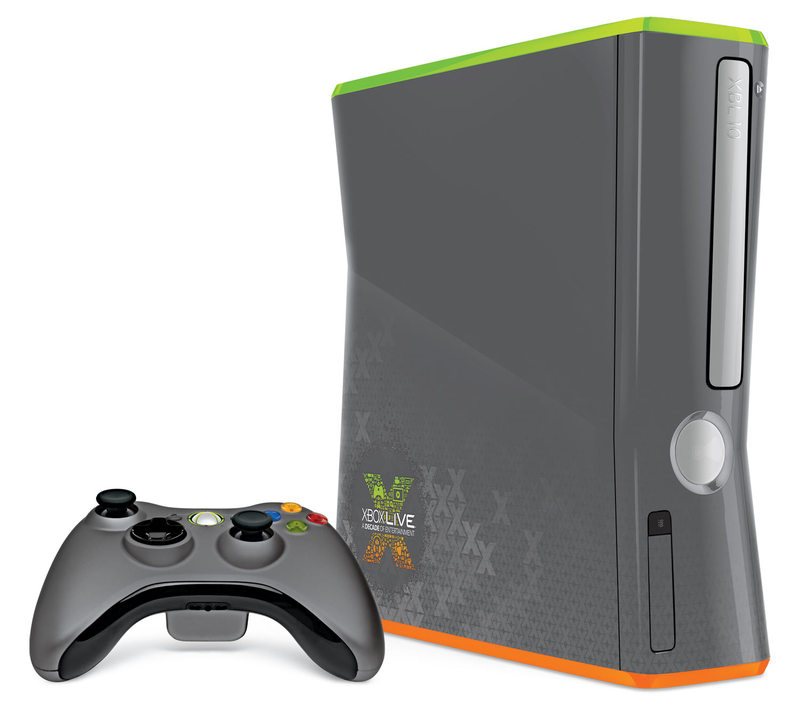
Some veteran subscribers to Microsoft’s Xbox Live service will receive a nice piece of recognition for their loyalty in the form of a free, custom-designed Xbox 360.

Xbox Live Director of Programming Larry Hryb announced the giveaway on Twitter, and included an image of the specialty consoles that will be sent to the service’s long-term subscribers.

“I can confirm we’re surprising some of the #Xbox LIVE members that have been with us the longest with one of these,” he wrote.

Over at All Games Beta, there are photos of the 250 GB console and the XBL-themed box it will arrive in, as well as a letter from the Xbox Live team that will accompany it. The letter indicates that the console will be sent to subscribers who have been with the service for more than ten years, and the console will also come with a free year of Xbox Live.

Given many of the recent updates to Xbox Live that have pushed it further away from standalone gaming console and toward the realm of all-purpose media center, there’s a good chance that the number of subscribers over the next ten years might make a similar console giveaway impossible — though we’re probably not alone in hoping it happens.


Source : digitaltrends[dot]com

It's free
index