Samsung and Apple preparing for second epic courtroom fight

Samsung and Apple preparing for second epic courtroom fight

Galaxy Note II and iPad Mini added to lawsuit

As Samsung and Apple prepare to go to battle in a second California lawsuit, the two sides have been amending their latest lists of 'infringing' products.

Ahead of the new trial, scheduled for March 2014, Samsung has added the iPad Mini, iPad 4 and fifth generation iPod touch to a list of products it claims Apple has infringed upon, which includes the iPhone 5.

Apple, meanwhile has added newer Samsung gadgets like the Galaxy S3, Galaxy Note 2, Galaxy Tab 8.9 Wi-Fi Galaxy Tab 2 10.1, Rugby Pro and Galaxy S3 Mini.

Eternal battle

This lawsuit is separate to the epic trial in which Apple earned a crushing victory back in August.

With the trial date not scheduled until 2014, we can probably expect every new phone, tablet or PMP released by either company to be added to this lawsuit.

However, the most depressing thing about a trial date 15 months away is that we'll probably be writing and you'll probably still be reading about these two squabbling in court when 2014 rolls around.


Source : techradar[dot]com

How to fix a broken touchscreen

How to fix a broken touchscreen

It's relatively simple to repair your broken touchscreen yourself

It's the modern nightmare: a slip of the hand, an absent minded moment and a split second later your life lies there shattered on the floor.

As desperately depressing as a broken phone screen may look, it may not be as terminal or as expensive as it looks.

All phones are obviously different, but many use separate elements for the touch-sensing component called the digitser and the actual LCD/OLED display.

The digitiser sits at the front and often when dropped it's this that shatters rather than the display.

A broken display usually results in rainbow effects and the display not working in sections. A broken digitizer will continue to work, just with the nasty cracks.

NOTE:Future Publishing Limited provides the information for this project in good faith and makes no representations as to its completeness or accuracy. Individuals carrying out the instructions in this project do so at their own risk and must exercise their independent judgment in determining the appropriateness of parts, equipment, sealants and other adhesives for a particular use.

1. We're going to look at replacing the HTC Desire S digitiser element, while not identical it'll be a similar process on many other models. These cost as little as £10 and should come with a suitable pry tools. You'll also probably need a jeweller screw driver set and ideally a set of Torx (star shaped) drivers sized 4 to 7.

Repair your broken touchscreen yourself

2. Clear the work area and light it well. We're going to be dealing with tiny screws that you should arrange in order, as you remove them. To begin remove any cover, battery, SIM and SD cards.

Repair your broken touchscreen yourself

3. For the HTC Desire S we start by removing four size 5 Torx screws from the base around the battery cover. If in doubt it's a good idea to photograph your device as you go along.

Repair your broken touchscreen yourself

4. The HTC Desire S is pretty forgiving there's only one area that needs the pry tool and that's the top camera cover. Some devices need their entire backs removing with the pry tool. These are tricky to use but start at a corner and try and work the pry tool under the edge. Once in work along the edge popping out the clips and lift away the cover.

Fix a broken touchscreen

5. Remove two more size 5 Torx screws that are revealed. Any visible connections can also be unclipped, on the HTC Desire S there are two at the base.

Fix a broken touchscreen

6. We can now carefully "push" the main device out of the metal chassis screen first. Be careful here to bend up the lower PCB, as it'll catch on the rear of the chassis. You shouldn't need to force it at all.

Fix a broken touchscreen

7. Remove two more size 5 Torx screws at the top and remove the plastic bracket that this releases. It'll just lift away.

Fix a broken touchscreen

8. At this point we're working towards separating the display elements from the phone motherboard. On the HTC Desire S spot the two ribbon cables coming in to the side, these are the digitizer and display connections. Using the pry tool remove any tape but save this. Lift up the white locking element and using the help of a small screw driver remove the ribbons.

Fix a broken touchscreen

9. We're now free to part the display and the motherboard. As with many tablets and phones these are glued together, using the pry tool carefully and slowly start to separate the two, the glue will give you just need to take your time and work around the edge.

Fix a broken touchscreen

10. Carefully fold open the phone and disconnect the final two connecting elements. Leaving you with the display section and the motherboard section.

Fix a broken touchscreen

11. This is the hardest part of the whole tear-down. An adhesive gasket binds the digitizer to the display chassis. This needs to be heated to loosen the adhesive and using the pry tool separate the digitizer from the display. We strongly recommend using a hair dryer, too much heat will damage the display. So point it away from the centre and just at the edge of the display. You can use a hot-air gun but be extra careful, use the lowest setting and keep it moving.

Fix a broken touchscreen

12. Start on just the bottom edge or the least broken section. Use the pry tool to test how "sticky" the adhesive is and reheat, repeat until it starts coming away. Move on to the next small section and repeat. Eventually you'll lift the entire digitizer out. The process takes a while but if you can save the gasket it'll help avoid the next step.

Fix a broken touchscreen

13. If you've damaged the adhesive gasket or part has some away, this will need to be replaced with 1mm or 2mm adhesive tape designed for phones. Ebay and Amazon has vendors that sell this. If any area of the digitizer touches the display or chassis it'll short and you'll get false-positive touches, sending the touchscreen crazy.

Fix a broken touchscreen

14. Remove any protective film on either side, feed the new digitizer's ribbon through the lower hole and carefully from the base, angle it back into place firmly pushing it down to make sure the adhesive holds well. Feed the ribbon along the back of the display and reverse this process to carefully rebuild your phone.

Fix a broken touchscreen

15. Cross your fingers and press the power button. If all has gone well your phone will spring back to life and the display will be sensing your touch again.

Fix a broken touchscreen

Source : techradar[dot]com

How to recycle your old computer

recycling old computer

Got old machinery collecting dust? Follow our guide to recycle old desktops and laptops the right way, including erasing all of your personal data properly.

We live in a world of incredible innovation in consumer technology. What’s cutting-edge now (Retina display Macbook Pro, anyone?) will likely be ho-hum only a few years down the road. We’ve all grown accustomed to the planned obsolescence of our electronics. Keeping a primary computer running smoothly for five years or longer seems like a herculean task, and very few self-respecting gamers would consider using their machine for longer than two years – at least, not without major component upgrades.

There’s undoubtedly an upshot to all this. Newer, faster, more powerful devices keep popping up, and in turn the technology we were previously perfectly happy with gets cheaper and cheaper. But there’s a darker side, too. Discarded, outdated, or broken electronics pose a serious environmental problem. 

Previously, we’ve covered how to recycle your old iPhones. With the holidays on our heels, you may soon be getting that new laptop you’ve been wanting. But what do you do with your old one? Follow our guide on recycling computers to make sure your well-loved laptops and desktops end up where they belong.

A word of caution on recycling

Before getting into the details, it’s important to understand how – and why – to recycle computer parts ethically. According to a 2010 NPR story, even when we try to do the right thing and recycle our e-waste, about 80 percent of it ends up in countries like China, India, or Nigeria. There, during so-called “dirty” recycling, low-wage workers perform tasks like bathing computer parts in acid to retrieve gold components. They’re exposed to heated mercury, lead, and other toxic materials without any protective gear. Meanwhile, unprofitable plastic parts often end up in landfills anyway.

Dirty recycling has become such a problem that at least 25 states have passed laws regulating e-waste, usually by requiring electronics manufacturers to recycle as much as they sell. Below, we’ll cover how to find reputable and environmentally-responsible recyclers for your goods.

Step 1: Wipe all personal information

While many recyclers and donation programs offer to wipe your hard drive for you, we recommend erasing all personal data yourself for safety reasons. Don’t forget to back up everything you need first!

Some beginners fall into the trap of thinking that simply deleting personal files will do the trick. This makes your data harder to find, but doesn’t erase it entirely. An experienced programmer can still retrieve it easily. Rather, we recommend fully overwriting your hard drive, preferably multiple times, and then re-installing your operating system from scratch if you need to (for instance, if you’re donating the computer). After all, physically smashing your hard drive to bits a la Office Space may be satisfying, but it still doesn’t solve the problem of environmental contaminants.

When it comes to drive-rewriting programs, the U.S. Department of Defense guidelines serve as the market standard. However, any of the following software should do the trick. Again, don’t forget to back up your files and make a backup disk of your OS before beginning!

1. Darick’s Boot and Nuke (DBAN) – Darik’s Boot and Nuke, an unsupported freeware program, gets the job done. Download the .iso file, burn it to disk, and boot your computer using DBAN after entering the BIOS screen.

2. Active@ Kill Disk – While Active@ Kill Disk comes free for basic wipes, only the paid version ($39.95) conforms to DOD standards. Don’t be fooled by the mediocre rating; most low-raters didn’t realize that this program would do what it says it does and were surprised to see their hard drive erased.

3. WipeDrive – WipeDrive is the power tool of disk overwrite utilities: not only does it conform to DOD standards, but its clients actually include the U.S. Department of Homeland Security, as well as the U.S. Army and Navy. However, this prowess doesn’t come free. The unpaid version only wipes 25 percent of your data, making it useless except for trials, while the full version is currently on sale for $19.95.

Step 2: Attempt to donate your computer

Remember the old “Reduce, Reuse, Recycle” posters from grade school? Well, there’s a reason that “Reduce” and “Reuse” come first. It’s actually much better for the environment to donate your old computer to a place that might still be able to use it – like a school or retirement center – than it is to strip it down and recycle it part-by-part, which is both energy- and labor-intensive. In other words, unless you dropped your computer in a bonfire or spilled hot cocoa across the motherboard, it’s worth trying to donate it before you opt for recycling. The following are all good starting places.

1. The National Cristina Foundation – From the website of the National Cristina Foundation, you can search for non-profits in your neighborhood seeking computers for at-risk students, people with disabilities, and low-income individuals. This way, your donation stays local, and you might even help someone join the digital age.

2. Dell Reconnect through Goodwill – Dell Reconnect represents Dell’s partnership with Goodwill, and in many ways, offers the best of both worlds. If Goodwill workers can refurbish and resell your computer, they will; if not, they’ll recycle it for you, adhering to an e-waste policy that prohibits export to developing countries. Best of all, the program accepts any brand of computer in any condition at more than 2,500 locations and can provide receipts for tax purposes.

3. Free Geek – Free Geek accepts even broken computers and spare parts, making it one of the few donation services to take machines in any condition. Afterward, this teaching-oriented non-profit transforms them into “FreekBoxes,” Frankenstein-like assemblages of refurbished parts running Linux. Even if you don’t live in Portland, Oregon, where the company is based, you can mail used computers and other electronics to them. Simply write “Attn: Hardware Donation” on the package. You’ll need to pay for shipping yourself. Free Geek also asks for a nominal monetary donation with each electronics donation, but your entire donation is tax-deductible, and goes to a fantastic cause to boot.

Step 3: Recycle through a reputable service

As discussed above, all electronics recycling programs are not created equal. Be sure to check out the EPA guide and the list below to find places to donate for free while keeping a good conscience.

1. e-Stewards certified recyclers – All e-Stewards certified recyclers come pre-vetted as environmentally responsible. Affiliated with the Basel Action Network, a major activist group fighting e-waste, e-Stewards certification means no landfills, no incinerators, no prison labor, and no export to developing countries.

2. Best Buy – As of September, Best Buy’s Recycling Program has committed to partnering exclusively with recyclers certified to e-Stewards standards, making it one of the best “big box” options for recycling. The program will accept any computer brand in any condition, no matter where you bought it, as well as TVs, cell phones, and most other electronics. Just bring your worn-out goodies to any Best Buy store.

3. Dell – In addition to the Dell Reconnect program through Goodwill mentioned above, Dell partners with FedEx to provide Dell Mail-Back Recycling. This may be a good option for rural computer users. Dell computers are always free to send in, and you can send in any other brand with the purchase of a new Dell product.

4. Apple – The Apple Recycling Program comes with a cool incentive: if Apple’s contractors decide that your device still has resale value, you’ll get an Apple Store gift card as thanks. Otherwise, your computer will be recycled for free, following standards that ban landfills, incinerators, prison labor, and overseas shipping. Since the program provides a free shipping label, this option also fits the needs of rural consumers. Just start by entering info on an accepted device – iPhone, iPad, Mac computer, or PC computer – to get a gift card quote.

[Image credits: Curtis Palmer, Beth KantorSimon Yeo]


Source : digitaltrends[dot]com

Giveaway: Win a pair of Phiaton Moderna MS200 in-ear headphones

Phiaton-MS-200

In the spirit of the holiday season, we're giving away a pair of Phiaton MS200 in-ear headphones

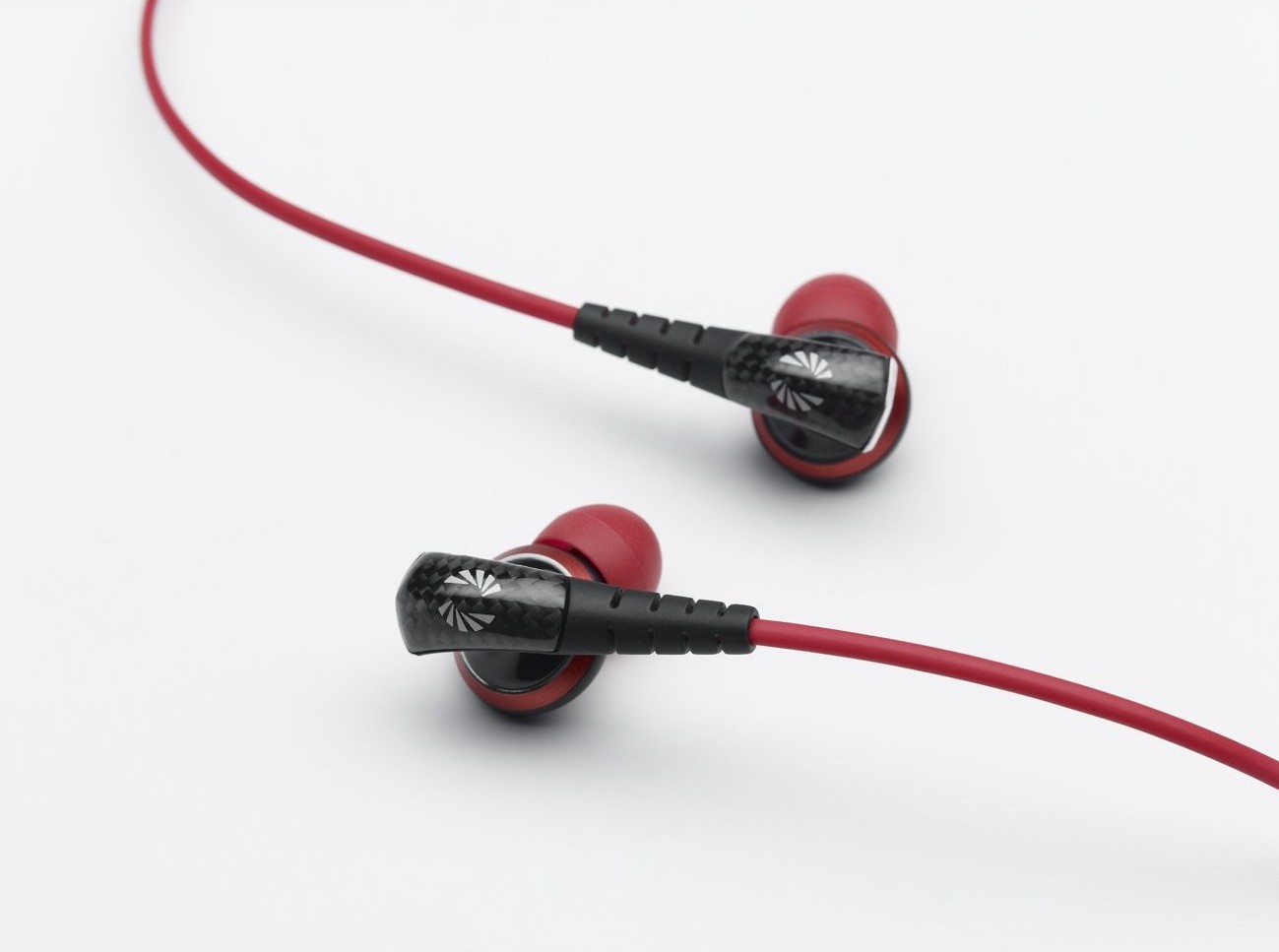
Phiaton recently unleashed the latest addition to its Moderna series of headphones, the MS200. As part of the Moderna series, these in-ears sport a carbon-fiber exterior and Phiaton’s bright red accents on the ear tips and cable. Flashy? Yes. But we’ve grown to like it. 

The MS200 don’t skimp on features, build quality or accessories. Phiaton packs with the MS200 a cylindrical carrying case, four pairs of standard silicone eartips, a new “RightFit” silicone eartip, and a pair of Comply foam tips. All that is to say: It’s a pretty good bet you’ll find a set of eartips that suit you. If not, you might want to consider getting your ears checked. The MS200 also sport Phiaton’s three-button in-line microphone – a design we’ve found works very well.

We’ve been evaluating the MS200 in anticipation of our formal review, and while we’re going to keep the really good stuff to ourselves for now, we can say that we are very pleased with their performance. 

Now for the good news: We’re giving away a pair of the MS200 to one lucky winner. All you have to do is leave a comment below telling us what you currently use for an in-ear headphone and why you’d like to switch to the MS200. The contest ends on Saturday, December 1 and we’ll announce the winner on  December 3. 

Good luck and get commenting!


Source : digitaltrends[dot]com

Jetsetter: Warface hits 5 million players in Russia, Czech president calls for ArmA III devs’ release

In the Thanksgiving edition of Jetsetter, we look at Crytek's newfound success with Warface in Russia while diplomatic efforts to free Bohemia Interactive developers imprisoned in Greece ramp up. Plus: The R4 era ends in Japan!

Even considering the dubious morality of Christopher Columbus and those that followed him to the New World a few hundred years back, Thanksgiving is an important time to reflect on our shared history here in the US. We are a nation largely born of others, a huge plot of land broken up into states that, with the exception of some recognizable chain stores and restaurants, are very different from one another. It ain’t the ideal vision of a grand melting pot, but it’s pretty great all the same. So we give thanks for our international heritage, and look back out to the beautiful world that birthed us. Jetsetter does the same, albeit with a keen focus on the world of video games.

Welcome once again to Jetsetter, Digital Trends’ weekly column looking at what’s happening in the wide world of video games beyond our borders. Development trends, new studios, bizarre mobile games from a basement developer in Prague—That’s how we roll. If you like what you see, please do let us know in the comments.

Warface gains 5 million players in Russia.

Crytek are a Jetsetter favorite, not just because I’m a big fan of Crysis 2 but also because of the international sprawl of the company. What started as a studio opened by Turkish-born Germans has grown into a massive operation with subsidiary studios in the United Kingdom, South Korea, Ukraine, Budapest, and Bulgaria. That’s what I call a global footprint. This week, Crytek is blowing up in Russia. It’s new free-to-play online shooter Warface has grown a significant following, racking up 5 million players in the country within a few months of its release earlier this year. Congrats to Crytek.


* Czech president lobbies for release of ArmA III developers.

Last week in Jetsetter, we reported that Bohemia Interactive staffers Ivan Buchta and Martin Pezlar would stand trial for espionage in Greece. The two developers were arrested in September while vacationing on the island of Lemnos and have remained in jail since. Now Czech Republic president Vaclav Klaus is calling for Greece to release them. “I would like to address a matter of two Czech citizens who were arrested in Greece and charged with espionage,” Klaus wrote in a statement to Greek president Karlos Papoulias, “I want to ask you, Mr.President, to follow this unfortunate affair with special attention considering the excellent relations between our nations so this does not throw unnecessary shade into out relationship.” You can follow updates on the fight for Martin and Ivan’s freedom at HelpIvanMartin.org.


* Japan bans imporitng R4 flash cartridges for Nintendo DS.

It’s about time! Despite the runaway success of the Nintendo DS over the last eight years in Japan, developers have often shied away from releasing new games for Nintendo’s handheld because of rampant piracy. The DS pirates best friend has always been the R4 flash cartridge, a storage device with a simpe user interface that can hold literally hundreds of pirated game ROMs. Though Japan’s Ministry of Economy, Trade, and Industry blocked the sale of R4 cartridges in Japan back in 2009, the devices were still readily available and new models were developed in 2011 just for the Nintendo 3DS. Now it has fully blocked the import of R4 cartridges in the country. It only took five years!


Source : digitaltrends[dot]com

It's free
index