Razer details specs of "Project Fiona" Windows 8 gaming tablet

Razer’s gaming tablet concept, codenamed Project Fiona, was given the green light back in October after easily reaching a goal the company had set for itself of 10,000 Likes/Shares on Facebook to gauge public interest. The project soon began taking feedback on what the final version of the device should look like -- including specs, form factor, pricing, features -- and now Razer CEO Min-Liang Tan is sharing the results.

According to the company, the tablet will have at least an Intel Core i5 or i7 processor with an unnamed mid-range discrete GPU to handle gaming duties at 720p resolution. In terms of form factor the design apparently remains true to the initial prototype, with game controllers that latch on both sides of the tablet, and voters were apparently okay with total thickness up to twice of the iPad for the sake of power.

There was no mention of battery life or any other specs and features, though based on previous information we know it should have a 10.1-inch display and run the full x86 edition of Windows 8.

Razer says this has to be the first gaming tablet designed “For Gamers. By Gamers.” Whether that’s a recipe for success remains to be seen, specially at the quoted price target between $1,299 and $1,499. A firm ship date has yet to be announced, though an FCC filing in October suggest the project is marching along.

The company is no stranger to premium-priced gaming hardware. Earlier this year, after a couple of delays, Razer jumped into the notebook market with the $2,800 Blade and called it the first true gaming laptop. Though they won’t release sales figures, the company claims that the original Blade was a sales hit, with demand outpacing supply in the first number of weeks after it went on sale. The refreshed model now starts at $2,499.


Source : techspot[dot]com

BlackBerry 10 L-Series appears in high-res snaps

BlackBerry 10 L-Series appears in high-res snaps

The L-Series, or is that Leak-Series? (credit: Tinhte)

RIM's upcoming, fully touchscreen BlackBerry 10 handset looks like it's been snapped again, and this time the photos are actually pretty good.

We've seen previouslyleakedpictures claiming to show the L-Series handset, but quality has been the usual level of blur – but now Tinhte has got hold of clearer images.

Apparently coming from Vietnam, the pictures once again show the handset which has appeared in previous leaks, but this time we're able to get a proper look at what is potentially the first fully touchscreen BB10 device.

BlackBerry 10 L-Series

The device isn't switched on so we can't be sure it's running BlackBerry 10, but there are still a number of points to garner from these snaps.

Features galore

BlackBerry 10 L-Series

First up is the rather chunky bezel which adorns the top and bottom of the phone, which adds extra length to the device – think iPhone 5.

Round the back there are slots for a microSIM and microSD card, both of which will be hidden by the rear cover, with the latter accessible without having to remove the battery.

BlackBerry 10 L-Series

There's a camera lens and flash hiding in the top corner, while on the right sits the play/pause toggle – similar to the switch on top of the BlackBerry PlayBook.

Connectivity fans rejoice, as according to the snaps the BlackBerry 10 L-Series handset will sport NFC technology as well as microUSB and microHDMI slots.

BlackBerry 10 L-Series

RIM is keeping quiet on its upcoming handsets, and while it is happy to tell us it will be launching full-touchscreen and a QWERTY keyboard handsets on January 30, no further details are being revealed.


Source : techradar[dot]com

Mionix updates Naos mouse with 8200 DPI sensor, 72MHz ARM chip

Mionix has launched a new flagship gaming mouse that builds on the venerable Naos 3200 and Naos 5000. Touted as "the new standard for high-end gaming nice," the Naos 8200 packs an 8200 DPI laser sensor that is driven by a 72MHz 32-bit ARM processor and promises to provide the "most accurate" gaming experience.

While some folks might be jazzed about the new sensor, what's likely more important is that Mionix hasn't messed with the attributes that earned its previous mice a loyal following. Top on that list is an ergonomic design, and we assume it's by no coincidence that this is also the first thing the company's press release highlights.

Although many companies claim their gaming keyboards and mice are ergonomic, few actually offer the anatomically accommodating design that you'll find with a specialty device. However, the Naos comes close -- or at least much closer than some other mainstream options -- with a large shell that can seat all of your fingers.

Other features include 128kb of integrated memory to store your settings and macros (five profiles are supported and they can be toggled on the fly), a customizable multi-color LED system with "pulsating" and "breathing" effects among others, a tool that can measure the tracking quality of your mousing surface, three DPI presets, seven programmable buttons as well as an adjustable polling rate and lift distance.

Mionix has opened preorders worldwide for $89.99 / €89.99 / £89.99 / 899 SEK with units expected to ship this month. Of note, the older Naos 5000 is currently going for the same rate on Newegg. It's unclear if the 8200 is meant to succeed the 5000, but it seems unlikely that both will exist at the same price for long, so you may want to watch for a nicely discounted Naos 5000 if you don't care about the new features.


Source : techspot[dot]com

Samsung Galaxy Note 2 upgraded to Android 4.1.2 Jelly Bean

Samsung Galaxy Note 2 upgraded to Android 4.1.2 Jelly Bean

Now with Android 4.1.2

Samsung has started pushing out the Android 4.1.2 Jelly Bean update to the Galaxy Note 2.

It's only reached Poland so far, according to the table over at SamMobile, but is rolling out in phases. So keep hitting the update button and hopefully you should see it soon enough.

So what's new? Well there's a host of new features. You get new additions in Notification Toggles, you can customise the Notifications Panel, and the brightness slider in the Notifications Panel can be disabled.

Multi-View can be disabled as well, the browser is smoother than before, and the Status Bar is now black instead of grey. You can type on the keyboard just by dragging your finger across it (like Swype or Android 4.2 Jelly Bean), there's a new ink effect on the lockscreen, as well as a new Group Cast app.

So no world-changing features, admittedly, but they all count.

S3 leads the way

Samsung recently started rolling out the same update to the Galaxy S3 smartphone.

The Galaxy Note 2 is one of Samsung's flagship devices, along with the S3, so it obviously wants to keep both up to date. Neither have Android 4.2 Jelly Bean yet though, as found on the Nexus 4.

Via Omio


Source : techradar[dot]com

Mobile device protection: Amazon granted patent for mini-airbag system

airbag patent

We first heard about Jeff Bezos's patent for mini-airbags on mobile devices last year. On Tuesday, it was approved by the US Patent and Trademark Office, but whether that means we'll one day be able to enjoy watching the company's e-readers and tablets bouncing majestically off the ground is, quite frankly, anyone's guess.

Whether the idea was the result of a boozy night out or masses of market research is largely immaterial; the fact is that a patent for mobile device airbags submitted by Amazon’s CEO Jeff Bezos and company vice president Greg Hart has just been granted to the e-commerce giant by the US Patent and Trademark Office.

News of the patent first emerged in August 2011, though it was actually submitted by the pair over a year earlier in February 2010. The USPTO approved it on Tuesday.

Offering some background to the idea, the patent cites a report that claims “1 out of 3 cellular phones are damaged or lost in the first year of ownership. With the number of cellular phones in use exceeding several billion and repairs typically exceeding $25, the costs of damage and loss of cellular phones amounts to billions of dollars per year.” The patent also lists other portable gadgets which might benefit from the mini-airbag system, including e-readers, laptops, tablets and cameras.

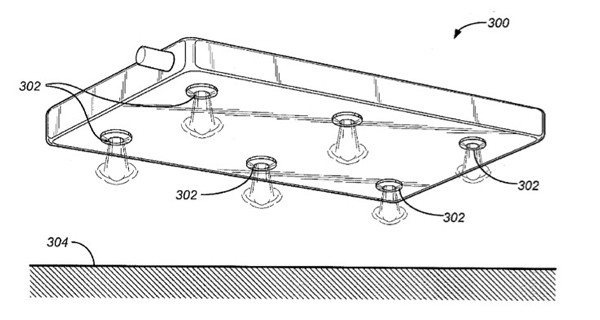
Bezos and Hart’s proposed “damage avoidance system” appears to work much in the same way as a car-based airbag, except that these bags will protect your mobile device instead of your body.

Drop your gadget and in a split second its on-board sensors, such as a gyroscope or accelerometer, will detect what’s happening and deploy the mini-airbags, saving your beloved smartphone or some such device from sustaining a cracked screen or scratched back. The device’s internals would also be protected from a potentially damaging impact.

The patent even talks of “propulsion elements” whereby a mechanism would “expel a gas from the portable device to reduce the speed of the portable device as it travels toward an impact surface.”

Of course, just because the patent has been granted, it doesn’t mean Bezos will be turning up at work on Wednesday morning and ordering the boffins at Amazon to get started on installing the system on the company’s e-readers and Kindle Fire tablets. But the boss of the e-commerce company may certainly turn his mind back to the idea now that the patent has been granted by the USPTO.

Can you imagine the Seatlle-based company taking this one all the way?

[via engadget]


Source : digitaltrends[dot]com

It's free
index