Google's Eric Schmidt rubs in Android smartphone dominance

Google's Eric Schmidt rubs in Android smartphone dominance

Merry Christmas, war is (almost) over, claims Google's Schmidt

Google chairman Eric Schmidt has stoked the fire of the ongoing Android vs iPhone smartphone rivalry by claiming the battle is almost won.

Speaking to Bloomberg, Schmidt said the dramatic swing towards Android handsets is reminiscent of Microsoft's Windows sweeping aside Apple's computing platform in the early 90s.

Android's market share rose to a formidable 75 per cent in the third quarter of 2012, compared with the iPhone's 15 per cent, prompting Schmidt to rub a truckload of salt into the wound.

He said: "This is a huge platform change; this is of the scale of 20 years ago - Microsoft versus Apple."

"We're winning that war pretty clearly now," he added, claiming 1.3 million Android devices a day are being activated.

Mmmmm pie

However, while Android is destroying the iPhone in terms of OS market share, Apple rakes in unprecedented profits on hardware sales, while Google simply gives away its operating system.

Schmidt says the openness of Android gives Google the chance to push users towards its other services and cash in further on ad sales.

He added: "The core strategy is to make a bigger pie,"

"We will end up with a not perfectly controlled and not perfectly managed bigger pie by virtue of open systems."

Schmidt is obviously feeling super-confident about the future, but perhaps his bravado went a tad too far when he claimed Google+ "is a viable competitor to Facebook."


Source : techradar[dot]com

FreedomPop tackles cheaper Internet, brings free wireless broadband to the home

Move over, ISP behemoths; there's a new kid in town. FreedomPop is bringing free wireless Internet to the comfort of your own home.

FreedomPop, a new startup company receiving backing from Skype co-founder Niklas Zennstrom, is working to change the landscape of Internet service providers with new services for wireless and sharing access.

The first angle of FreedomPop’s plan is to provide inexpensive and shared Internet access. Sharing access gives the user credits on the network, with nearly 40 percent of its members currently receiving some amount of free credits. FreedomPop has an iPod Touch case that uses WiMAX to turn the mobile gadget into an Internet device, as well as a 4G MiFi router and a 4G USB dongle for laptops that share and receive online access. 

The next step for FreedomPop is to release an “open Wi-Fi” local sharing service through those devices. CEO Stephen Stokols told Forbes that the new feature would let users share broadband access with any other nearby people through two SSIDs in addition to sharing with others on the network. On that note, FreedomPop is launching a home Internet product, FreedomPop Hub Burst (pictured above), which uses Clearwire WiMax for a connection that’s faster than DSL, but slower than cable. As with the open Wi-Fi products, home users can earn free access by adding friends to their network and taking advantage of promotional offers. The company is taking pre-orders on the Hub Burst and expects to ship the product next month.

Stokols said he expects his company to disrupt the other startups looking to alter the Internet provider market because FreedomPop doesn’t have to negotiate deals with large telecommunications companies. It also has undercut other hotspot companies on price, such as Boingo Wireless.

The combination of low cost and free credits certainly makes FreedomPop seem like a sure thing. Right now, it is designed to best handle light Internet activities. Anyone looking for more data-heavy capabilities, like streaming video, will need to pay an extra $10 a month, or sign up for the pay-as-you-go model. It’s still a far more cost-effective choice than most major Internet providers, but FreedomPop will surely be tested by issues of scale and security down the road.


Source : digitaltrends[dot]com

The Elder Scrolls V: Skyrim Dragonborn DLC review: That old black magic

Bethesda's Dragonborn DLC for The Elder Scrolls 5: Skyrim adds some very welcome new environments to the game, though it falls short on delivering enjoyable dragon mounts.

Let’s just clear the air right off the bat: riding on the back of a dragon is not fun at all. There, I said it. And I feel so much better now. The new Dragonborn DLC for Bethesda Softworks’ 2011 RPG hit The Elder Scrolls V: Skyrim introduces dragon mounts at the end of the moderately lengthy campaign, but the reward isn’t really a suitable cap on the journey you’ll take. Fortunately, that journey is an excellent one, highlighted by a brand new land to explore and an assortment of secondary quests that add up to a great, big chunk of “more Skyrim.”

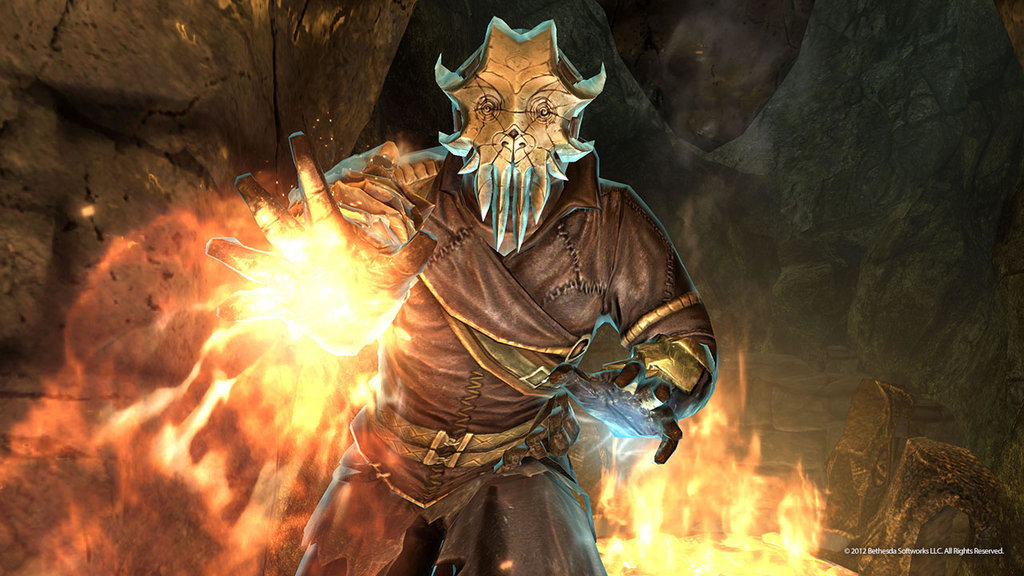
Much like the earlier Dawnguard DLC, there’s no indication when you first fire up your post-Dragonborn download save that there’s new content to be had. All of the pieces are there, and a knowledgeable player will be able to immediately head to Windhelm and hire a boat to the island of Solstheim, but the more proper DLC introduction comes when a gang of dragon-masked cultists attack without warning. They’re dealt with easily, and a quick search of their leader’s corpse reveals that they’ve been sent with one specific purpose: killing Skyrim’s Dragonborn hero.

Tracing the cultists back to their point of origin brings you to the island of Solstheim, a sprawling, mountainous landscape that was last seen in the Bloodmoon expansion pack (remember those?) for Morrowind. Longtime Elder Scrolls fans will no doubt pick up on familiar links between this DLC and the earlier expansion, but no prior knowledge of Solstheim is required. This is, for all intents and purposes, and entirely new open world environment for you to explore with lots of secrets to be found and 30+ new fast travel locations to unlock on your map.

It’s clear as you explore early on that something is amiss on the island of Solstheim. The natives seem normal for parts of the day, only to suddenly zone out and wander off to a nearby construction site established around an unusual rock formation. The island is dotted with these and the situation is the same wherever you go. Try to talk to someone working near a rock formation and they’ll respond in a flat monotone with some obscure phrase that sounds almost like a prayer.

You eventually come to learn that Miraak, the very first Dragonborn of legend, has returned in some form, and that he’s up to something nefarious. As the full picture comes into focus, your quest brings you from the shores of Solstheim to the surreal Daedric realm of Apocrypha, the home  of Hermaeus Mora. This god-like being and his home realm are a clear homage to the works of H.P. Lovecraft and the Cthulhu mythos. Tentacles stretch down from the yellow-tinted sky and fantastical nightmare creatures – the likes of which you haven’t seen in Skyrim before – wink into existence without warning.

Solstheim and Apocrypha together are the marquee features in Dragonborn. This is the heftiest DLC offering for Skyrim yet in terms of purely new content, and the new locations in particular are a joy to explore. New enemy types, such as the giant-sized, Creature from the Black Lagoon-faced Lurker and the aggressive, pack-oriented Ash Spawns throw up some added challenge, but the new land is the clear-cut star – as it should be for a game like Skyrim, whose greatest rewards are built on exploration.

The entire island can be circled in fairly short order, but an assortment of quests ensure that you’ll see every inch of it. The main quest is good for 5-6 hours of play, but a faction-length second questline focused on the bloody politics of dark elves offers another sizable chunk of narrative as well. Then there are the many one-offs tasks that you’ll acquire as you talk to people, including a couple of faction-specific ones for Thieves Guild members and werewolves. Rounding things out is a new player house, built into the most unusual of locations.

Once again, we come back to the environment. Solstheim is just as much a joy to discover as Skyrim was before it. There’s a markedly different flavor to the snowy, mountainous terrain, especially in the handful of settled areas that you’ll visit. It’s more than that though. A great disaster befell Solstheim at some unspecified time before your arrival, and evidence of the catastrophe is spread across the whole of the island. You’ll come across many unfinished stories as you explore, and while some feed into the secondary tasks that you can take on, many others are simply left a mystery, allowing you to fill in the blanks based on what you see and read. Bethesda’s talent for filling its open worlds with a sense of discovery is very much at the forefront of Dragonborn.

The only real mis-step, as mentioned before, is the dragon riding. The quest-related shout that allows you to tame the great beasts can be used later on any standard dragon spawn (i.e. not a named dragon). Saddling up is easy enough, but Lair-comes-to-Skyrim this is not. Your tamed dragon will always fly along a set flight path in a lazy circle, and while you can fast-travel to new locations while on the back of the winged lizard, you can’t actually steer its movements in any way. The feel is ultimately that of a high fantasy Disney World ride, with the added bonus of being able to shoot spells at enemies if they happen to fall within range of your mount’s flight path.

To put all of that in another, more concise way: horseback riding is more exciting than dragonback riding. It’s a shame, the lone proper negative in an otherwise commendable expansion of Skyrim‘s world. It isn’t enough to make the DLC entirely skippable — there’s a lot of great content here for sure — but you’ll definitely want to think carefully about your purchase of dragonback riding is a major factor in your decision-making. Other than that, The Elder Scrolls’ return to Solstheim is a triumphant one and it makes a good case for immersing yourself once again in this fan-favorite 2011 release.


Source : digitaltrends[dot]com

Verizon Samsung Galaxy Note 2 Bootloader is Now Fully Unlocked

Samsung Galaxy Note 2

Managed to pick up a Samsung Galaxy Note 2 from Verizon only to find you are now stuck with a locked bootloader? The good news is that Adam Outler has now revealed how to unlock your Note 2 via XDA TV.

Recently Verizon has become very aggressive about locking up bootloaders with smartphones featured through their wireless service. The Note 2 was in particular known for being locked down tight, but Adam Outler further proves if there is a will, there is a way.

While the root method for the Verizon Galaxy Note 2 has been around for a bit now, a fully unlocked experience was previously believed near-impossible. Now you too can do custom recoveries and install your own ROMs with the same ease as any other Note 2 owner.

So what’s needed to get the job done? Heading to XDA is a good place to start, as is watching Outler’s XDA TV video. You will also need a special tool apparently, affectionately named “Suck it Verizon Odin Package”.

Where you avoiding Verizon’s version of the Note 2 do to the lack of an unlocked bootloader? Does this news change your mind?


Source : mobilemag[dot]com

Russian security firm finds first fake OS X installer malware

If you thought owning a Mac would make you impervious to malware, think again. A Russian security firm is reporting the first threat of this kind to appear on an Apple machine.

Doctor Web, a Russian security firm, has found a Trojan that mimics the OS X installer on Apple computers in order to obtain phone numbers. The threat is called Trojan.SMSSend.3666 and according to Doctor Web, it is the first such malware to maliciously imitate the installer. Similar threats used to only appear on Windows machines. The Trojan usually gets downloaded through what appears to be legitimate software. 

When the user attempts to open the compromised program, the malware launches a fake installer on OS X machines and introduces a prompt asking the user to enter a phone number to activate the software. The malicious program then sends a code by SMS that the user enters to supposedly finish the activation process. That process charges a subscription fee to the user, regularly debited to the person’s mobile phone. Some of the installers do complete the download of the software it’s pretending to be, but the focus of the attack is the phone number.

Targeting victims by mobile number hasn’t been successful in the past, but the spread of this style of malware into Macs shows that cybercriminals have found ways of making it lucrative. More and more services –  such as social networks like Facebook and Twitter – are connected to phones these days. According to The Next Web, the appearance of the installer malware on OS X before iOS shows how much tougher it is to get malware on Apple’s mobile devices. It seems that the extra scrutiny the company levels against programs in the Apple App Store does pay off.


Source : digitaltrends[dot]com

It's free
index