Huawei confirms Ascend D2 and W1 for CES

Huawei confirms Ascend D2 and W1 for CES

Tricky to pronounce

Huawei has confirmed it'll unveil two new mobiles at CES in January.

Its first Windows Phone handset, the Ascend W1, will make its debut alongside the Android-running Ascend D2.

Huawei's CEO Yu Chengdong confirmed both handsets on microblogging site Weibo. He also expressed some doubts about the Ascend D2.

Doubts over power

He's worried it'll be overpowered, and hence too expensive, according to his post. It certainly sounds like a beast. It's rumoured to have a 5-inch, 1080p display, which would put it on a par with the HTC J Butterfly. Samsung and LG are also reported to be readying handsets with similar screens for next year.

But that's not all. The D2 will also have a quad-core 1.5GHz processor, and a 13-megapixel camera. So we could well have a challenger to the Galaxy S3 and HTC One X+ waiting in the wings.

The Ascend W1, however, is a low-end Windows Phone 8 affair. It'll have a 1.2GHz processor that's dual-core, 4GB storage, 512MB of RAM, and a 5-megapixel camera. So it's not going to set the world alight, but should be considerably cheaper than the Ascend D2.

CES 2013 kicks off on January 8. We'll be on hand to bring you all the news as it breaks.

Via WMPoweruser


Source : techradar[dot]com

Samsung reveals the Galaxy Grand, a new smartphone with a 5-inch screen and Android 4.1.2

Samsung Galaxy Grand

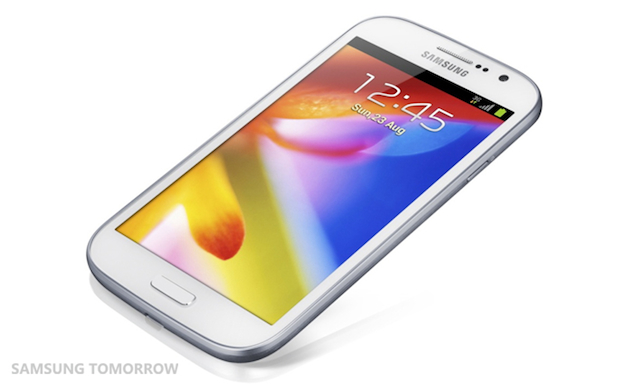
Samsung has announced the Galaxy Grand, a smartphone/tablet hybrid with a 5-inch screen, which fits in-between the Galaxy S3 and Galaxy Note in the company's ever-expanding range.

Samsung loves to make sure its range contains as many different screen sizes as possible, and it has continued its quest today with the announcement of the Galaxy Grand, a smartphone/tablet hybrid for those folk who consider the Galaxy S3 a bit small and the Note 2 a little too large.

As you may have guessed, the Galaxy Grand has a 5-inch touchscreen, a size all set to rise in popularity in 2013. Unfortunately the resolution isn’t quite as stunning as the Note 2 or Galaxy S3’s, coming in at 480 x 800, which is below both these two and the original Galaxy Note. Samsung hasn’t stated whether the screen is an AMOLED panel.

Inside the Galaxy Grand is a 1.2GHz dual-core processor and 1GB of RAM, which although not as powerful as other big-screen phones, will still be plenty for normal use. The 8GB of internal storage memory may sound a little small, but Samsung has had the sense to add a microSD card slot to the Galaxy Grand, and it’ll accept cards up to 64GB in size.

Looks familiar

You may be looking at the image of the Galaxy Grand and thinking, “My, that looks familiar.” That’s because Samsung has played it very safe with the Grand’s design, and in the images it has so far provided, there’s little to differentiate it from the Galaxy S3 or even the smaller Galaxy Premier without seeing them alongside. Samsung has made sure the Galaxy Grand’s dimensions fit neatly in-between its two flagship devices too, as it measures 143 x 76 x 9.6mm, while the S3 is 136 x 70 x 8.6 and the Note 2 is 151 x 80 x 9.4.

An 8-megapixel camera is mounted centrally on the Galaxy Grand’s rear panel, while a 2-megapixel video call lens can be found above the screen. Other features include GPS, Bluetooth 4.0 and a 2100mAh battery, which given the average resolution screen and dual-core chip, should provide the handset with plenty of energy. Google Android is its operating system and Samsung has made the welcome decision to use the very latest version, 4.1.2 Jelly Bean.

Samsung hasn’t provided any information on the Galaxy Grand’s release or its projected cost, although it has announced a dual-SIM version will be launched alongside the standard version, so we can expect it to see a wide international release. Samsung is all set to have a strong showing at CES 2013, so we may learn about its Grand plan during the early January event.


Source : digitaltrends[dot]com

Samsung Galaxy Grand is just a repackaged, cheaper Galaxy Note

Samsung Galaxy Grand is just a repackaged, cheaper Galaxy Note

Looks like a S3, as big as a Note, but possible cheap as chips

That's right folks there's another new handset from everyone's favourite Korean manufacturer, say hello to the Samsung Galaxy Grand.

The Grand name gives you a hint that this isn't a run of the mill mid-range blower, oh no this is a 5-inch handset which brings the real estate of the Galaxy Note 2 to the more budget-centric market.

While the screen may be expansive, its quality is less impressive boasting a mediocre WVGA 480x800 resolution which will appear poorer simply due to the sheer size of the display.

Mediocre

Under the hood there's a 1.2GHz dual-core processor, 1GB of RAM, 8GB of internal memory, Android Jelly Bean, while round the back everything looks a bit Samsung Galaxy S3 with a centralised 8MP camera flanked by a single LED flash and speaker grill.

There's also a front facing 2MP camera and all the usual connectivity options including Wi-Fi, Bluetooth, A-GPS, USB and DLNA, but there's no sign of NFC.

In short the Galaxy Grand is a slightly less well equipped Samsung Galaxy Note, but sporting the style of the current crop of Galaxy handsets.

There's currently no word on the Samsung Galaxy Grand release date or price, although we'd expect it to arrive in the major markets, with two models (single and dual-SIM) being made.


Source : techradar[dot]com

Apple’s request for Samsung sales ban rejected by US judge; Samsung’s retrial bid also denied

Samsung Apple branding iphone galaxy

US District Court judge Lucy Koh has rejected Apple's request for a sales ban on a number of Samsung mobile devices deemed by a jury in August to have infringed Apple patents. Meanwhile, Samsung has failed in its bid for a retrial based on claims of jury misconduct during the August hearing.

Samsung will be breathing a huge sigh relief today as US District Court judge Lucy Koh on Monday rejected Apple’s request for a permanent sales ban on 26 of its mobile devices. This comes despite a California jury finding in Apple’s favor on a number of patent infringements at a trial in August.

However, it wasn’t all good news for the Korean tech giant, as its request for a retrial based on claims of jury misconduct during the August hearing was thrown out by Judge Koh, which means Samsung will still have to pay $1.05 billion in damages to Apple.

Monday’s post-trial orders are the latest chapter in the long-running patent-related battle between the two companies as they vie for supremacy in the cut-throat mobile device market.

Koh said in the ruling that the iPhone maker’s argument that it had suffered revenue loss because of Samsung’s violation of a number of utility and design patents was not strong enough to justify the imposition of a sales ban.

“The phones at issue in this case contain a broad range of features, only a small fraction of which are covered by Apple’s patents,” Koh wrote in her ruling, adding, “Though Apple does have some interest in retaining certain features as exclusive to Apple, it does not follow that entire products must be forever banned from the market because they incorporate, among their myriad features, a few narrow protected functions.”

Patent expert Florian Mueller of Foss Patents was surprised by Koh’s sweeping decision considering the large number of infringement findings, describing it as a possible first for the US legal system.

“It may be unprecedented in the legal history of the United States for an injunction motion to be denied across the board despite such a large number of infringement findings (roughly half a dozen) by a jury and, especially, in light of the competitive situation between the two as well as the jury’s findings of willful infringement,” Mueller wrote on his blog.

He added that Apple is almost certain to appeal Monday’s ruling, meaning both companies will return to court some time next year. Judge Koh has repeatedly asked the two tech giants to try to resolve their patent-infringement issues out of court, but as long as each company believes it can win in the courts over the long term, this is highly unlikely to happen. 


Source : digitaltrends[dot]com

Samsung's phones won't be banned in US after Apple trial

Samsung's phones won't be banned in US after Apple trial

No ban for you

Apple may have won $1 billion from Samsung in its patent infringement case, but it's failed in its bid to have the Korean company's devices banned from sale.

Judge Lucy Koh ruled Samsung's smartphones and tablets will stay on US shelves. But it wasn't all good news for Samsung. Koh threw out the company's complaint that the jury foreman was biased against it because of his previous dealings with one of its partner companies.

Koh ruled the patent infringement wasn't a big enough threat to Apple to warrant a sales ban.

"Samsung may have cut into Apple's customer base somewhat, but there is no suggestion that Samsung will wipe out Apple's customer base, or force Apple out of the business of making smartphones," Koh said in her ruling. "The present case involves lost sales - not a lost ability to be a viable market participant."

In other words, even though Samsung may have made devices very similar to Apple's, and it's a bigger company, Apple can still more than hold its own.

Samsung's Galaxy Nexus could still be banned in a separate case, though.

"Unprecedented"

Experts hailed the decision not to ban Samsung's devices as "unprecedented", considering the number of injunctions found, and the amount of money Samsung was made to cough up.

Apple wanted 26 Samsung devices banned. Koh ruled that in order to win a ban, Apple would have to show it'd "lost these sales because Samsung infringed Apple's patents. Apple has simply not been able to make this showing."

Samsung was hoping that jury foreman Velvin Hogan's previous dealing with Seagate could prompt a retrial. Hogan was bankrupted after trying to sue Seagate for fraud in 1993, and seeing as Seagate has dealings with Samsung, the Korean company thought this would prejudice him.

But Koh ruled that Samsung couldn't complain about Hogan because it had carried out pretrial interviews with him. "Parties [in the trial] waive their right to challenge the jury's impartiality if they are aware of the evidence giving rise to the motion for a new trial or fail to exercise reasonable diligence in discovering that evidence," Koh said in her ruling.

Via Guardian


Source : techradar[dot]com

It's free
index