Back for a second helping after the success of its first franchise, Cut the Rope creators ZeptoLab released its sophomore offering today. Pudding Monsters is a strategy game that will have players sliding pudding across the refrigerator to make a dessert too big to eat.
ZeptoLab, the creators of mobile gaming darling Cut the Rope, has officially launched their second franchise. Pudding Monsters is available for iOS devices today.
Most companies take to their second offering by simply looking to avoid the dreaded sophomore slump. For ZeptoLab, the bar from its first title is so high it’d be hard not to fall a little. Even so, Pudding Monsters will aim to please. Featuring characters that do their best to match the cuteness and lovability of Cut the Rope‘s Om Nom, Pudding Monsters offeris an entirely new style of play.
When a terrifying villan, in this case just a gluttonous human, is threatening to wipe out the pudding population in the refrigerator, it’s up to these delicious misfits to stick together–literally. Players will slide pudding pieces across the game board in an attempt to pile them into an immovable force. Every pudding has its own personality and special abilities that will come in handy over the course of compounding and adding strategy to each level. There are 75 levels available upon download, plus ZeptoLab has a tendency to add content and is already promising more levels to come.
Pudding Monsters is available in the iTunes App Store for $1 for both iPhone and iPad. Unlocking all available episodes carries a $5 price tag and can be completed from in the app.
It hasn't even been a year since the original Samsung Galaxy Note launched. It was a work of genius for old Samsung. Many (including us, we admit) were not convinced. Who on earth would want something so big to make their calls and surf the internet, even with a glorified stylus?
Cue awkward silence.
Millions of you, it would appear. The Samsung Galaxy Note has sold by the bucketload. And while it is most definitely a niche device, it's done wonders for Samsung's balance sheet. How do you follow that up? With something better, of course - the Samsung Galaxy Note 2.
If you've ever fondled or caressed the original Samsung Galaxy Note and found its larger size too much to handle, we'll break this to you with a sledgehammer - the Samsung Galaxy Note 2 is bigger.
It's now 151.1 x 80.5 x 9.4mm (5.9 x 3.2 x 0.4 inches), so slightly up from 146.9 x 83 x 9.7mm (5.8 x 3.3 x 0.4 inches). That said, we didn't find it cumbersome at all.
In the way the original Samsung Galaxy Note followed the Samsung Galaxy S2's square design, the Samsung Galaxy Note 2 follows the Samsung Galaxy S3's more rounded rectangular look.
And what a beauty it is. It actually felt slightly smaller to us in day-to-day use - but that may be down to the fact that we have gravedigger hands.
The Samsung Galaxy Note had a frankly amazing screen as it was, so would have taken some beating. But Samsung clearly likes a challenge. The size has gone up slightly from 5.3 inches to 5.5. And although pixel density is reduced, we didn't notice it.
This is the bright, vivid Samsung Super AMOLED panel that we all know and love - and what a beauty it is, replicating colours amazingly and immaculately.
As expected, that screen takes up most of the front. You get a home button and two hidden soft keys beneath it as before, plus a front-facing camera and sensors up top.
The handset itself has little to note (geddit?) around the edges. A headphone jack up top, power button on the right, volume on the left and charger port below, right alongside the S-Pen slot - more of which will follow later.
Around the back, you'll find the 8MP camera with flash.
The additional sorcery is carried out away from view. The microSD expansion slot is beneath the rear cover - as is the microSIM slot, hidden behind the enormous 3,100 mAh battery.
And there's a whole lot of goodness even further inwards than that: HSDPA (LTE if you're extra lucky), NFC, GPS, Wi-Fi and so forth. It's a veritable treasure trove of geekdom.
One other thing we'd say is that this does feel like a quality Android smartphone/tablet. We're aware of the protestations by some readers (particularly iPhone users) that phones such as the Samsung Galaxy S3 feel like toys because they're so light and plasticky.
At 183g (0.4lbs), you couldn't describe the Samsung Galaxy Note 2 as a feather - and the weight gives it a real notion of substance.
If you want to pick one of these big boys up, you'll need to be willing to part with some serious cash - around £530/AU$999/US$700 appears to be the average SIM-free price. It is also available on contract, but be willing to shovel top dollar each month in the network's direction for two years.
Normally, this is where we'd talk about the alternatives on offer. But we admit, we're stumped here. Why? Well, in our mind, there is no clear rival. The Samsung Galaxy Note created its own category, in that there were no real phablets about before.
There is the LG Optimus Vu, which hasn't hit the UK, but is in the US under the moniker LG Intuition, however it's 4:3 ratio screen makes it an extremely odd proposition.
And while you'll get the Android 4.1 Jelly Bean operating system and similar benefits from the Samsung Galaxy S3 or Samsung Galaxy Note 10.1 (depending on whether you want a phone or tablet), the form factor is pretty unique.
In fact, the only real rival is the original Samsung Galaxy Note - a worthy contender for that title, because it's now available for a much reduced sum.
However that's all about to change as reports suggest the likes of HTC, Sony, Huawei and ZTE all have 5-inch plus handsets on the way, many of which will apparently boast full HD, 1080p display - your eyes won't know what hit em.
Around £400/AU$480/US$500 will get you an original Note SIM-free - and that makes it a very serious and credible alternative to its replacement, the Samsung Galaxy Note 2.
The excitement of the rumour mill, the titillation of every leaked photo led to higher than ever levels of expectation over the iPhone 5 features, and while the announcement was greeted with some derision at the lack of perceived headline improvements, the record sales tell an entirely different story.
Given the underwhelming changes to the iPhone 4S, the iPhone 5 launch really needs to re-energise customers to prove Apple can repeat the game-changing trick it managed with the iPhone 4.
The iPhone 5 price is predictably high, so consumers will need to bear that in mind too when looking for their next smartphone.
So is the Apple iPhone 5 the greatest smartphone ever, and did it finally see Apple ascend to the top spot in our 20 best mobile phones chart? Or was it a case of too little, too late... and what about those darned Maps, eh?
Design
We'll begin in the traditional manner: how the thing actually feels in the hand. With the iPhone 5 there will be many types of prospective buyer: the upgrader from the 4 (or more-money-than-sense iPhone 4S upgraders), those tired of their Android handset and those taking their first steps in the smartphone market and want to get one of them iThingies their friend/child has.
Well, all of those picking up the iPhone 5 will have the same reaction: this thing is amazingly light. You've probably heard the numbers by now (20 per cent lighter than the predecessor, as well as beating most of the opposition too at 112g.)
It's an odd sensation, but it actually detracts from the experience when you first pick it up. We've praised the weighty feel of the iPhone in the past, lending it a premium feel in the face of toy-like phones, and it's almost disappointing that Apple decided to join that clan.
However, through extended use this problem quickly disappears, as the overall effect of the phone is still a chassis designed for strength, it just sits more anonymously in the pocket.
You'll obviously see the change in height too – the iPhone 5 stands 123.8mm tall to allow for the larger 4-inch screen. In truth, those not familiar with the iPhone 4S probably wouldn't notice the difference, which is why it's a good move from Apple to include the larger screen if it's not going put people off that hate larger phones.
The decision to stick at 4-inches is Apple's admission that while it recognises people are all over the idea of having more screen real estate to play with it doesn't want to move away from the thumb-friendly nature of the device.
Through a mixture of moving the centre of gravity slightly as well as repositioning the screen within the bezel, it's still possible to scroll your thumb mostly around the whole display one-handed, which Apple is clearly keen to keep hold of.
However, we're not convinced of that argument any more, and the power button was still a little out of reach when using the phone normally, as was anything in the top left-hand corner of the screen.
This was no issue in reality, as scooting the phone down a touch in the palm is a natural action. But if that's the case, then why not offer a 4.3-inch screen at least?
There's more to a phone than a screen these days (although increasingly less and less) and the general construction of the iPhone 5 is excellent to say the least.
We've tested both the ceramic white version and the anodised black, and the two tone effect on the back of the phone is stunning, both visually and under the finger.
It doesn't beat the sheer beauty of the HTC One S, with its micro-arc oxidised back and rounded lines, but it's well-set in second place.
The two sections of pigmented glass at the top and the bottom of the phone add a pleasant effect, and the sapphire glass is meant to be thoroughly durable, to complement the Gorilla Glass on the front.
Apple knows consumers get furious when they drop and iPhone, and is clearly seeking to stop the smashes before they happen with a tougher exterior - although it seems the anodised black version is pretty prone to scratching, with a number of users mentioning chipping on the darker hue.
Phil Schiller, Apple's Senior Vice President of Marketing, reportedly replied to an email from a user pointing out that aluminium will scratch and chip in natural use - and we're also hearing that white iPhone 5 models are being returned through flaking as well.
We kept our black iPhone 5 in a soft pocket in a bag for much of its life, yet saw the following chip with minimal key / coin contact in under a fortnight:
For a device of this premium quality, users will expect it to survive the pocket test, and especially do so for the first two weeks of life. It's a big fail for Apple to expect users to accept that a product can be damaged so easily.
The same industrial band around the outside is in effect again as on the iPhone 4 and 4S, with small sections removed where the antenna joins.
Apple has gone for a more advanced form of antenna here, meaning the days of lost signal are gone, and generally increasing the power of your call connection and GPS lock on too.
There are other big design changes here too: the headphone jack has moved to the bottom of the phone, and the iconic 30-pin connector has been retired in favour of the new Lightning port, giving a headache to all those that have invested in chargers, docks and other accessories over their iPhone lives.
You can buy an adaptor, but it's pricey at £25. And unless you want to keep it permanently attached to the bottom of the iPhone 5 you'll need to buy a few, which is far from ideal.
However, let's not harangue Apple too much for this: a smaller connector is not only easier to use (you can plug the smaller cable in either way round, and the connection feels more solid), but you're rewarded with a thinner and more compact phone to boot.
There's also a small chink of light on the top right hand side of the iPhone 5 - when the screen is illuminated, you can see it under the band if you really, really look for it. It's been seen by a number of users, but is hard to actually replicate unless you mask the screen and hold it at the right angle.
It's again a sign of slightly under-par machining from Apple, but in day to day use it's almost completely invisible.
The decision to move the 3.5mm headphone jack to the bottom is an odd one, as while it allows you to slip the phone into the pocket head-first when listening to music, which is a more natural action, it's a real pain in the posterior for some apps that will only work in landscape a certain way up.
Using it this way means your headphones experience will be one of having to jiggle the jack around two fingers.
It's not the most comfortable way to hold a phone, and even when using the phone in portrait mode, the jack gets in the way somewhat. Plus it's miles away from the volume keys, which makes it hard to change the audio level in the pocket if you don't use the dedicated headphones.
There are other smaller design changes to the iPhone 5 too, such as the iSight front-facing camera moving to the middle and the home button being noticeably more robust to help reduce instances of a broken portal to your home screen.
But enough about what the phone looks like - the killer question is how the thing feels in hand. And we'll sum it up by saying: smooth. It's a little slippery, and we were always worried we would drop the darned thing.
But that's the only negative thing about the design (apart from the low weight initially and scratching aluminium) as it sits in the palm nicely and allows you to do it all with one hand, including hitting the top-mounted power/lock button with ease.
That lock button is actually still loose, as it was on the iPhone 4S, meaning when you shake the phone around you can hear it clicking away, which undoes a lot of the premium feel Apple is going for.
Make no mistake, the iPhone 5 is one of the most beautifully crafted phones out there - but when you're paying £529 up front for the thing, we'd hope this would be the very minimum Apple would be doing.
And while it looks nice, from the front it doesn't really add much to the design of the iPhone - it's certainly not the same as the jaw-dropping design of the iPhone 4 compared to the 3GS... it's another evolution in the iLine. It's not bad, but for those that hoped the iPhone 5 would be another step change there's a good chance they'll be disappointed about the look... until they feel the lovely back on offer.
There was a real chance here for Apple: remove the bezel and give the front of the screen a look that's similar to the OLED TVs from the likes of Samsung or LG… but instead we're treated to the same lines as before.
You always get the feeling that Apple saves what it can for the next iteration of the iPhone, and while there's nothing wrong with the current construction we can see the edge-to-edge screen becoming something amazing on the iPhone 6 or iPhone 5S.
Intel seems to be aiming its smartphone efforts at emerging markets rather than places Europe and North America? Smart, or running scared?
Chipmaking giant Intel has been saying for years (and years … and years) that it will be a major force in the smartphone and tablet markets, but things haven’t worked out that way. Although the power and sophistication of Intel’s CPU’s are largely unmatched, the mobile world is almost entirely driven by processors based on power-efficient designs from the UK’s ARM Holdings.
However, now that Intel says it’s finally ready to compete with ARM processors in mobile devices, it seems to be eschewing the high-margin, mobile-savvy markets like North America and Europe in favor of emerging economies like India and China. Is Intel running scared, concerned that smartphones based on Intel chips don’t yet stack up to ARM-based devices? Is it focusing on markets where consumers are perhaps less likely to notice the difference? Or is it a case of Intel following the Gretzky rule of business: skating to where the puck is going to be, rather than where it has been?
With great power comes great power consumption … and great price
Intel’s dominance of the PC processor market has been built on continuously pushing forward both processor design and manufacturing processes – the famous “tick-tock” iteration of CPUs that has driven the company for the better part of the last two decades. Intel has managed to stay steadily ahead of the competition. It’s current Ivy Bridge processor line is built using a 22 nanometer process, and the next “tick” due in 2014 should shrink processors down to an astonishingly small 14nm process. Smaller parts mean being able to put more transistors and cores and busses into chips and operate them with less power. Progress.
However, all that investment in design and manufacturing technology comes with high costs: chip fabrication facilites cost billions apiece, and that means Intel’s latest-and-greatest chips are expensive. As king of the CPU mountain, Intel charges up to $1,000 for its top-of-the-line PC chips, and up to double that for server chips. In contrast, a couple months ago, IHS iSuppli estimated Apple pays a measly $17.50 for its custom high-performance A6 processors in the iPhone 5. Quite a price gap.
Intel’s challenge, then, is to find a way to make its processors competitive with ARM designs in terms of both power consumption and price. Intel could reduce cost and power consumption by making its chips simpler, but that would quickly make them incompatible with existing x86 software and toss aside (literally) decades of development work on the desktop, in servers, and in embedded systems. Intel isn’t going to do that and tick off its long-time partners. So its mobile chips are at many levels as complex as its PC chips, and they’re reducing their power consumption by migrating techniques from high-end processor designs. This approach dovetails nicely with Intel’s Atom line, originally intended as low-power, low-cost processors aimed at netbooks and set-top boxes. For mobile, Intel shifted these efforts to back to the larger, most standard 32nm manufacturing process because, after all, Intel still has those multi-billion-dollar 32nm facilities. High-end ARM-based designs like Apple’s A6 chip are also built using a 32nm process, but a key differentiator here might be experience: Samsung (which makes Apple’s processors) is pretty new to 32nm manufacturing, where Intel has been at it for roughly four years.
Medfield and Clover Trail
Intel’s mobile offerings to date are the “Medfield” platform aimed at smartphones and the “Clover Trail” platform aimed at tablets. Intel promised it would be able to compete with ARM-based designs in both processing power and battery consumption, as well as deliver processors that were fully compatible with x86 technology. That’s why Microsoft’s Surface Pro devices – which can run traditional Windows desktop software – are being built on the Clover Trail platform.
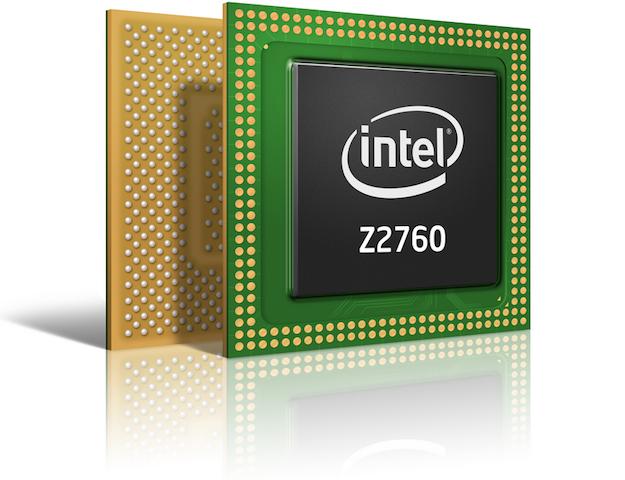
Medfield: Intel’s Medfield platform is currently represented by the Atom Z2460: it’s a single-core processor that can run from 1.6 to 2GHz, and it’s the chip driving all the Intel-powered smartphones currently on the market (of which there are few). In terms of performance, benchmarks have it competing favorably with dual-core ARM chips in terms of both processing power and battery life – and Intel’s x86 heritage may be helping the chip a bit in some areas, because the Z2460′s performance in things like the SunSpider JavaScript test have been very good. During development, Intel put an emphasis on Web performance.
The Medfield line has two other chips on the horizon: the high-end Atom Z2580 and the low-end Z2000. The Z2850 will increase raw clock speed to 2GHz without increasing battery consumption, but (perhaps most importantly for high-end phones) will add 4G LTE capability: anyone wanting to build a smartphone on the Z2850 won’t need to invest in separate LTE hardware. The Z2000 will be for entry-level devices: no LTE, and a clockspeed around 1GHz.
Clover Trail: Intel’s Clover Trail chips are right on the horizon: they’ve missed the Windows 8 launch and the end-of-year holiday buying season, a fact that can’t make Microsoft and partners looking to launch Windows 8 tablets very happy. Unlike Medfield, they’re dual-core chips, and they also feature new low-power states when idle or asleep that should give devices longer battery life and standby times. We’ll see if those work out: reports of the Surface Pro’s battery life are not promising.
What’s next? For tablets, Intel’s next platform is dubbed “Bay View,” with the first processors codenamed Valley View. They’ll feature anywhere from one to four processor cores based on a new architectural design running at up to 2.4GHz. They’ll also sport four new Intel Gen7 graphics engines derived from its mainstream Ivy Bridge processor line – that’s one more graphics core than Apple’s got in its current ARM-based A6X. Valley View will also be built using Intel’s 22nm process currently used for Ivy Bridge. Remember, smaller always means less power consumption. However, these chips are probably a year away – and Apple and other ARM tablet makers won’t be sitting on their hands in the meantime.
Can Intel earn money on mobile chips?
If Microsoft’s Surface Pro is any indicator, Intel may not have fully resolved power consumption issues in Clover Trail to make tablets competitive with ARM chips, but those single-core Medfield processors do seem to be able to give ARM designs a run for their money in terms of performance and power consumption. The question then becomes “how much money?”
ARM-based chips are cheap, with most ARM-based chips from Qualcomm and Samsung priced between $15 and $30 each. Intel has shipped some inexpensive CPUs in its day, but so far as I can determine the cost of ARM processors is below anything Intel has shipped in recent years. It’s clear that Intel’s margins on mobile chips will be considerably smaller than on its mainline PC and server chips, and (therefore) Intel will have to sell a lot of mobile chips if it wants to make up the revenue it’s losing from the shrinking PC market.
However, Intel might be able to persuade some device makers to get on board. Folks who want to use ARM processors not only have to pay companies like Qualcomm, Samsung, or Taiwan Semiconductor to make them (Texas Instruments has bowed out of the ARM business), but also have to pay a license fee to ARM for the designs. That gives Intel a little wiggle room on price, since Intel has full rights to the design and owns its own chip fabrication facilities. Where using ARM chips is complicated, Intel can offer one-stop shopping.
Even so, Intel is going to make a lot less money on every mobile chip it sells compared to PC and server processors. To make ends meet, Intel has to bet not only on the extraordinary growth of the mobile market (mobile devices outshipped PCs back in 2010, and the installed base of mobile devices should eclipse PCs next year) but also on consumers replacing their mobile devices more often than they replace PCs. That could work out: where consumers may replace PCs only ever three to five years, they are likely to replace smartphones and tablets more frequently – and they’re also likely to own more than one mobile device. In theory, Intel could be in a situation where it can sell a typical consumer three or four mobile processors in the same period of time it might sell them just one PC processor.
So why are Intel’s smartphones overseas?
If Intel is so keen to get into the mobile devices – and so much of the company’s future seems to ride on mobile – then why are Intel-powered smartphones mostly launching in emerging overseas markets? If Intel’s Medfield chips really do compare favorably with ARM-based phones, why aren’t smartphone makers looking to launch devices in the most lucrative smartphone markets like Europe and North America, where consumers have proven they will camp out overnight (in the cold and rain!) to be among the first to own a hot new phone? Are Intel and phone makers embarrassed about Intel-powered phones? Are they worried the devices won’t stand up to the scrutiny of savvy consumers, so they’re launching the devices in markets were customers perhaps aren’t as experienced or discerning?
The answer comes down to who Intel has been able to bring on board as partners … and LTE.
Partners: Intel’s approach to smartphones has not been to build and market its own phones, anymore than the company has built and marketed its own PCs. Instead, it has been creating reference smartphone designs running Android that it can pass along to phone manufacturers, who in turn customize, augment, and tweak as they like rather than market under their own brands.
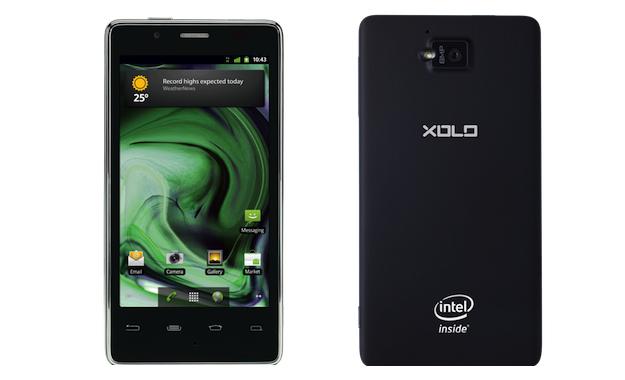
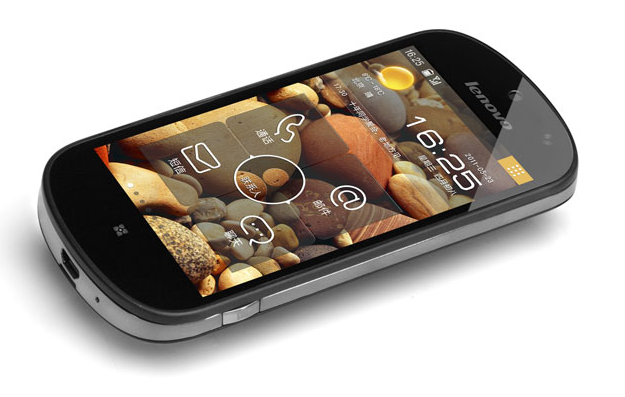
So far, Intel has been able to bring a number of partners on board, but they’ve mostly been manufacturers willing to run with phones very close to Intel’s reference designs. Major partners include Lenovo (now the world’s top PC manufacturer) and ZTE in China, Lava in India (Intel just announced two more smartphone partners in India – where mobile Internet use has already outpaced traditional PCs), and Russia’a Megafon.
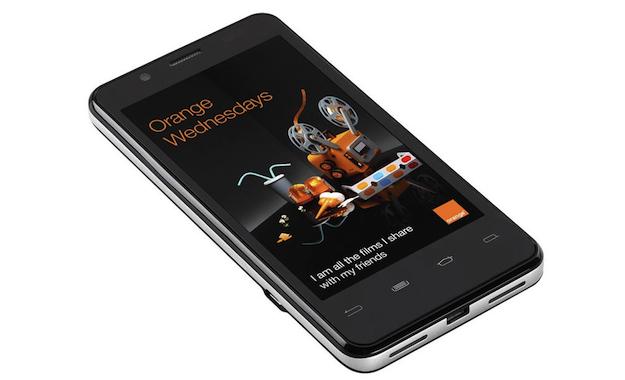
Intel has not been eschewing developed markets entirely: Motorola (now a unit of Google) has launched the Razr i in Europe and Latin America as well as a Medfield-based smartphone through China Mobile, and Orange UK launched the San Diego, a barely-touched version of Intel’s reference phone design.
LTE: What you’ll notice all these Intel-powered smartphones lack is LTE. While LTE is the immediate future of most mobile broadband efforts around the world, right now the United States is in the ironic position of having the broadest LTE deployment on the planet. That means U.S. carriers really aren’t all that interested in new phones without LTE (and highlights why the Google Nexus 4 disappointed so many), and many major phone manufacturers aren’t yet interested in making Intel smartphones for the North American market. Without LTE, it’s a tough sell. The next high-end chip in the Medfield line, the Atom Z2580, will have built-in LTE capability. It should be ready in the first half of 2013, and should enable phone makers to start targeting the American smartphone market seriously … if they choose.
Where will the puck be?
It will be interesting to watch how aggressively device makers target the U.S. market with Intel-powered smartphones. The United States may represent one of the most lucrative smartphone markets on the planet, but it’s also one of the most mature and it’s still dominated by the Apple iPhone. It takes more than a processor to compete successfully with Apple, which has proven the value of emphasizing design and usability. That means, in the United States market, Intel-powered smartphones are likely to come across as just-another-Android device: they might be better or worse than others, favored by some and disliked by others, but will almost certainly land in an already-crowded field that already has some standout players (like Samsung’s Galaxy line).
Overseas, however, Intel might have a better chance of establishing its devices as high-end or aspirational brands – in part because iPhones are often out of reach of many consumers in developing markets, but also because the Android offerings are often less complex and emerging middle class consumers are only now beginning a serious migration away from feature phones.
There are lots of potential customers in emerging markets: right now, only about 11 percent of India’s population has any sort of mobile device: that represents a potential market of hundreds of millions of people. And that’s still small time compared to China: China Mobile alone has more than 700 million customers: that’s more than double the total population of the United States. In the long term, establishing a firm position in those markets might be worth more to Intel than fighting for a share of the United States’ smartphone market.
In the recent months, MetroPCS has released a couple of very affordable phones for consumers. They’ve done it again today releasing the ZTE Avid 4G.
The phone gives you a huge amount of bang for your buck, cooming it at only $149. As far as power is concerned? The ZTE Avid features a 1.2 GHz dual Core CPU running on Android 4.0 Ice Cream Sandwich.
While it only has a 4 inch 800 x 480 display, the rest of its features make up for that, including 4G LTE support. Avid 4G also sports a 5MP rear facing camera and a VGA front facing camera. For a slight monthly fee, you will also have the ability to turn your phone into a mobile hotspot.
This handset is great option for those looking to get a great phone for not a lot of money. You can order it directly from the MetroPCS site or in-store. So if you have some gifts to buy for the holidays or just want to reward yourself, log on or head in and get yours today!