So what is the cutoff before a phone is more of a tablet that can place calls? Evidently bigger than 6.1 inches as far as Huawei is concerned.
The Chinese-based company recently announced the Ascend Mate, an impressively large 6.1 inch 1080p Android phone. The new phone is set to be officially unveiled at CES 2013 alongside the Ascend D2 and Ascend W1, but Huawei’s Chairman of Devices Richard Yu could not wait to show off the Ascend Mate.
Yesterday at a Huawei store in Guangzhou China, the chairman revealed the monstrous device to shoppers. The encounter can be seen in the video below.
The Ascend Mate is rumored to have a thickness of nearly 10mm, have a 361ppi LTPS display, quad core 1.8GHz HiSilicon K3V3 chip, and a life sustaining 4,000mAh battery. The price will run just short of ¥3,000 (approximately USD $480).
What do you think, how big of a phone do you think is too big? Would you consider purchasing this monster of a device?
When it comes to Windows Phone there's a new player in the starting line up in the form of Windows Phone 8 – Microsoft's latest attempt to make a significant dent in the mobile market.
While Android and iOS lead the way when it comes to mobile operating systems, you can draw many similarities between the two which may leave you feeling like you want some new. A fresh start, a new perspective.
That's exactly what Windows Phone, both versions 7 and 8, offers with a completely new way of providing you with your smartphone fill.
1. Nokia Lumia 920
What's better than a top Windows Phone 7 handset? A Windows Phone 8 one, and we've got no qualms about telling you this is the best Windows Phone out there.
Simplicity is the key here, the Lumia 920 does the basics well, from contact integration and calling, to web browsing and messaging – oh and it's 4G enabled
The 8MP camera on the back of the Lumia 920 is one of the best we've used and for anyone looking to get a top end cameraphone you need to seriously consider this Nokia.
The 4.5-inch display is also a good'un, crisp and clear it makes watching movies, surfing the web or Facebook stalking an enjoyable experience, thanks to the PureMotion HD technology on offer.
And you can even use it with gloves on... what more could you want? You're right: holograms. But they don't exist yet.
If you're pockets aren't so deep, or your hands are a little smaller you may want to take a look at the Lumia 820, which still provides you with the full Windows Phone 8 experience, albeit on a slightly smaller screen.
It still has the fancy tricks of Lumia 920, including wireless charging, 4G, NFC connectivity, but it also brings changeable covers so your phone can reflect your mood – exciting times.
Microsoft decided to shun Nokia when it came to championing Windows Phone 8, instead choose the HTC 8X to be the signature device for its new operating system.
While the 8X is by far the best looking of the Windows Phone 8 bunch it unfortunately doesn't have the prowess under the hood to match the powerhouse which is the Lumia 920.
You do get Beats Audio technology and a couple of amplifiers to enhance your tunes through the internal speaker as well as the headphone jack, plus the slender frame fits comfortably in the hand.
It's by no means a bad phone, it's just not the best Windows Phone 8 handset out there.
Because TechRadar's powers-that-be inexplicably rejected a perfectly sensible expenses request for a fully working TARDIS, we're stuck merely putting on our 'informed guessing hat' again, to figure out what's coming from Apple over the next 12 months.
This year, such predictions are perhaps tougher than usual: Apple's meticulous regularity regarding release schedules was thrown to the wind during 2012, most notably with the iPad 4 following the iPad 3 after only six months. Also, we were a year ago totally wrong about the iPod Classic finally bowing out - it's still on sale.
Still, we are heroically soldiering on regardless, with a list of 'Apple in 2013' predictions. They perhaps aren't as bonkers as some of those you'll find elsewhere on the web, but they are therefore probably more likely to come to pass!
1. An early iPhone 5S
You'd be crazy to think Apple wouldn't update the iPhone in 2013, given that it's responsible for much of the company's revenue. Judging by iPhone release patterns to date, it's likely to be a smaller bump this time round: an iPhone 5S, perhaps, with incremental improvements to speed, battery life and the camera. What's less certain is when it'll appear. With the recent autumn event suggesting a new iPad next October or perhaps every six months, the next iPhone might well arrive in the spring.
2. Apple TV or Apple iTV
Tim Cook recently referred to TV as "an area of intense interest" for Apple, adding: "When I go into my living room and turn on the TV, I feel like I have gone backwards in time by 20 to 30 years." So obviously this means a literal Apple iTV, right? Not necessarily. TVs aren't updated regularly, yet Apple likes to refresh hardware often. Smart money is instead on the existing Apple TV box in 2013 becoming more than a mere hobby, and disruption coming from further integration with iOS devices, bespoke Apple TV apps, and an iTunes Match-style service for video, along with other deals with broadcasters and TV companies.
2013's Apple TV will be this same Apple TV, but with apps and more services
3. Something for the pros
We last year predicted the last ever Mac Pro would arrive in 2012. Instead, we got a half-hearted update and a promise from Tim Cook that the company was "working on something really great for later next year". Macs remain the minority of Apple's revenue, desktops are the minority of Mac sales, and Mac Pros sell in lower quantities than the iMac and Mac mini. Still, if Cook's true to his word, we will see a new Mac Pro next year - and we reckon that will be the last one Apple releases before it concentrates entirely on appliance computing.
In October, Apple fired Scott Forstall, and Sir Jony Ive, senior vice president of industrial design, was given the role of leading and directing all Apple's 'human interface', including software. We doubt we'll see a wholesale shift from overblown textures to sleek minimalism, but by the end of 2013, Ive will make his presence felt on OS X and iOS. We hope whatever the result it will at the least mean more usable Apple operating systems, and potentially more beautiful ones as well.
Apple to date has used plenty of textures in its apps — something Ive might soften now he's leading all of Apple's human interface
5. Innovation question marks
Apple's expected to revolutionise an industry about every eight seconds or tech pundits get all huffy. In reality, though, Apple has always been a company of iteration, only occasionally making breakthroughs: the Apple II (1977), the Mac (1984), the original iMac (1998), the iPod (2001), the iPhone (2007), and the iPad (2010).
Nonetheless, expect question marks to be raised during 2013 if Apple doesn't disrupt another market, regardless of how well its other devices are selling. Also expect people to remark a lot how the company's not the same now Steve Jobs isn't around, despite the company being a corporate-sized embodiment of the man.
6. Map attack
Having ditched Google Maps data, Apple rolled its own mapping solution for iOS 6. The results were problematic and error-strewn. Tim Cook apologised, Scott Forstall in part got the boot for the mess, and Apple doubled down, yet still didn't fix things fast enough for the Australian state of Victoria's police force, reportedly concerned about people becoming stranded. (That last story was a tad overblown, as it turns out, with only one person actually stranded. Still, it showcased the system's inability to make sensible assumptions when two places have similar names.)
Apple's pretty hopeless when it comes to online services, but maps are an area in which it cannot afford to fail, and so we've two predictions: first, Apple Maps will improve at a rate of knots; secondly, the service will be under close scrutiny, and so will ostensibly appear to remain broken but will in reality be less so as time moves on.
Apple Maps: not as good as it should have been. Expect that to change in 2013
7. Super Siri
Siri arrived on more devices through iOS 6 and also learned some new tricks in 2012. Although it doesn't yet do everything people want, the voice-control system is a little more intelligent regarding finding information, and it can now launch apps. Apple needs to up its game to compete with the impressive Google voice search, though, and so 2013 will see major enhancements to Siri, primarily in terms of speed, but also regarding the information it can access. Also expect Apple to increasingly use Siri to circumvent the need to search online — much to the chagrin of Google.
8. Release cycle changes
For a time, Apple's release cycle was like clockwork, especially when it came to iOS: new iPads in the spring and an iPhone in late summer. The iPad 4 changed all that, arriving a mere six months after its predecessor. Expect competition from rivals to further disrupt Apple's release schedule, with some devices moving to six-monthly rather than annual updates, and others shifting from previous cycles. Also, given Apple's launch/shipping misses regarding the new 27-inch iMac (which launched alongside the 21-inch new iMac) and iTunes 11, we won't be surprised to see the company revert to simply not announcing future products unless they're pretty much ready to ship that day.
The iPad 4: six months early, by 2012's schedule. 2013's will be more turbulent
9. More profits and less market-share
We don't think we're in for a repeat of Windows/Mac OS when it comes to Android/iOS, but cheap Android tablets and smartphones will nonetheless continue to have an impact on Apple's market-share during 2013. Figures will, however, continue to show iOS has the lion's share in terms of ongoing usage and profits. Another prediction: pundits will fail to realise Apple's stalling or falling share of a rapidly growing market nonetheless equals growth, and continue to lump Android into a single group, despite, as Ian Betteridge recently noted, it being "a set of semi-compatible platforms, built around the same technology".
10. Baffling survival of the iPod Classic
We last year predicted the iPod Classic's luck would run out in 2012, given Apple's shift to the cloud, its focus on iOS, and dropping flash memory prices potentially enabling larger-capacity iPod touch devices. Amazingly, it survived. Therefore, we're going to predict the iPod Classic will bafflingly remain in play for another year, in part because we were wrong last time, but mostly in an attempt to dare Apple to do otherwise.
The iPod classic, still going strong, against the odds — although that's probably because it is relatively cheap Source : techradar[dot]com
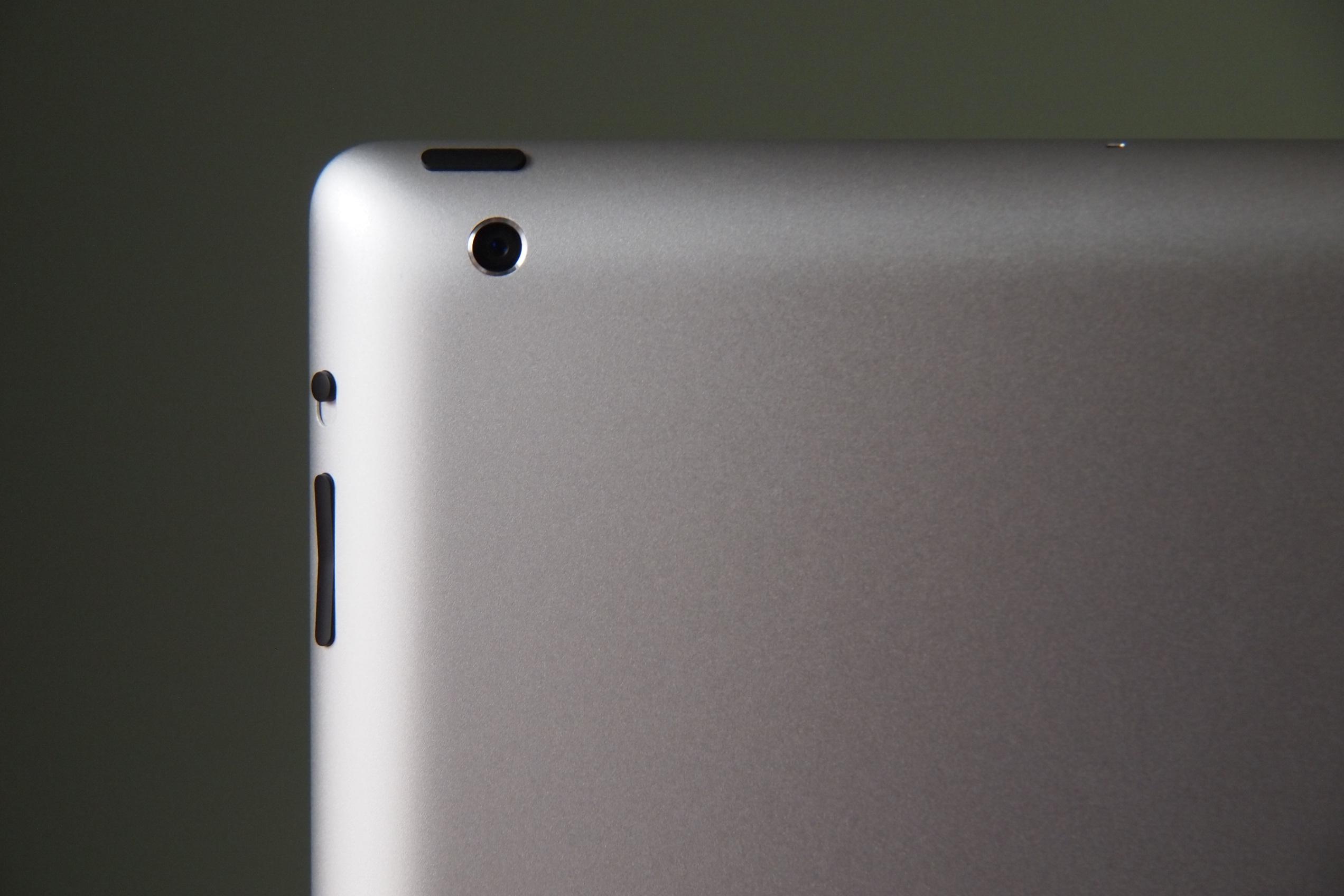
Apple is preparing to release another update to its iPad in March, less than six months after launching the fourth iteration of its popular tablet, a new report claims. The fifth-generation iPad is said to be lighter and smaller than the current model, possibly with narrower side bezels like those on the iPad Mini.
In what surely has to be one of the final Apple-related rumors of 2012 – and there have been more than a few of them this year – the Cupertino company is reportedly just months away from unveiling yet another update to its full-sized 9.7-inch iPad. The claim comes from Macotakara, a Japanese website that has previously called it right with a number of Apple-related predictions.
Macotakara says that according to “an inside source” the fifth-generation iPad will be unveiled in March 2013, less than six months after the launch of the current version. The updated device will be 2mm thinner, 4mm shorter and 17mm narrower, a significant decrease that appears to suggest the side bezels of the next iPad will resemble those of its little brother, the iPad Mini.
With the third- and fourth-generation iPads actually thicker and heavier than the iPad 2, you can bet engineers at Apple have been looking at ways to shrink down the extra internal tech required to power the device’s high-resolution Retina display in order to get the tablet back down to size.
The website failed to note any under-the-hood changes we might see with the next version. The current iPad is powered by a 1.3GHz A6X dual core processor, a 1.3-megapixel front-facing camera and 5-megapixel rear-facing camera, all of which could be improved upon the next time the product receives a refresh.
The expected March date makes a certain amount of sense, with the first three iterations of the iPad following a March/April release cycle. But could it really come so soon after the fourth-generation iPad, which launched just last month? In many ways it’s easy to see that Apple would want to move towards a more frequent release cycle, keen as it is to maintain its dominant position in the tablet market.
Macotakara’s report also says the tech giant is currently working on the next iteration of Apple’s smaller iPad, the Mini, expected to launch with a Retina display and faster A6X processor, which backs up other recent reports suggesting the same.
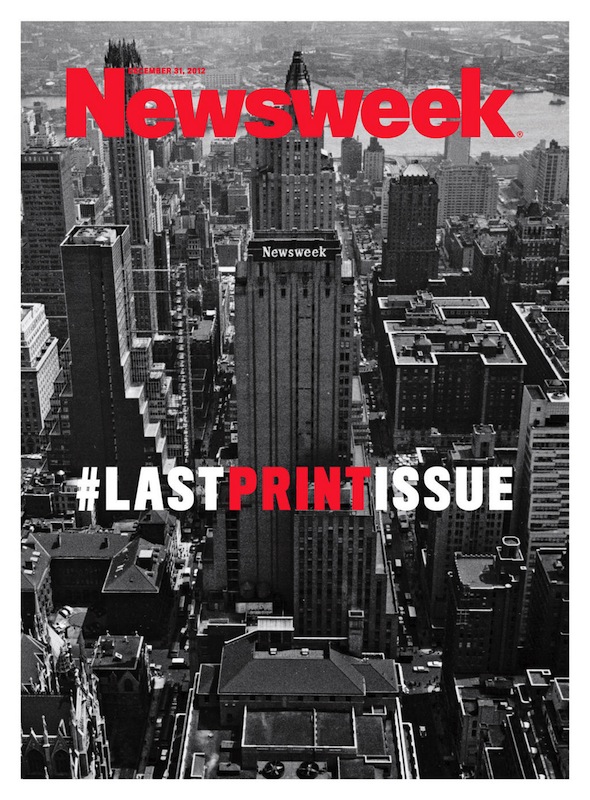
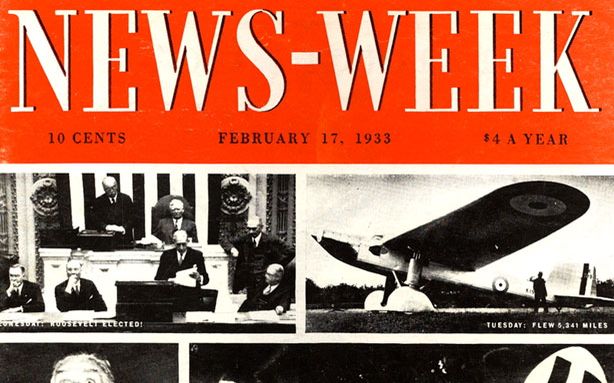
For Newsweek, the future is digital. After nearly 80 years, the print edition of the venerable news magazine is rolling off the presses for the last time. The final cover was tweeted by Newsweek on Sunday just prior to it hitting newsstands.
Newsweek’s print edition is about to hit newsstands for the final time after rolling off the presses for almost 80 years. The publication will continue as a subscription-based mobile app and web magazine called Newsweek Global.
Newsweek tweeted its final December 31 cover on Sunday, showing a full-page black and white photo of its former Newsweek offices which the organization vacated in the mid-’90s. It goes with the hashtagged headline “#LastPrintIssue”, seemingly a nod to its all-digital future or simply an attempt to create some Twitter buzz.
The venerable news magazine announced its decision to scrap its printed offering in October following reports that the company was losing somewhere in the region of $40 million annually.
Explaining the move in a piece titled A Turn of the Page for Newsweek, editor Tina Brown wrote, “We are transitioning Newsweek, not saying goodbye to it. We remain committed to Newsweek and to the journalism that it represents.”
She continued, “This decision is not about the quality of the brand or the journalism – that is as powerful as ever. It is about the challenging economics of print publishing and distribution.”
A tie-up with web-based news site The Daily Beast in 2011 saw online traffic to its joint site increase markedly as a result. A selection of Newsweek articles are available on the free Daily Beast site, while entire digital editions are currently available – for a fee – to those with iOS, Android, Kindle and Nook devices.
Earlier this month it was reported The Daily Beast was examining the idea of introducing a metered access model that would allow readers to view a number of articles for free before requiring payment for continued access, a move that would no doubt come as a big disappointment to its mass of followers.
For Newsweek, the decision to change was simple – with more and more readers going online to seek out its journalism, a print-edition readership half of what it was 20 years ago and costs spiraling out of control there really was only one way to go.
On Sunday Brown tweeted, “Bitter sweet! Wish us luck!”