Sci-fi tech that’s already becoming a reality

The future is now. With the year coming to an end, we look at some of the sci-fi tech that's already becoming science fact.

As with any year ending, we often take the time to think about how far we’ve come and where we’re headed. At least the world isn’t ending, right? What we tend to forget is the fact that we already live in the future. We may not have flying cars (yet), but we have phones that talk to us and robots that mop our floors. Our science fiction utopia can’t be that far off, can it? We found four pieces of tech we’re confident we’ll be seeing more of in the next year or two.

Mecha

Mecha are the, shall we say, more fantastic side of robots, the kind of walking weapons you’d see in shows like Gundam and Robotech, and more recently in films like Guillermo del Toro’s upcoming Pacific Rim (if you haven’t seen it, watch the trailer). Just answer this question: If you could be inside a giant robot monster, wouldn’t you wreak wanton havoc upon your enemies? Of course you would. Hence their everlasting appeal.

While you probably won’t see the kind of mecha that stand at skyscraper height anytime soon, 2012 was a red-letter year for the mech genre thanks to a certain Kuratas. The 13-foot tall, $1.35 million mech warrior went on sale last month. It features all the requisite equipment: rocket launcher shoulder pads and machine gun arms. It can be piloted from inside and, naturally, via smartphone. This is only the beginning.

Cloaking devices

Cloaking devices and invisibility cloaks have a storied history in both science fiction and fantasy. The human mind thrills at the thought of moving around completely undetected, and we have countless stories that employ the device in a myriad of ways, from ancient Norse legend all the way down to Harry Potter.

Unfortunately, actual scientific inquiry into whether or not that sort of thing is even possible is very much in its infancy. But this year, scientists were able to effect actual invisibility by manipulating the electromagnetic spectrum around a small object. You had to be observing the object from a single direction, sure, but it’s something.

While this isn’t the sort of thing you’ll likely see (or not see?) on the street anytime soon, the next few years could see increased military interest that can really push the research.

Self-driving cars

While robotics of the stripe that envisions automata walking among us is a little further off than we’d prefer, the idea of self-driving cars has gotten incredible traction in the last several years. Google has already demonstrated that they can create a driverless car that can perform better on the road than one piloted by a human being.

Right now, driverless cars are street legal in California, Nevada, and Florida. However, there are still questions to be answered. Namely, how might law change to reflect our understanding of “driver” when the car itself is doing all the work? And if an accident does happen, in what ways is he or she liable? In the coming years, those questions will have to be addressed in earnest.

3D-printed human tissue

Actually growing human tissue in a lab is maybe one of the scarier ideas in modern medicine, but it’s also one that desperately needs further study. Growing tissue to treat injuries, repair and replace organs, and maybe someday even grow limbs, could be the breakthrough that can eventually treat victims of disease and war.

But imagine printing that tissue in a machine as opposed to growing it in a petri dish. While Makerbot hasn’t signed up quite yet, scientists are currently working on ways to 3D-print human tissue in the hope of one day manufacturing human organs on demand.

Scientists are currently developing the tools needed to tailor printed tissue for such applications as burn wounds or creating new blood vessels from scratch. But as we move beyond fixing the human body to improving upon it, what kind of ethical concerns might be raised?

Invisibility photo via PopSci


Source : digitaltrends[dot]com

Best apps for your new tablet or smartphone

Best apps for your new tablet or smartphone

Fill your phone or tablet with our recommended apps

Just got an Android or Apple phone or tablet for Christmas? Lucky you!

Both platforms have a wealth of apps, free and paid-for, that you can download and enjoy on your new device.

But with so many apps available, how do you know which ones to get? That's where we come in.

TechRadar is well known for its definitive lists of the best apps for Android and iOS, which we keep regularly updated.

So whether you're looking for the best games, apps to help you take control of your social networks, or apps to help you be more productive at work, we've got you covered.

Below are links to our most popular app roundups…

Best Android apps

60 best free Android apps

40 best free Android games

10 best free Android apps for kids

10 best office apps for Android

Best Android browser: 8 compared for speed and features

8 best Android keyboard apps reviewed and rated

10 best Android music players

10 best Android movie player apps

VitalPlayer

Best iPad apps

70 best free iPad apps

60 best free iPad games

Top 230 best iPad apps for iPad 4, iPad 3, iPad 2 and iPad mini

Best iPad apps

Best iPhone apps

70 best free iPhone apps

60 best free iPhone games

5 best iPhone sat nav apps

10 best iPad and iPhone apps for mobile working

Also see:

5 best Android and iOS benchmark tools

Best iPad and iPhone 2D shoot 'em ups

Best iPhone and Android apps for cycling from our colleagues at BikeRadar


Source : techradar[dot]com

Developers hoping to cash in with app sales as millions unwrap new tablets and smartphones

Gameloft last year launched an app sale on December 29. This year, however, mindful that tablets are set to be unwrapped by the boatload – along with a not unimpressive number of app-hungry smartphones – the video game developer is kicking off its sale a little earlier.

The company announced its cut-price Android goodies in a blog post on Christmas Eve. “Luckily, we’ve all survived the Mayan Apocalypse ;) and can look forward to our holiday festivities!” the post said. “And what is the best part about Christmas? All the sales of course & we’ve got some great ones for you this year!”

Gameloft’s iOS offerings were put on sale even earlier – last week – and remain on offer. For the Android bonanza, Gameloft says its cutting the price of “pretty much everything except Modern Combat 4.” Well, you can’t have it all.

But there’s plenty to be going on with – The Dark Night Rises, for example, can now be yours for 99 cents, along with The Amazing Spider-Man, Gangstar Rio: City of Saints, Wild Blood and The Adventures of Tintin. You might also want to take a look at Gameloft’s Daily Deals page (iOS and Android) where you can pick up some free, or deeply discounted, games.

Of course, Gameloft isn’t the only developer offering its games at discounted prices this holiday season. Electronic Arts, for example, also recently launched a sale, offering a whopping 85 percent off the likes of Fifa Soccer 13 (for iOS, now 99 cents) and Need For Speed (iOS and Android, now 99 cents).

With the recent release of Apple’s iPad Mini, Amazon boosting its Kindle Fire line-up and Google entering the tablet market with its Nexus offerings, it could prove to be a lucrative end to the year for app makers as excited owners of new devices waste no time in diving into the various app stores, credit cards at the ready.


Source : digitaltrends[dot]com

Here are all the apps Santa forgot to put on your new phone or tablet

2012 very well may have been the year of the filled up hard drives for mobile users. There were a ton of great apps on every platform to keep us swiping and tapping away. We've compiled some of our favorite apps of the year, including Sparrow, Figure, City Lens, and more.

The past year brought some amazing new apps into the world. All of these apps came into our lives less than twelve months ago, but it’s hard to imagine how we ever lived without them. From apps that re-imagined the notebook for the digital age to ones that kept us on task over the course of the day, there are some real routine changers out there that we’re glad we were introduced to this year. Here are our favorite apps and games to come out in 2012.

Figure (iOS)

Ever been walking and seen a street performer acting as a one man band, playing multiple instruments at the same time? Next time you do, throw a dollar in his bucket and tell him to download Figure. This iOS app came on the scene to give anyone the ability to make music. With a few minutes and a couple tabs, you’ll be able to create impressively unique and complex beats no matter where you are. It’s music making made easy.

Sparrow (iPhone)

If you spent all of 2012 looking for an email app to replace the disappointing offerings from the big names in mobile apps, then we hope you stumbled along Sparrow at some point. The feature-rich email client that had made a solid impression on Mac users made its mobile debut this year, giving people on the go more control over their inbox than ever before. Intuitive navigation and a layout that makes your inbox look like less of a less than it probably is, Sparrow soars.

Barefoot World Atlas (iOS)

Designed to show off the Retina display of the updated iPad, Barefoot World Atlas is a gorgeous education tool that will teach you about cultures and countries around the world in a visually appealing way. A 3D globe as densely populated with facts as the world is with people, Barefoot World Atlas is interactive, entertaining, and educating. It will probably trick you into learning some stuff when you think you’re just looking at pretty pictures.

Nokia City Lens (Windows Phone)

Though augmented reality has yet to be mastered completely, Nokia is doing its part in the process. Released in beta earlier this year and getting improvements added in throughout, Nokia City Lens offers Nokia phone users the opportunity to look at the world as if they were wearing Iron Man’s visor. Alright, it’s not quite that comprehensive. But it does allow you to take a look at the world around you and access information about them simply by holding up your phone.

Xbox SmartGlass (iOS, Android, Windows Phone, Windows 8/RT)

The gamer population in the United States as big as it’s ever been, it should come as no surprise that gaming apps are becoming more popular. In the case of Xbox SmartGlass, it’s turning your tablet into an accessory for your Xbox Live experience. No longer do you need to scroll through tiles and pound out letters one button at a time. Use Xbox SmartGlass as an extension of the console. The app acts as a remote, a keyboard, and more.

Clear (iOS)

Getting stuff done is often easier said than done but for users that discovered Clear for iOS, 2012 was likely the most productive  year they’ve had. Clear is about as accurate a name as this app can have as it lays out daily tasks in a simple, clear list. Controlled through swipes that make it easy and satisfying to check tasks off your to-do list, Clear became a clear choice in productivity helpers.

Day One (iOS)

If this past year went by with a breeze and you can barely remember any of it, then make sure you start out 2013 with Day One. Journaling seems like something of the past or an overused sitcom plot that leads to a character reading the diary of another, but Day One allows you to capture every moment to make it easy to look back on. It’s one thing to live an event, it’s another to be able to remember it in vivid detail. Day One will be your photographic memory.

Paper (iPad)

Apple showed love to Paper in its year-end picks for the best iPad apps and we have to agree with the crew in Cupertino. Paper is a really brilliant tool for artists and doodlers alike. It turns your iPad into the ultimate sketchbook and encourages creation of all kinds of awesome visual designs. Draw out a crazy portrait you’ve had in your mind or crudely draw a couple graphs. No matter what you do, it’s going to look amazing in Paper.

Viggle (iOS, Android)

With all the great shows that have cropped up on TV over the past few years, it’s impossible to not watch a little bit of television. Viggle embraces this fact and says, “Watch a little? Watch tons! We’ll give you free stuff if you do.” How can you turn down an offer like that? Check in to your favorite TV shows as you’re watching them and Viggle will reward you with points redeemable at tons of your favorite stores. You can’t go too wrong with that offer.

Nike+ Running (iOS, Android)

If you’re feeling a little guilty from all the sitting and watching TV you’re doing with Viggle, give Nike+ Running a chance. Nike has been a well-known name in fitness for quite some time now, but their entrance into the mobile app world has been recent. It’s welcome as well, as Nike+ Running is one of the best running companion apps out there. Set targets, compare your runs, track time & calories burned, and more.


Source : digitaltrends[dot]com

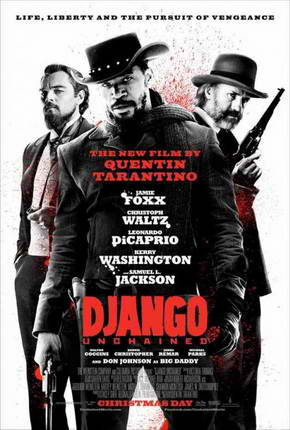
Django Unchained review: Tarantino closes out the year in style

Quentin Tarantino’s foray into the spaghetti western genre is a natural one for the director, and the result is one of the best films of the year.

It really was just a matter of time until Quentin Tarantino made a spaghetti western. The genre obviously influenced his style, so it makes perfect sense that he would attempt to try his hand at one eventually. The majority of Tarantino’s films can be arguably defined as a reinvention of classic, but also slightly neglected genres. They are an idealized and romantic look back at what certain genre movies of the past were in the minds of fans. Tarantino operates within these cult genres, and his films revitalize dormant styles with a modern twist. 

That often limits the appeal of Tarantino’s films. He has broken into the mainstream, but his unique style isn’t for everyone, nor will it likely ever win over people set against him. In his newest offering, that hasn’t changed – even if it is one of his best films yet.  

Django Unchained is Tarantino’s (overdue) take on spaghetti westerns. Even the name “Django” is an homage to the 1966 Sergio Corbucci film, Django, which was memorable for being dubbed the most violent movie ever made at the time. Django Unchained shares the violent sensibilities of its 1960s namesake, as you would expect of a Tarantino film, but the story similarities end there.

Set immediately prior to the Civil War, the movie is dominated by the specter of slavery, and Tarantino handles the issue with the same delicacy in which he has always handled sensitive subject matter – i.e. not at all. He runs head first into the topic and paints a horrific picture of the institution, but does so in a way that doesn’t define the film as you might expect.

It is an inexorable element of Django Unchained, of course, but Tarantino satirizes several aspects of slavery in a way that allows you to laugh at a few of the more absurd characteristics of the institution instead of crying at what is among the worst and most despicable periods in human – and especially American – history. It might come across as insensitive – and it can be – but there is never a moment when it is overwhelms the film. It becomes almost secondary to what is primarily a spaghetti western with a comedic tint, as seen through the lens of Tarantino.

The film is essentially broken into two parts, each of which carries a different tone and theme. It doesn’t have a specific break point as many other Tarantino films do, but there is a notable shift at about the half way point. The pacing also changes because of it – which presents a few problems late in the movie – but it doesn’t detract from the overall quality.

The first half is a mentorship story, complete with a training montage. The real star of this section of the film is the travelling bounty hunter, Dr. King Schultz (Christoph Waltz). Schultz is a gentleman and a scholar, as well as a cold blooded killer. The character is actually somewhat similar to Waltz’s role as the strangely charming Nazi in Tarantino’s Inglorious Basterds, just minus the indefensible background and villainous tenancies.

While in pursuit of a trio of brothers, Schultz encounters the slave, Django (Jamie Foxx), who can help identify his current prey. Together the pair track down their bounty and form a friendship of sorts in the process.

Waltz is the clear star at this point, both in his character and in his performance. He is electric, and using the witty dialogue Tarantino feeds him, every scene he is in is a good one. Waltz drives the film and is responsible for many of the film’s funniest moments.

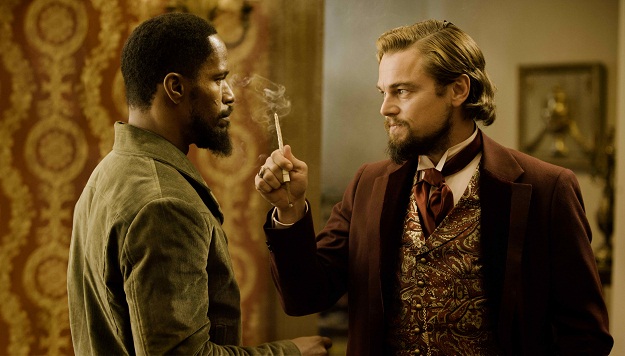
The second half of the film focuses on the transformed Django, as he begins to search for his wife (Kerry Washington) who was sold to the infamous plantation owner Calvin J. Candie (Leonardo DiCaprio). 

At this point Foxx takes control and becomes the star of the film, a role he dominates and excels in. The biggest surprise though is that of DiCaprio as Candie. He oozes charm and repugnance in equal parts, and with the help of his butler and confidant Stephen (played with gusto by Samuel L. Jackson), he is one of the most interesting villains on screen this year.

Both sections have their merits, and they combine to offer one of the most original – and entertaining – film of the year. Fans of the spaghetti westerns will feel right at home and appreciate what Tarantino is attempting, while those unfamiliar with the genre will see an idealized and modernized take on what made them into cult favorites to begin with.  

It is also very much a Tarantino film, with all the good and bad that comes with it. Those that don’t like his style – the twisted banter and heavy use of ultra violence – won’t find anything to change their mind here. His fans will argue about where this film rates in his library for years to come, but it will certainly be near the top.

The film has a few issues though, primarily with the pacing. The first half of the movie is a series of action pieces linked through humor, as the duo hunt bounties. The second part becomes a much slower narrative, as it is all setup to the end goal and relies heavily on dialogue rather than action – albeit witty and original dialogue. But there is a noticeably slower pace once the plot changes. 

That doesn’t take away from the overall product, but there are a few moments that drag. It feels a bit like two movies crammed into one, and the first is the better – but only marginally. This is a fairly minor complaint though, and even at its slowest Tarantino manages to throw in some intriguing visuals, good banter, or something outrageous to distract you from the slower pace.

Conclusion

Tarantino’s foray in the world of spaghetti westerns is handled with his usual aplomb and gusto. There are a few moments in the second half of the film where the pacing falters, especially compared to the first half, but it is a temporary hiccup and the climax brings everything to a good resolution.

The issue of slavery is never going to be an easy one, nor should it be, but Django Unchained allows it to speak for itself without becoming the sole focus of the film. That will likely turn some people off, and that’s fair. But they will be missing one of Tarantino’s best films, as well as one of the best films of 2012.


Source : digitaltrends[dot]com

It's free
index