New security vulnerability found in Java; experts recommend disabling the app

Considering how common Java is across work and home computers, this has the potential to be a huge security breach. Here’s what you need to know.

Researchers have identified a zero-day security flaw in the Java program that hackers are exploiting. The concern is severe enough that the U.S. Computing Readiness Team, a unit of the Department of Homeland Security’s National Cyber Security Division, issued a note about the flaw. The vulnerability has already been incorporated into two of the most popular Web threat tools for hackers’ malware distribution, so the threat is live and putting computers at risk, The Next Web reported. 

The problem is a remote code execution vulnerability in Java 7 Update 10 and earlier versions of the application. This weakness allows a hacker to execute arbitrary code on an exposed machine. The Computing Readiness Team said there is no known workaround yet to protect against malicious attacks, and they recommended disabling Java if at all possible until maker Oracle can enact some repairs. If you can’t disable or uninstall the application, your best bet is to disable it in your main browser and keep all of your Java use confined to a separate browser.  

A French researcher working under the name Kafeine first reported the vulnerability, and security company AlienVault Labs confirmed the flaw. Kafeine said in his post about the problem that the latest version of Java was being exploited on a site receiving a heavy volume of traffic. 

Java has been a source of security concerns for years. Java 7 Update 7 was an out-of-cycle patch released in September to block a vulnerability that let hackers assume total control over a computer. The software is near-ubiquitous, making it an appealing target for hackers. Check out our explainer on Java for more information, including a walkthrough of how to disable and uninstall the app on your computer. 

Image via Jennie Faber


Source : digitaltrends[dot]com

Nokia Reports Positive 4th Quarter for Nokia Lumia Smartphones, 4.4 Million Units Sold

The Nokia Lumia 920 has certainly seemed to be off to a good start so far, selling out constantly across the globe and in as little as 20 minutes in the Chinese market. We’ve heard that Windows Phone 8 is starting to take off in a way that Windows Phone 7 never did.

You have to wonder though, how much of it is hype, and how much is reality? While the Nokia Lumia line might not be selling on the same level as flagship devices from Apple and Samsung, the company has now reported its earnings for 4th quarter 2012– and they aren’t bad at all. In fact, they are rather impressive.

The company managed to sell 4.4 million Lumia units, versus 2.9 million in the 3rd quarter. Beyond their Windows Phone 8 handsets they also sold 9.3 million of their touch-screen Asha feature phones.

Notably, their aging Symbian smartphones sold 2.2 million units, marking the very first time that Windows Phone sales have been higher than Symbian, which is still reasonably popular in many developing nations across the globe.

Nokia has a tough road ahead of it when it comes to rebuilding itself from its recent years of fiscal decline, but its Windows Phone 8 offerings certainly seem to be off to a good start so far. Personally, this is great news for the mobile industry and for consumers. The more competition, the better.

What do you think of Nokia’s Lumia Windows Phone 8 handsets, do you think they are worthy of all the hype and praise or not?

Nokia provides preliminary financial information for Q4 2012 and preliminary outlook for Q1 2013

Nokia Corporation
Stock exchange release
January 10, 2013 at 15:00 (CET+1)

Espoo, Finland - Nokia today provided preliminary information on certain aspects of its fourth quarter 2012 financial performance and also provided preliminary information on its outlook for the first quarter 2013.

Nokia now estimates that Devices & Services has exceeded expectations and achieved underlying profitability in the fourth quarter 2012.
- Mobile Phones business unit and Lumia portfolio delivered better than expected results; and
- Operating expenses were lower than expected.
- Devices & Services non-IFRS operating margin for the fourth quarter 2012 now expected to be between break even and positive 2 percent.

Seasonality and competitive environment are expected to have a negative impact on the first quarter 2013 underlying profitability for Devices & Services, compared to the fourth quarter 2012.

Nokia also estimates that Nokia Siemens Networks has exceeded expectations for the fourth quarter 2012, delivering record underlying profits and a third consecutive quarter of underlying profitability.
- Strong performance in higher margin product categories and geographic regions; and
- Better than expected cost management.
- Nokia Siemens Networks non-IFRS operating margin for the fourth quarter 2012 now expected to be between 13 and 15 percent.

Seasonality is expected to have a negative impact on the first quarter 2013 underlying profitability for Nokia Siemens Networks, compared to the fourth quarter 2012.

Commenting on the preliminary Q4 financial information, Stephen Elop, Nokia CEO, said:
“We are pleased that Q4 2012 was a solid quarter where we exceeded expectations and delivered underlying profitability in Devices & Services and record underlying profitability in Nokia Siemens Networks. We focused on our priorities and as a result we sold a total of 14 million Asha smartphones and Lumia smartphones while managing our costs efficiently, and Nokia Siemens Networks delivered yet another very good quarter.”

Preliminary financial information for the fourth quarter 2012:

Nokia currently estimates that Devices & Services net sales in the fourth quarter 2012 were approximately EUR 3.9 billion, with total device volumes of 86.3 million units.
- Mobile Phones net sales of approximately EUR 2.5 billion, with total volumes of 79.6 million units of which 9.3 million units were Asha full touch smartphones.
- Smart Devices net sales of approximately EUR 1.2 billion, with total volumes of 6.6 million units of which 4.4 million units were Nokia Lumia smartphones.
- Total smartphone volumes of 15.9 million units composed of 9.3 million Asha full touch smartphones, 4.4 million Lumia smartphones and 2.2 million Symbian smartphones.
- Devices & Services Other net sales of approximately EUR 0.2 billion, including a positive impact from non-recurring IPR income of approximately EUR 50 million.

Nokia currently estimates that Devices & Services non-IFRS operating margin for the fourth quarter 2012 was between break even and positive 2 percent, which compares to the previous outlook of approximately negative 6 percent, plus or minus four percentage points. Devices & Services non-IFRS operating margin includes a positive impact from non-recurring IPR income of approximately EUR 50 million.

During the fourth quarter 2012, multiple factors positively affected Nokia’s Devices & Services businesses to a greater extent than previously expected. Preliminary information indicates that the main factors include:
- Within the Devices & Services business, better than expected financial performance in the Mobile Phones business unit and Lumia smartphones. In addition, Devices & Services recognized non-recurring IPR income of approximately EUR 50 million; and
- Lower than expected Devices & Services’ operating expenses, partially due to greater than expected cost reductions under the restructuring program.

Nokia currently estimates that Location & Commerce net sales in the fourth quarter 2012 were approximately EUR 0.3 billion and the non-IFRS operating margin was between 13 and 15 percent.

Nokia and Nokia Siemens Networks currently estimates that Nokia Siemens Networks net sales in the fourth quarter 2012 were approximately EUR 4.0 billion and the non-IFRS operating margin was between 13 and 15 percent, which compares to the previous outlook of approximately positive 8 percent, plus or minus four percentage points. Nokia Siemens Networks non-IFRS operating margin includes a positive impact from non-recurring IPR income of approximately EUR 30 million.

During the fourth quarter 2012, multiple factors positively affected Nokia Siemens Networks’ businesses to a greater extent than previously expected. Preliminary information indicates that the main factors include:
- More favorable product and regional mix in Nokia Siemens Networks. In addition, Nokia Siemens Networks recognized non-recurring IPR income of approximately EUR 30 million; and
- Better than expected improvement under Nokia Siemens Networks’ restructuring program to reduce operating expenses and production overheads.

Preliminary outlook for the first quarter 2013:

Nokia expects its non-IFRS Devices & Services operating margin in the first quarter 2013 to be approximately negative 2 percent, plus or minus four percentage points. This outlook is based on Nokia’s expectations regarding a number of factors, including:
- competitive industry dynamics continuing to negatively affect the Smart Devices and Mobile Phones business units;
- the first quarter being a seasonally weak quarter;
- consumer demand, particularly for our Lumia and Asha smartphones;
- continued ramp up for our new Lumia smartphones;
- expected cost reductions under Devices & Services’ restructuring program; and
- the macroeconomic environment.

Nokia expects Location & Commerce non-IFRS operating margin in the first quarter 2013 to be negative due to lower recognized revenue from internal sales, which carry higher gross margin, and to a lesser extent by a negative mix shift within external sales.


Source : mobilemag[dot]com

Hands-On with the 6.1-Inch Huawei Mate Android Smartphone


I don’t think we ever thought we were ever going to get here, but the natural progression has spoken for itself. The iPhone has had a 3.5-inch display through a number of generations. Then, we started to see Android smartphones gain in popularity and they also gained in size.

I like to use the Galaxy series as a prime example: the original Galaxy S Captivate had a 4-inch display. The Galaxy S II got up to the 4.3-inch range (with some variations) and the Galaxy S III is in the 4.8-inch range. Then, the Galaxy Note and Note II arrived, pushing screen size to 5.3 and 5.5-inches respectively. A device like the Huawei Mate was inevitable.

Announced here at the 2013 Consumer Electronics Show in Las Vegas, the Huawei Mate is a beast of an Android smartphone. It has really pushed the envelope by offering a huge 6.1-inch display. This is getting awfully close to the 7-inch range where “true” Android tablets begin their range. Interestingly, although there are now a few 5-inch offerings with 1080p displays, the Huawei Mate has stuck with 720p. I suppose this will help with battery life, but in using it in person, its display doesn’t quite look quite as crisp, given the lower pixel density.

That said, it is still a very nice display. Huawei went with a HD IPS+ panel for great viewing angles and, not surprisingly, it’s protected by Corning Gorilla Glass. I still feel that it doesn’t quite get the same kind of color saturation as an AMOLED family display, looking more like a blown up version of the screen you see on the Optimus G for example, but it certainly does the job.

You can tell that Huawei has borrowed some design inspiration from Samsung with a rounded smooth back and the overall slate style, but it’s really hard to differentiate the core design of a slate-style smartphone these days. So, Huawei decided to go big. In fact, the marketing materials that accompany it proudly proclaim it to have the “world’s largest screen.” Did this make it unwieldly? I think it depends on the size of your hands. I thought it was perfectly comfortable as a two-handed experience, but trying to do much of anything one-handed is going to be a challenge. You can hold it up to your face for a phone call, but you can’t really expect to reach around much of the screen when you’re only holding it with one hand. The larger display, though, is great for GPS navigation, video watching and other multimedia functions.

The performance should be up to spec with most higher end smartphones these days, given that it is powered by a quad core 1.5GHz Hi-Silicon K3V2 processor, backed with Intel XMM6260. It wouldn’t really be fair for me to completely gauge its performance at this time, seeing how it’s not quite ready for market and I only had it in my hands for a few minutes, but it did seem to lag and hang a little when switching between apps or opening new apps. It’s not slow, per se, but it’s not quite as fast as what we’ve seen on other high-end Android devices.


Source : mobilemag[dot]com

Samsung stuns with 8-core Exynos 5 Octa processor, the heart of its future flagship mobile devices

Exynos 5 Octa Presentation

Samsung has announced the Exynos 5 Octa processor at CES 2013, an eight-core chip built using ARM’s interesting big.LITTLE concept for improved power and lower energy consumption.

ces-mobile

Samsung has shown why it’s one of the most exciting companies working in mobile tech at the moment, by announcing the Exynos 5 Octa processor during its keynote presentation at CES 2013. Just in case the name hasn’t given it away, this is an eight-core processor, and it’s destined to one day power the smartphone in your pocket.

The new chip will one day replace the Exynos 4 Quad, now powering an astonishing 53 million devices worldwide, as Samsung’s go-to chip for its flagship phones. CEO Stephen Woo said it will provide, “A level of pure processing power never seen before in a mobile device,” before using a reference device to show the processor in action, when its multi-tasking and gaming abilities were briefly demonstrated.

Although the Exynos 5 Octa is billed as an eight-core chip, not all its processor cores were born equal and a more accurate description is that it’s a dual quad-core processor. This is because it’s one of the very first system-on-a-chips to be built using ARM’s big.LITTLE concept.

Dual quad-core processing power

Rather than a single eight-core chip, it has two quad-cores inside – one being a quad-core ARM Cortex A15 and the other a quad-core Cortex A7. The Cortex A15 deals with the tough stuff but passes off the easy tasks to the Cortex A7, or they can both be fired up to really show off. This means it’s strong enough to provide all the power you may need, while at the same time being smart enough to conserve energy when it can. If you’re wondering just how much difference the Exynos 5 Octa and other big.LITTLE chips will make when used in a device, ARM’s CEO Warren East said he expects “twice the performance and half the power consumption” compared to today’s best offerings.

If this approach sounds familiar, it’s similar to the companion core found in Nvidia’s Tegra 3, which avoids waking the quad-core beast and deals with the easy tasks on its own. The difference is, the Exynos 5 Octa’s cores can all work together when the need arises. Samsung has built its new processor using a 28nm manufacturing process, which it promises will help keep power consumption to a minimum.

Now we’ve got you all excited about the Exynos 5 Octa, you’ll want to know when it’s going to be available, right? Sadly, Samsung glossed over this point as it moved on to other things during its presentation, but there have been rumors it’ll be powering the Galaxy S4 when it’s released later this year.


Source : digitaltrends[dot]com

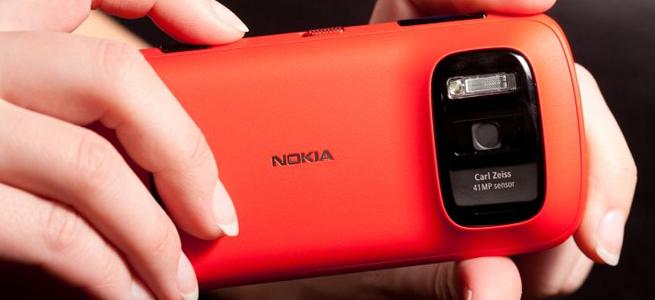
Nokia confirms it’s working on new PureView camera innovations

Nokia’s head of imaging technologies has said his team is hard at work on creating new PureView camera innovations, saying “Very cool” things will be coming in the future.

ces-mobile

This time last year, the world was still a month away from being introduced to Nokia’s PureView camera technology. Since then it has given its name to two devices, the often jaw-dropping Nokia 808 PureView and the equally impressive (but initially controversial) Lumia 920.

It’s clear then that although exciting, PureView is still in its infancy, and when Damian Dinning – one of the driving forces behind PureView – announced his departure from Nokia late last year, many questioned whether its continued development would remain a priority for the Finnish brand.

Speaking to the company’s official blog while at CES, Nokia’s Head of Imaging Technologies, Juha Alakarhu has now put those fears to rest. When pushed to talk about where PureView was headed in the near future, he said, “We’re really driving innovation in key areas to deepen and enrich the imaging experience. I can’t tell you about the specific things we’re working on. Safe to say it’s very cool.”

So, it’s good to know we’ll being seeing a PureView camera on another phone in the future, however Alakarhu did reiterate an important point. He reminded us PureView doesn’t relate to any specific piece of technology and refers instead to the camera being, “The latest and greatest in imaging.” He continued, “When you buy a Nokia phone with PureView, you are getting our highest quality imaging innovation.”

He’s clarifying that PureView has completely morphed into a marketing term, something like Sony’s old CyberShot branding on its best camera phones, to be used when Nokia adds a particularly innovative feature to a new model. For the 808 PureView it was the amazing ability to zoom in on a photo and retain sharpness and detail, while for the Lumia 920 it’s the wide F2.0 aperture, image stability and low-light performance. Whether this was the intention for the PureView name all along isn’t known, but it’s certainly what it has become.

Nokia’s two PureView phones have been excellent performers, and it’s going to be fascinating to see what the team comes up with next. Perhaps Nokia will celebrate the 808‘s one year anniversary with a new PureView innovation at Mobile World Congress?


Source : digitaltrends[dot]com

It's free
index