Dragon Age 3 writer paints an ugly portrait of BioWare’s relationship with its audience

Dragon Age 3 writer David Gaider posted an essay lamenting the relationship between BioWare and it’s increasingly hostile Internet audience. The studio has dramatically changed some of its games due to fan feedback in recent years. Will that change?

BioWare is a studio worryingly beholden to its audience and their expectations. It’s getting worse according to Dragon Age writer David Gaider.

Gaider took to his blog this week to discuss BioWare’s “increasingly toxic” forums at the BioWare Social Network. The writer used to willingly engage with the studio’s players posting in the forums, but has come to avoid it more and more due to the entitled and hostile attitude of posters.

“Spending too much there starts to make me feel negative—not just about the games we make, but about myself and life in general,” explains Gaider, “You can, in fact, meet and talk to some very keen and intelligent posters… Yet the signal-to-noise ratio does seem to be worsening, and eventually you get the feeling like you’re at one of those parties where all anyone is doing is bitching.”

“The only other option is to simply avoid all online interaction with fans at all of make any such completely benign and PR-oriented, which would be unfortunate—and not, I suspect, when even the angry fan would want.”

It’s true that once an artist releases their work into the world, it’s no longer theirs. The audience, crueler than it’s ever been thanks to the anonymity of the Internet, can and will savage anything they consume. It’s natural. What’s problematic with BioWare’s relationship with its audience is that it’s changing the studio’s creative process. Worse still, BioWare’s controlling publisher is encouraging the change.

Under the stewardship of Electronic Arts, BioWare has become as very different network of studios. What began as a company devoted to creating deeply authorial role-playing games that also reflected the player’s personality through dynamic choices has become a blockbuster machine with a contentious open relationship with its audience. The future of BioWare under its current management is dependent almost entirely on the often-contradictory input of its fans. Mass Effect 3’s new ending content was finished in a hurry and released for free. Star Wars: The Old Republic was completely remodeled as a free-to-play game, and then immediately changed again due to fan grousing. Dragon Age 3: Inquisition, a game still in production, is built almost entirely around fan input.

The dialogue between audience and creator offered by the Internet is not guaranteed to be a positive factor. If BioWare can’t ignore the vocal, immature minority of its audience in the creation of its games, maybe it would be best for creators like Gaider to stop engaging the audience at all.


Source : digitaltrends[dot]com

Nokia’s gamble on Windows Phone finally pays off as mobile sales ‘exceed expectations’

nokia-microsoft-stephen-steve-feb-2011

Nokia’s fourth-quarter earnings show a return to the black for the struggling company, thanks in large part to the success of its Windows Phone 8 devices.

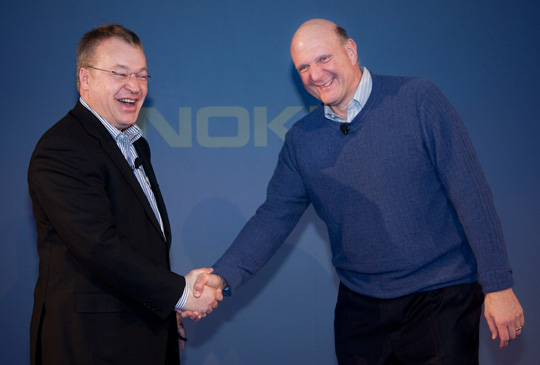
After announcing a “broad strategic partnership” with Microsoft that saw Nokia producing Windows Phone devices exclusively, the Finnish company is finally seeing it bear fruit. On Thursday, Nokia announced fourth-quarter mobile sales that “exceed expectations,” causing its stock to soar more than 18 percent.

Things weren’t always so rosy in Windows Phone land. Nokia’s partnership with Microsoft got off to a turbulent start with the initial launch of Windows Phone 7. The first iteration of the operating system was not what the world wanted, and sales reflected that for the last two years. However, it seems that’s beginning to change with the release of Windows Phone 8 in conjunction with Nokia’s powerful and affordable hardware. The Lumia 920 sold out in less than 20 minutes when it launched a few months ago, which gave a hint that we were going to see some interesting numbers from Nokia in the fourth quarter.

While the fourth quarter of 2012 will be in the black for Nokia, it won’t likely last. Nokia has already said it expects to slide back into the red due to industry dynamics – Samsung and Apple outselling them in the stores. Regardless, this is welcome news for the manufacturer, and it may be a sign of future good to come for the company, as long as Microsoft doesn’t start selling its own phone.


Source : digitaltrends[dot]com

Samsung Announces Upgraded Version of Galaxy S2, the S2 Plus

Samsung refuses to let the Samsung Galaxy S2 die, it seems. They have now officially announced a newer, improved version of the aging handset under the name Galaxy S2 PLUS.  While it doesn’t have many external changes and looks nearly identical to the S2, it did get some notable upgrades under the hood.

For starters, it has a 4.3 inch WVGA Super AMOLED plus display, 1GB RAM, a 1.2GHz dual core processor and 8 GB of internal storage with expandable MicroSD. There’s also Android 4.1.2 Jelly Bean right out of the box.  The phone will feature an impressive 8 MP rear facing camera and 2 MP front camera.  The phone will come in a non and NFC version.

While we haven’t been given any indication on what we can expect to pay for the phone, you can probably expect it to be fairly reasonable. This might not be a great choice for those of us that want the latest and greatest, but if the price is right, it could be a great device for those looking for something light on the wallet yet still more than capable of reasonable performance.

Is this a phone you would be interested or has the S2’s ship sailed?


Source : mobilemag[dot]com

Holster-wearers rejoice! Blackberry 10 is actually pretty awesome

We go hands on with a near-final build of BlackBerry 10 at CES 2013, and what we see is quite amazing.

ces-mobile

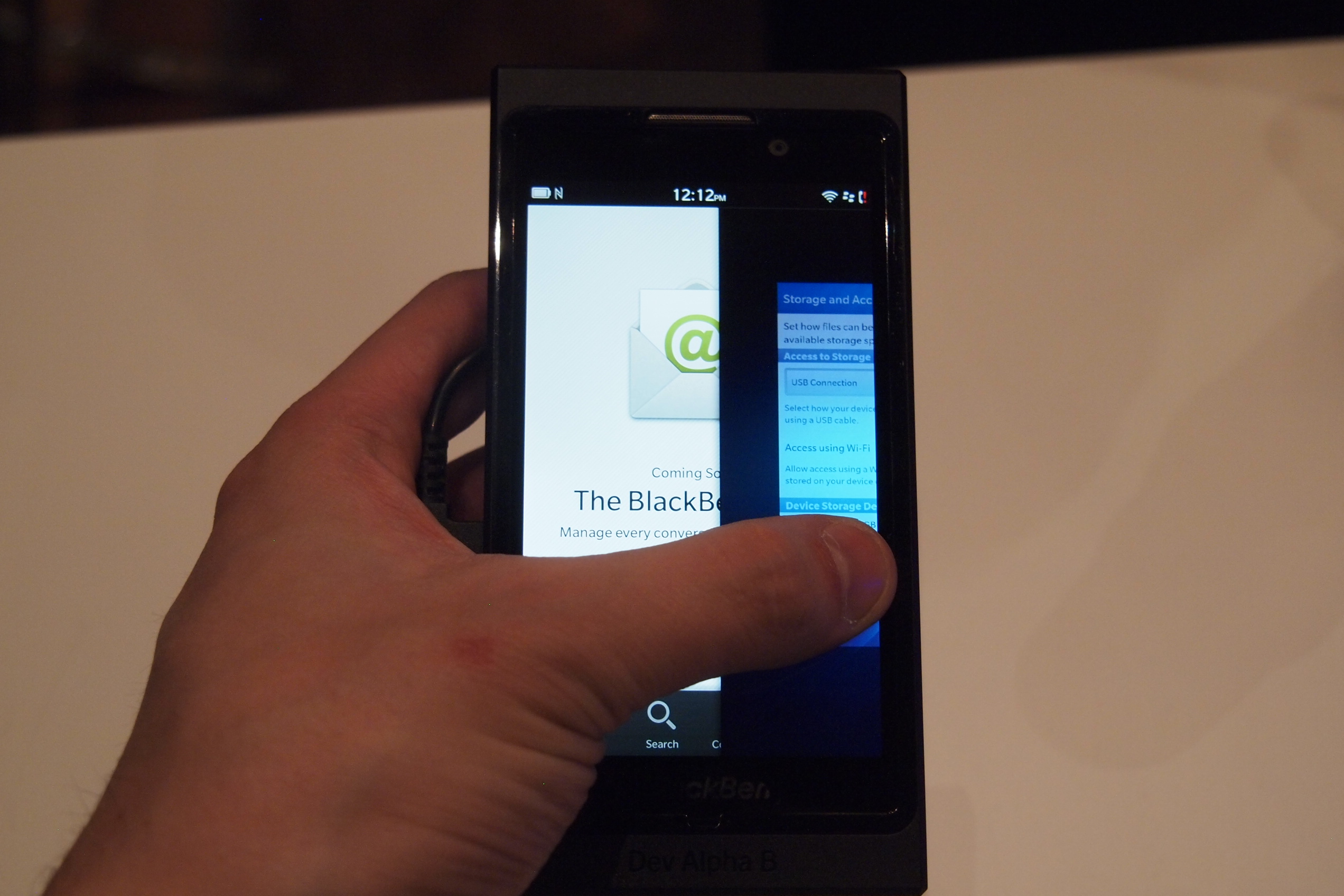
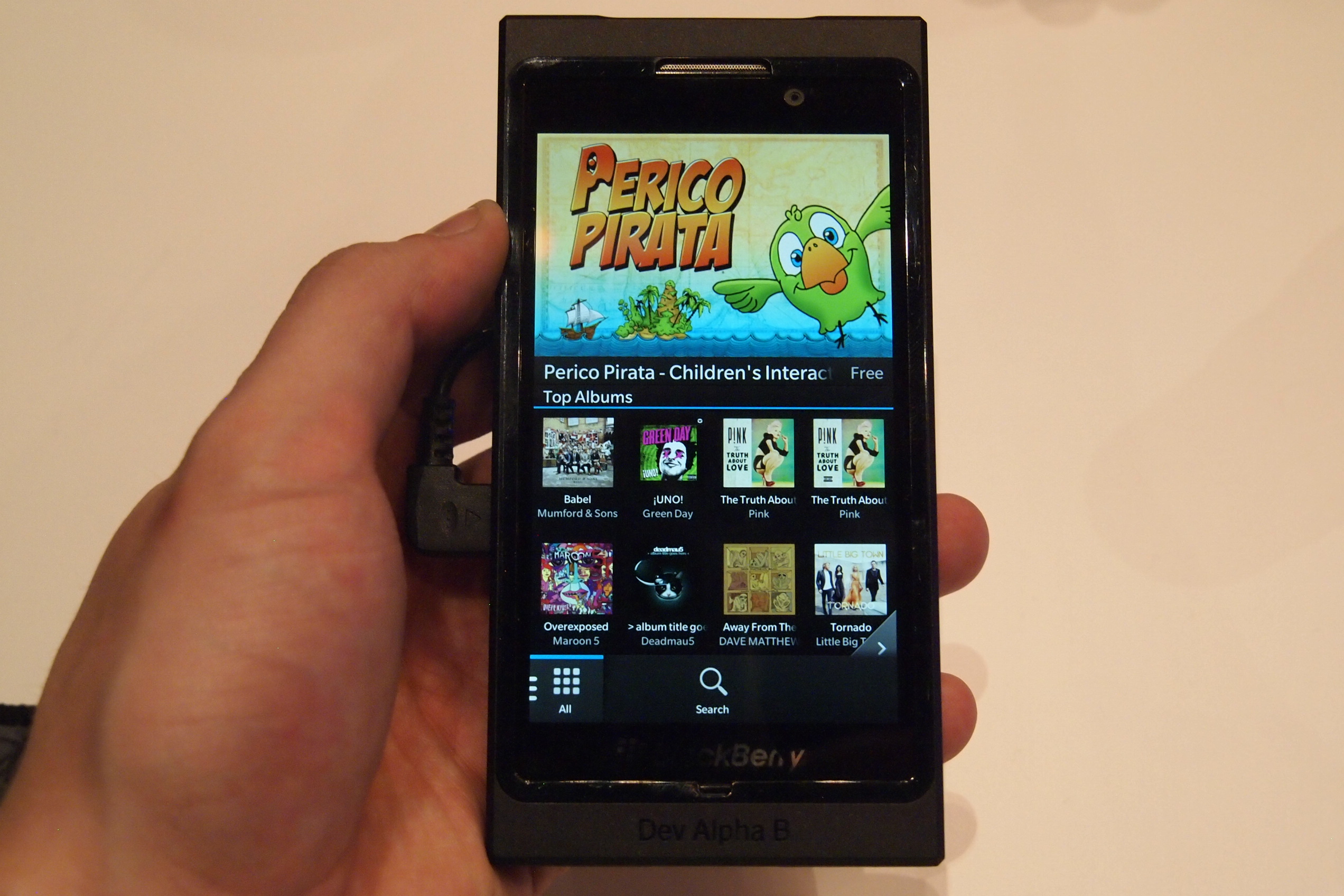
In June 2011, I spent some time with an early version of BlackBerry 10 and commented that things “can only get better.” I said that because. at the time, things weren’t good. At all. BlackBerry 10 was a mess and the developer unit I tried it on was so glitchy I felt guilty writing a hands-on piece at all. Yesterday, off-site at CES, I got a full run down of a near-final version of BlackBerry 10 by the folks at Research in Motion. I can’t believe the difference six months can make. BlackBerry 10 is not only fully functional now, but it’s exciting.

RIM’s been talking about things like “flow” and universal inboxes for months, and now that I’ve seen all of BB 10′s parts working together, I have to believe that RIM has a fighting chance. I wouldn’t have said it until today, but BlackBerry 10 could bring the comeback RIM so desperately needs.

It’s all about flow

Talking about a user interface having “flow” and being easy to use is, well … easy. Anyone can run their mouth and every single phone manufacturer does. Usually it’s a spiel filled with silly words like “friendliness” and “human emotion.” But RIM has done something close to that. BlackBerry 10 is simple to use and has a smoothness to it that puts it right up there with Google’s newest Nexus devices and iOS.

Like the competition, BB 10 has a lock screen, notifications, a list of installed apps, and all the crap you expect in a post-iPhone operating system, but RIM has perfected some new ideas. Instead of a blank homescreen like  you get on Android or an apps list, like you get when you turn on an iPhone, BlackBerry 10 sends you straight into your recently used apps. BB 10 can manage up to nine active applications simultaneously and freeze others in the background, and lays them out in a 4×4 grid of tiles that scrolls downward. You enter an app by tapping on it, or simply hit the X in its lower right corner to shut it down. It’s not the most gorgeous homescreen, but managing active apps is something no one is getting right in mobile, which gives BB 10 an advantage out of the gate.

After looking at your active apps, a swipe from the right will take you to your apps list, which will go on and on, depending on how many apps you have installed, just like an iPhone. You can re-order your installed app icons, make folders, etc.

Swipe back to the active apps page and then to the left once more and you come to the BlackBerry Hub, a complete universal inbox that organizes all of your emails, messages, notifications, social networks (Facebook, Twitter, LinkedIn), and a bunch of other stuff. I still need to play around with the Hub more, but from my first glimpses, it does appear to do a good job of organizing all of your information in one place. No other OS is doing this well. I’m wondering how much time I might save if I was on a BB 10 phone. Calendar, flash, and many other functions are built right into the Hub and work seamlessly with swipes and gestures.

Whether you’re in the Hub or any other app, you can easily exit by swiping up from the bottom of the screen. Or you can do what RIM calls “peeking” and pull up from the bottom of the screen and over (to the right) to get a glimpse of what your Inbox looks like. This feature is mostly for show, but it is easy to do, and fun. It’s a small detail, like many others, that makes the interface feel very complete.

Lastly, a swipe down from the top of any home screen will bring up a menu of quick settings, so you can easily connect to Wi-Fi, Bluetooth, and things like that. It’s fantastic that RIM chose to include them in a permanent, prominent place because there are few things you’ll want to mess around with more than these as you change locations or try to manage battery life.

Separating work and play

If you want (or if you work at a company that forces you), your BB 10 phone can actively separate your work and personal life. A swipe down on the homescreen lets you toggle between the two modes. With a press of a button, you can make all of your work emails, notifications, apps, active apps, all of it, disappear. For once, you’ll be able to enjoy a weekend of peace. And if you get that face-punchingly annoying urge to do work on your free time, you can simply turn it back on. It works in reverse, too. You can shut off your personal accounts during work, if you’d like.

Because BlackBerry has been working in business environments for so long, RIM has an advantage here. It has many features that make it ideal for IT departments. They can even set up their own app stores for employees now, giving them access to custom BB 10 apps that they should have.

The camera … has problems

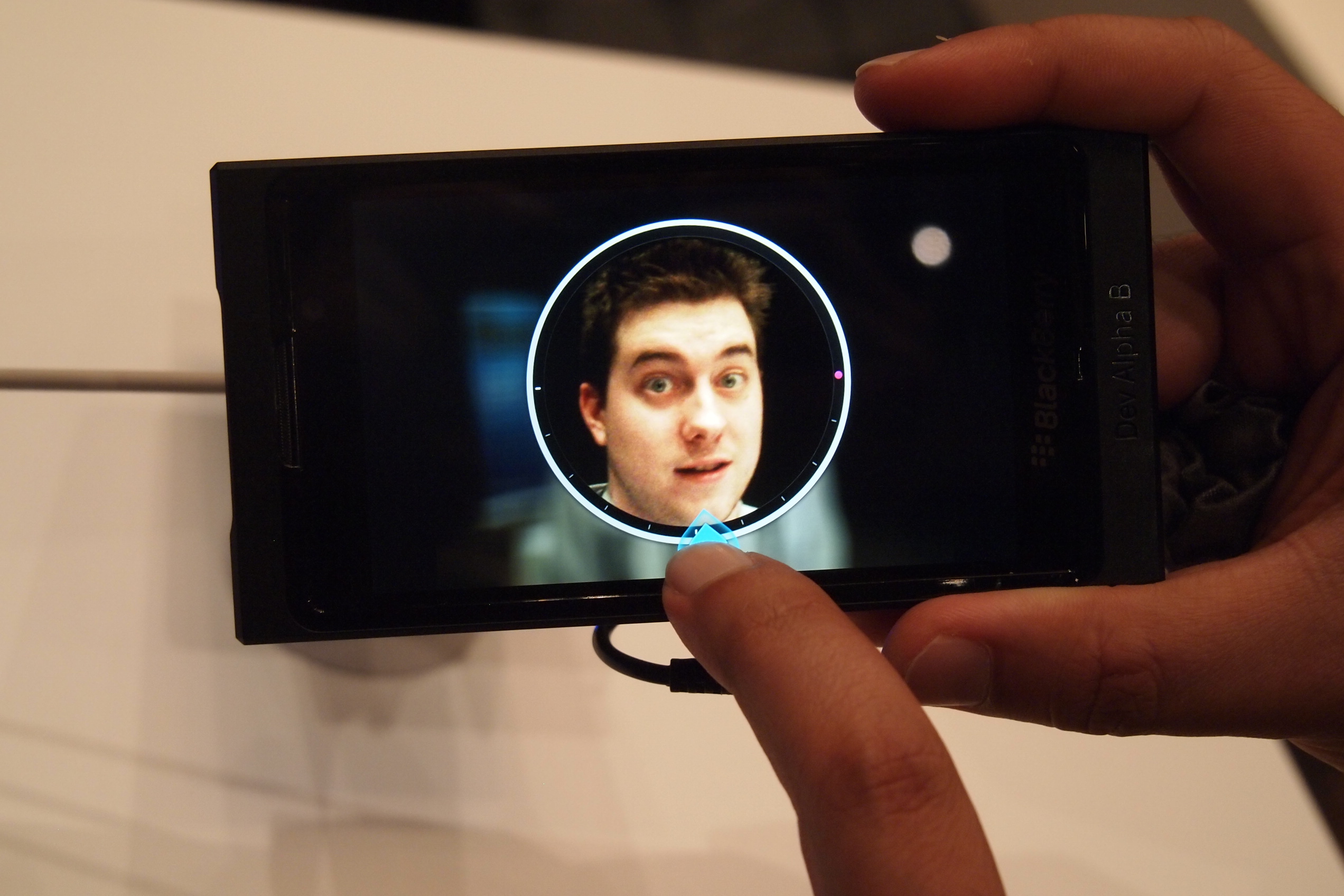
I’ve been raving about BlackBerry 10 for almost 900 words now, but one thing you haven’t heard is a compliment for the camera. While I really like RIM’s new feature that lets you fix your face in a photo (it records about 2 seconds of footage surrounding a pic), the camera app is currently quite laggy and glitchy in the  Dev Alpha unit I used, and even in the near-final units employees showed me. I wasn’t impressed by the pictures these phones were taking and the camera app just didn’t respond right. Hopefully RIM will iron this problem out before launch.

70,000 apps strong

Anyone can launch a new operating system, but these days, the toughest part is getting enough developers to support your vision and create software for it. Luckily, RIM appears to be more prepared than you might expect. The company is aiming to have 70,000 apps available at launch. While I’m sure most of those apps are terrible (most apps are on any platform), execs assure me that their efforts are focused on getting top apps to the platform. They’ve made a lot of bold moves. Since last year, RIM has passed out more than 6,000 BlackBerry 10 Dev Alpha units to developers and 25,000+ BlackBerry PlayBooks (PlayBooks run on the same basic OS). This, along with a series of major BlackBerry developer Jam conferences around the country has lead to a renewed sense of interest in BB 10.

Most importantly, instead of forcing developers to cater to its needs, RIM appears to be going out of its way to make BB 10 extremely compliant with the programming languages and tools that devs use to create Android, iOS, and other apps. Porting from Android is especially easy. 

If RIM can launch with 70,000 apps, it will make history. For reference, Windows 8 had about 5,000 apps at launch and still hasn’t reached 70,000. This level of support has me excited that BB 10 could hit the ground running – something it desperately needs after being delayed for more than a year.

Show me where to sign

There are plenty of questions, and I haven’t gotten a glimpse at final hardware, but the BlackBerry 10 OS has serious potential. I’ve been critical of RIM in recent years, but holding off on releasing BlackBerry 10 might have been the best move it could make. The final product is fun to use and polished. There are a couple kinks, but far fewer than I’d expect in a first-generation operating system. 

I’m no soothsayer, but using BlackBerry 10 made me want to use it more. That’s somewhat rare. Unlike the first time I used Windows Phone, or many of the times I’ve seen Android skins and devices, I can see myself using BlackBerry 10 on a daily basis. And I like what I see.

Here’s to hoping that RIM can pull this off. We could use some real competition for Android and iOS. BlackBerry 10 will be announced in full on January 30.


Source : digitaltrends[dot]com

PlayStation 3 pulls ahead of Xbox 360 with 77 million consoles sold

According to research firm IDC, Sony’s PlayStation 3 closed its sixth year on shelves by pulling ahead of Microsoft’s Xbox 360 in global sales. Where will the first two HD consoles rest if they retire at the end of 2013?

In North America, the battle’s over: As this console generation winds down, the Xbox 360 has come out as the winner. It has been the best-selling console month in and month out almost without a break since Microsoft released the redesigned model in June 2010. Things are different on a global scale, though. Back in November the PlayStation 3 and Xbox 360 were neck and neck in worldwide sales, hovering around 70 million each according to corporate tallies. Still distant from the Nintendo Wii’s roughly 100 million global total, but impressive nonetheless. According to research firm IDC, though, the PlayStation 3 has pulled ahead of the Xbox 360 as the two head into what is likely their final year.

IDC published its latest broad report on the video game console industry, “Worldwide Video Game and Entertainment Console Hardware and Packaged Software 2012 – 2016 Forecast,” at the end of December. According to IDC’s tallies, Sony inched past Microsoft during the holiday season, with approximately 77 million PlayStation 3s sold compared to 76 million Xbox 360s.

While the diehard fans of both consoles will likely see IDC’s report as new ammunition for fruitless and obnoxious forum comment wars, the numbers don’t tell the full story of who has “won” this console cycle. It’s not so simple. For example, Sony didn’t start selling PlayStation 3 consoles at a profit until 2010, around four years after the console first released. Meanwhile the Xbox 360 was sold at a profit starting in January 2008, just over two years after that machine came out. That’s just one factor that determines how successful the two companies’ console businesses have been over the past seven years total.

What matters in terms of the video game industry going forward is this: Both Microsoft and Sony have been successful enough this past console cycle to justify massive investment in putting out new machines. The PlayStation 4 and Xbox 720, whether they’re called Orbis and Durango or Thebes and Kryptos, will be commercially viable when they come out, and therefore viable venues for game makers to ply their trade.

IDC’s report also bears that out: Game consoles and disc-based video games are going to continue selling despite the increases in digital sales. “It doesn’t appear that alternative platforms—set top boxes from cable companies, Web-connected smart TVs, and so on—are positioned to materially disrupt the trajectory of the ‘big 3′ console OEMs in 2013 or 2014,” said IDC gaming research manager Lewis Ward, “Discs will remain the console game revenue mainstay for years to come.”


Source : digitaltrends[dot]com

It's free
index