Hands on: Project Shield is every bit as amazing as Nvidia claims

Nvidia’s Shield would be impressive if it was just another Android gaming handheld, but it’s far more than that.

ces-mobile

We’ve seen several Android gaming devices over the past year, and if CES is any indication we’re likely to see many more soon. Most of the gadgets we’ve seen enhance Android games, usually by adding a physical controller. Nvidia’s new Project Shield does that, too. And then it adds something more substantial: allowing users to play their PC games on the handheld. Yes, that sounds too good to be true. And yes, it totally works.

The actual Shield device looks like a standard console controller with a smartphone stuck on top, somewhat akin to the Moga Pro. That’s pretty much what the device is, except the screen is integrated into the whole device instead of being something separate. It’s lighter than we expected it to be, a good thing for a gaming console. After hours of gameplay, you don’t want your wrists or arms to feel tired. We also like how comfortable it felt. Our hands wrapped naturally around the device and we were able to reach all the buttons, analog sticks, and analog triggers with no trouble.

Nvidia’s Tegra 4 chip drives the Shield and thus the graphics and gaming performance is superb. The newly announced chip is the “World’s Fastest Mobile Processor” according to Nvidia and, from what we saw in our Shield demo, we have no reason to doubt that claim. We saw smooth performance in games, video, and while swiping through the interface. Tegra 4 is what will drive the graphics-rich Android games that will be Shield’s raison d’être and it will also make the PC gaming part of the device possible.

Shield will be able to connect to your computer over a home wireless network, access the games on it, and allow you to play said games on the handheld. No latency issues and no worries about compatibility. That’s because the Nvidia (Kepler) graphics card is doing all the hard work and processing plus encoding the video and streaming it to Shield. All the Tegra 4 chip has to do is decode the video, which is high quality. Even in a crowded wireless environment like CES the game played smoothly. Playing a PC game on a handheld device is pretty sweet, and the controller is just as fast as when playing the games actually on the device.

The display is large enough that we were able to see fine details in games but not so large that it makes the handheld unwieldy to use. Shield is bigger overall than the Nintendo 3DS and the PS Vita thanks to the console controls. That doesn’t take it out of the portable league and may even prove that consumers don’t care as much about having something small and slim if it delivers the gaming experience they want. It’s a good size right now and we hope the final product isn’t any bigger.

Shield runs on Android (Jelly Bean) and isn’t limited to gaming. Anything you can do on any other Android tablet you can do on Shield, including watching movies or updating a social network. The lack of keyboard and the placement of the display may make it awkward to type, so most users will probably limit text-heavy activities. Still, as a media player, the Shield will surely please. Audio quality is quite good with booming volume.

An Nvidia rep told us that the company will work with developers to map the handheld’s controls to games ahead of launch. With games ported from consoles there may not be any need. Titles found in the Tegra Zone store should work with Shield straight away.

The company isn’t talking about pricing yet, though they do expect to release the device in the second quarter.

Overall, Project Shield is one of the most impressive gaming devices we saw at this year’s CES, which is why it ended up on our Best Of CES 2013: Gaming list. Having it in our hands just made us want it even more. The comfortable grip, the rich graphics, the versatility, and the power make for sweet gadget we can’t wait to play with more.


Source : digitaltrends[dot]com

Surface Phone concept looks real enough to touch in new video

Microsoft Surface Phone concept

The gorgeous Surface Phone concept isn’t rooted in any sort of reality, but this concept video does a great job of showing the world exactly how terrific Microsoft’s smartphone could be.

Rumors of a Microsoft-made Surface Phone have been swirling around since the Surface tablet was first mentioned so many months ago. The desire for the Surface brand to extend to smartphones even spawned a few concept renderings showing what the phone may look like if it ever saw the light of day. The whispers have died down since then as people have moved on from the disappointment brought on by the Surface RT and begun looking forward to the upcoming Surface Pro. But that didn’t stop Tech Radar from bringing the concept to life in a mock promo video.

The design appropriately draws from the strengths of Microsoft’s tablets, incorporating the popular, angled edges and mag casing. The body is extremely svelte and streamlined, sticking to simplicity rather than buying into tacky embellishments. A full USB 3.0 port is situated at the top of the device with a 12MP camera and ultra-bright flash around back. All of this is faced by a 5-inch, 1280×720 Super AMOLED+ screen with 326ppi. The USB 3.0 port is enough to have us clicking the preorder button and that’s only the tip of the iceberg.

It’s the integrated kickstand and mini Touch Cover that make this design particularly drool-worthy. Much like the larger Surface tablet, the concept smartphone has a thin kickstand that props it up at the ideal angle for typing. The Touch Cover looks extremely similar to the full-sized version, but some extraneous buttons were removed due to size constraints. Regardless, it holds onto the magnetic attachment and would no doubt offer the same pleasing keyboard experience.

Seeing the concept phone rendered in three dimensions on video really proves the viability of a smartphone built by Microsoft. A USB 3.0 slot on a phone would be incredibly convenient, as well as having the ability to do some serious typing if the situation demanded it. Obviously this would never replace a full-fledged laptop or even a Surface tablet, but it is certainly an attractive prospect. The chances of this being made any time soon are slim though. No doubt the company is busy pouring billions of dollars into advertising and hawking the Surface tablets at every opportunity. Plus, it’s a safe bet to say a Surface Phone would make Windows Phone enthusiasts, HTC and Nokia, very disappointed. The last thing Microsoft needs is to have its biggest allies turn their full attention to Android. Practicality aside, however, we secretly hope Microsoft is watching and smiling.


Source : digitaltrends[dot]com

Forget CES, MWC 2013 is where we’ll see some new phones

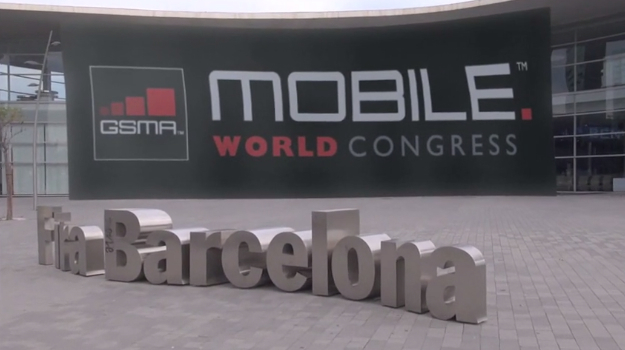
Mobile World Congress 2013 Banner

As CES 2013 draws to a close, it’s clear many of the biggest names in mobile technology have chosen to wait for February’s Mobile World Congress to reveal their latest products. But why this year?

ces-mobile

Exhibitors at International CES have started packing up their elaborate stands and heading back home, having announced all their new hardware to the gathered press and public. We’ve seen everything from smart watches to smart washing machines, but strangely for a technology show, smartphones were in short supply.

Of the big names attending the show, only Sony took the covers off a truly exciting, internationally available new smartphone – the Xperia Z – while up and comers Huawei and ZTE debuted devices set for release in China. Lenovo then did the same with the slick K900 and Alcatel kept its release schedule secret, leaving it down to U.S. networks to take up the slack, but all we really got was the low-end Samsung Ativ Odyssey for Verizon and the Pantech Discover for AT&T. Hardly the most inspiring collection.

Has CES always been like this though, and we’re just too focused on smartphones not to recognize a decent haul of new devices when we see one? By looking back at last year and the year before, it’s painfully obvious how disappointing this year’s show was for mobile fans. In 2012, AT&T gave us the Titan II and the Lumia 900 – two impressive, big screen phones with 4G LTE connectivity – while Sony had its Xperia Ion and Xperia S on display. Huawei was on hand with the Ascend P1 and the super-slim Ascend P1 S, the former of which – amazingly – has only just reached U.S. shores.

There was also a glut of 4G hardware being demonstrated, including the LG Spectrum and the Motorola Droid Maxx for Verizon, the Samsung Galaxy Attain 4G for MetroPCS, the LG Viper for Sprint, and the Samsung Exhilarate for AT&T. And it was also a smartphone packed CES in 2011. The list is as long as it is exciting, including hardware headed for the major U.S. networks such as the Motorola Atrix 4G and Droid Bionic, the HTC Thunderbolt, the LG Revolution and the HTC Inspire, plus global devices including the LG Optimus Black and the Sony Xperia Arc. Add in quirky phones like the Dell Venue Pro and budget phones from Acer and Huawei, and you’ve got a show filled with phones you actually had a chance of buying, regardless of where you lived.

New MWC venue for 2013

So where were all the phones this year? It’s not as if the industry is dying out, far from it, but it does appear CES was shunned in favor of Mobile World Congress, soon to be held in Barcelona, Spain. MWC is the largest mobile trade show in the world, hosts at least 1,500 exhibitors and last year attracted 67,000 visitors, up by 11-percent over 2011. But why have manufacturers suddenly decided to hold back until the show? One reason could be MWC’s new-for-2013 venue.

Mobile World Congress has shifted to Fira Gran Via, where a venue twice the size of the old one awaits. This has given exhibitors an extra 24,000 square meters of space to play with, complete with improved access and services. While MWC was never short on big announcements, the smaller space and awkward facilities may have encouraged manufacturers to split them between it and CES. This year though, the need may have disappeared.

It’s not just speculation that some of the biggest names in mobile technology have saved themselves for MWC. LG came right out and said it during its CES press conference, while Asus has given several interviews saying the Barcelona event is going to be “Huge” for them. Samsung even said it was going to concentrate on Mobile World Congress before CES started.

Samsung could also partly be to blame for the lack of multiple, big mobile releases at CES, as its dedicated launch of the Galaxy S3 last year – a play it obviously took from Apple – was such a success, it may have encouraged others to try the same tactic. They get more press attention and it most likely ends up costing a lot less too.

Fewer network branded phones announced

Also, it’s worth noting CES 2011 and 2012 were stacked with U.S. only, network branded smartphones. This year, as we’ve already seen, there were only a handful. The biggest selling devices of the past year have been internationally recognized handsets, such as the Galaxy S3, the Lumia 920 and the iPhone 5, with the Nexus 4, HTC One X+, and many other mid-range phones running close behind. Are manufacturers becoming less inclined to indulge U.S. networks’ love of branded hardware that has a limited appeal, or are networks finding they don’t sell well enough to justify even making the deal, now that smartphones are more popular in general? Take away the LG Vipers and HTC Inspires, and CES events of old look far more like this year’s show.

Perhaps the final insult for CES on the mobile front this year is that Qualcomm, Nvidia, ST-Ericsson, Samsung, and Intel have potentially used it to set the stage for MWC, as each one has talked up its exciting new processors, but any new hardware featuring them was nowhere to be found. “Just you wait until next month,” they seemed to say. Thankfully, frustrated smartphone fanatics don’t have much longer to wait to find out what wonders Mobile World Congress will hold, as it begins on February 25, and it’s shaping up to be quite a show.


Source : digitaltrends[dot]com

Shoot smoother video like the pros with Steadicam Smoothee

Steadicam smoothee

The Steadicam Smoothee is designed for smooth panning video shot with iPhone or GoPro devices, giving you the film-like quality without the expensive gear.

ces-photography

Tiffen’s Steadicam is popular with film and professional videographers. The $60,000 camera mounting is worth every penny to those who rely on it to prevent jerky movement when shooting while in motion. If you’ve ever wondered how they get those smooth panning shots when you watch a movie, it’s by using a Steadicam.

The Smoothee is a Steadicam for the rest of us. It provides the same concept –a gimbaled stable platform for an iPhone, fourth-gen iPod Touch, and GoPro Hero, Hero 2, and Hero/iP4 devices. At CES 2013, they showed off the latest version for the iPhone 5. When mounted in a Steadicam Smoothee, the shakes that are common with shooting video on an iPhone are replaced by a smooth, professional-looking shooting experience. This is especially important when shooting high-definition video.

The Smoothee is built around a sturdy and durable metal frame and features an interchangeable camera mount so that it can be used with different camera options. A belt clip – to further anchor the setup – is included with each Smoothee system. Mounting is easy, and the frame provides a comfortable hand gripe to aim and guide the video device.

The Smoothee retails for $169 and additional camera/device mounts are $24.95 each. It’s definitely far more affordable and accessible than the $60,000 unit Steadicam sells to the pros. Also available is a $49.95 travel bag.


Source : digitaltrends[dot]com

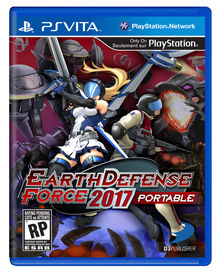
Earth Defense Force 2017 Portable review: Alien bug squashing on the go

In what is essentially just a re-release of the 2007 Xbox 360 game, Earth Defense Force 2017 slims itself down for release on the Vita.

Before we start weighing what’s good and what’s not about D3Publisher’s PlayStation Vita port, Earth Defense Force 2017 Portable, let’s remember the most important thing: this is a portable version of EDF 2017. Now, thanks to the magic of technology, you can pick up your Vita anytime, in any location, and fight to save Earth from invading giant alien insect and robot forces. Judging the game purely on this fact alone, it is an automatic winner.

Make no mistake: the fact that EDF 2017 is now playable on a portable screen doesn’t actually elevate the quality of the experience. This launch window Xbox 360-exclusive from 2007 hasn’t aged well at all. The graphics look like they could have been handled by a last-gen platform, the controls are simplified to the point of confusion, and anything that didn’t work well six years ago is still just as non-functional now as it always was. And yet, that’s sort of where EDF 2017‘s charm lies. As imperfect a game as it may be, it still manages to deliver in spades on its simple concept of “lay waste to entire cities as you shoot everything at giant bugs and robots.”

Let’s start with what’s new for the PS Vita release. Completing the game unlocks Pale Wing for use, a jetpack-equipped soldier that plays very differently from the landlocked protagonist in the vanilla game. There are some new weapons and levels, though in all honesty, with it being multiple years since EDF 2017 was last played on a Xbox 360, most will be hard-pressed to identify them. That said, the new bits amount to “more game,” and for an arcade-y shooter such as this one, more content is only a good thing.

The Vita release also adds some new multiplayer options, complementing local co-op with a new online mode that supports up to four players. In the time I spent reviewing EDF 2017 Portable, I was never able to find a Versus room to play in, but the co-op play is great. You can tackle any of the games levels on any difficulty with up to four players in the lobby. Restrictions can be set on weapon levels and health levels, and an assortment of similar filters can be applied when searching for a lobby to join. I ran into minimal connection issues when stepping into co-op matches. More importantly, EDF 2017 Portable really shines in co-op. Between the ability to revive teammates and the insanity of having four people firing massively destructive weapons in all directions, the carnage is a glory to behold.

Unfortunately, this is where the new additions stop. The port brings in some welcome bonuses, but none of the flaws of the 2007 game have been addressed here. Vehicles are the biggest offenders; while 2010′s EDF 2017 follow-up, Insect Armageddon, offered a revised approach to piloting machines of war — they became fun to play with! — no such tweaks were made to this Vita release. In truth, the controls weren’t touched at all in any meaningful way. Even when you’re just moving your standard footsoldier around the battlefield, there’s still the baffling absence of a reload button to cope with.

For some, elements such as this only add to EDF‘s charm. That’s the audience this game is aiming to capture. If you didn’t like EDF 2017 before then you’re probably not going to find much in Portable to enjoy. It’s the same game, for better and for worse. The biggest issue of all is, unfortunately, the price. Given the minimal number of enhancements made for this portable port, it’s something of a shock that Sony is asking $39.99 for an item that you could pay $15 to play on your Xbox 360. Yes, this is the first time EDF 2017 is available on another platform, and yes having the option of online co-op is a great thing, but this is one of those rare cases where it’s difficult to recommend the game to anyone at the price that’s been set for it.

Conclusion

All that said, it’s hard to deny the raw fact that EDF 2017 Portable is still just as stupidly fun as it’s always been, and that you can now play it on the go. Speaking as a longtime fan of the game and the series, I can say that price wouldn’t be a factor here for me. Series newcomers might want to sample the 360 game first before taking the plunge, but if you love EDF and you’ve been jonesing for some alien bug-squashing on the go, this PSN-exclusive Vita release will most definitely scratch that itch. 

(This game was reviewed on the PS Vita using a copy provided by the publisher.)


Source : digitaltrends[dot]com

It's free
index