Android 5.0 Key Lime Pie release date, news and rumours

Android 5.0 Key Lime Pie release date, news and rumours

Android 5.0 Key Lime Pie has started baking

Google's showing no signs of slowing its pace of Android development, with Android 4.0 appearing on the Galaxy Nexus late in 2011, followed in July of 2012 by the Android 4.1 Jelly Bean release that arrived powering the super Nexus 7.

But, forward-looking, update-obsessed people that we are, we can't help but imagine how Google's going to maintain the pace of innovation in its next version of its mobile OS, Android 5.0.

All we know so far is that Google's working away on the K release of Android, which it's developing under the dessert-related codename of Key Lime Pie. Regarding the version number, it's likely that the Key Lime Pie moniker will be given to Android 5.0. We thought we might find out on 29 October but as yet there is no official word from Google.

Rumours of a new Nexus handset started trickling in during the third quarter of 2012, as we reported on 1 October 2012. There was speculation that this phone would be sporting Key Lime Pie, but sources who spoke to AndroidAndMe correctly claimed that the handset, which turned out to be the Google Nexus 4 would be running Android Jelly Bean.

So now as we wait on official news of the Android 5.0 release date and features, we can start to pull together the Key Lime Pie rumours from around the web, with the first sighting of Android 5.0 on a benchmarking website, apparently running on a Sony smartphone. There has previously been speculation that Sony is in line to produce the next Nexus phone, which may lend some credence to this rumour.

Android 5.0 release date

Google has announced that its next developer conference - Google IO - will take place from May 15 to May 17 2013, a month earlier than 2012's June dates. Given that Google announced Android 4.1 Jelly Bean at 2012's IO conference, it's not unreasonable to expect to see Android 5.0 at this year's event.

Android 5.0 phones

While the Nexus 4 didn't appear with a helping of Key Lime Pie, speculation that we reported on 21 January 2013 suggests that the Motorola X Phone is the Android 5.0-toting handset that will break cover at Google IO. According to a post on the DroidForums website, the phone will also feature a virtually bezel-free, edge-to-edge, 5-inch display.

Android 5.0 features

Key Lime Pie features are yet to revealed, but as we scour the web for more Android 5.0 news, we've been thinking about what we want to see in Android 5.0 Key Lime Pie. Hopefully the new mobile OS will feature some of these things...

1. Performance Profiles

It's bit of a fuss managing your mobile before bed time. Switching off the sound, turning off data, activating airplane mode and so on, so what Android 5.0 really needs is a simple way of managing performance, and therefore power use, automatically.

We've been given a taste of this with Blocking Mode in Samsung's Jelly Bean update on the Samsung Galaxy S3 and the Note 2 but we'd like to see the functionality expanded.

Something like a Gaming mode for max power delivery, an Overnight low-power state for slumbering on minimal power and maybe a Reading mode for no bothersome data connections and a super-low backlight.

Some hardware makers put their own little automated tools in, such as the excellent Smart Actions found within Motorola's RAZR interface, but it'd be great to see Google give us a simple way to manage states.

Another little power strip style widget for phone performance profiles would be an easy way to do it.

android 5
Set telephone to BEDTIME SLEEPY MODE

2. Better multiple device support

Google already does quite a good job of supporting serious Android nerds who own several phones and tablets, but there are some holes in its coverage that are rather frustrating.

Take the Videos app which manages your film downloads through the Play Store. Start watching a film on one Android device and you're limited to resuming your film session on that same unit, making it impossible to switch from phone to tablet mid-film.

You can switch between phone and web site players to resume watching, but surely Google ought to understand its fans often have a couple of phones and tabs on the go and fix this for Android Key Lime Pie?

3. Enhanced social network support

Android doesn't really do much for social network users out of the box, with most of the fancy social widgets and features coming from the hardware makers through their own custom skins.

Sony integrates Facebook brilliantly in its phones, and even LG makes a great social network aggregator widget that incorporates Facebook and Twitter - so why are there no cool aggregator apps as part of the standard Android setup?

Yes, Google does a great job of pushing Google+, but, no offence, there are many other more widely used networks that ought to be a little better "baked in" to Android.

4. Line-drawing keyboard options

Another area where the manufacturers have taken a big leap ahead of Google is in integrating clever alternate text entry options in their keyboards. HTC and Sony both offer their own takes on the Swype style of line-drawing text input, which is a nice option to have for getting your words onto a telephone. Get it into Android 5.0 and give us the choice.

UPDATE: Google heard us and this feature appeared in Android 4.2.

Android 5 keyboard
P-U-T T-H-I-S I-N A-N-D-R-O-I-D 5-.-0

5. A video chat app

How odd is it that Google's put a front-facing camera on the Nexus 7 and most hardware manufacturers do the same on their phones and tablets, yet most ship without any form of common video chat app?

You have to download Skype and hope it works, or find some other downloadable app solution. Why isn't there a Google Live See My Face Chat app of some sort as part of Android? Is it because we're too ugly? Is that what you're saying, Google?

6. Multi-select in the contacts

The Android contacts section is pretty useful, but it could be managed a little better. What if you have the idea of emailing or texting a handful of your friends? The way that's currently done is by emailing one, then adding the rest individually. Some sort of checkbox system that let users scroll through names and create a mailing list on the fly through the contacts listing in Android Key Lime Pie would make this much easier.

Android 5 contacts
Make this a destination, rather than a never-used list

7. Cross-device SMS sync

If you're a constant SIM swapper with more than one phone on the go, chances are you've lost track of your text messages at some point. Google stores these on the phone rather than the SIM card, so it'd be nice if our texts could be either backed up to the SIM, the SD card, or beamed up to the magical invisible cloud of data, for easy and consistent access across multiple devices.

8. A "Never Update" option

This would annoy developers so is unlikely to happen, but it'd be nice if we could refuse app updates permanently in Android 5.0, just in case we'd rather stick with a current version of a tool than be forced to upgrade.

Sure, you can set apps to manual update and then just ignore the update prompt forever, but it'd be nice to know we can keep a favoured version of an app without accidentally updating it. Some of us are still using the beta Times app, for example, which has given free access for a year.

Android 5 apps
Let us keep older versions. Many people fear change

9. App preview/freebie codes

Something Apple's been doing for ages and ages is using a promo code system to distribute free or review versions of apps. It even makes doing little competitions to drum up publicity for apps much easier, so why's there no similar scheme for Android?

It might encourage developers to stop going down the ad-covered/freemium route if they could charge for an app but still give it away to friends and fans through a promo code system.

10. Final whinges and requests...

It's be nice to be able to sort the Settings screen by alphabetical order, too, or by most commonly used or personal preference, as Android's so packed with a huge list of options these days it's a big old list to scroll through and pick out what you need.

Plus could we have a percentage count for the battery in the Notifications bar for Android 5.0? Just so we know a bit more info than the vague emptying battery icon.


Source : techradar[dot]com

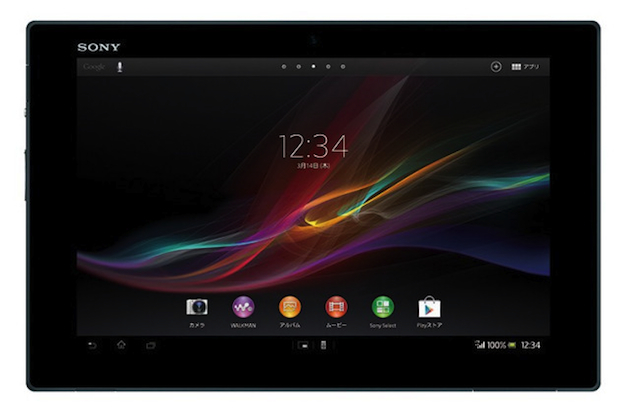
Sony announces super slim, quad-core Xperia Tablet Z

Sony Xperia Tablet Z Japan

Sony has announced the Xperia Tablet Z, a very slim 10.1-inch tablet with a quad-core processor, which is currently headed only for Japan. However, this could change when Mobile World Congress begins next month.

The rumors surrounding a new Sony Android tablet were on the money, as the company has announced the Xperia Tablet Z, a device to which we were only recently introduced and few expected to be made official before Mobile World Congress. Sony has a good reason not to save the Xperia Tablet Z for MWC though, as so far it only lined up a Japanese release.

Sony has abandoned the unusual, folded paper-style design seen on the Xperia Tablet S, deciding instead to make the Xperia Tablet Z a more traditional slate with an extremely thin profile. It measures just 6.9mm thick, which is noticeably slimmer than the 9.4mm thick iPad and 8.9mm Samsung Galaxy Note 10.1; plus at 495 grams, it’s at least 100 grams lighter than both its primary rivals.

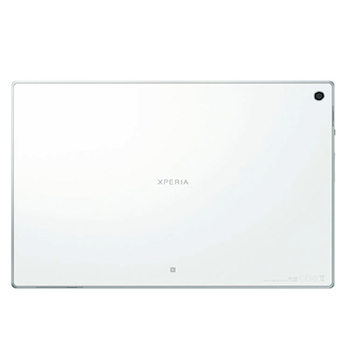
Sony Xperia Tablet Z Rear WhiteThe screen measures 10.1-inches and has an impressive resolution of 1920 x 1200. Billed as a Reality Display it uses Sony’s Mobile Bravia Engine 2, a feature introduced on the new Xperia Z, Xperia ZL and Xperia V smartphones. which enhances contrast, sharpness, colors and brightness while reducing noise on still photos and video.

A quad-core, 1.5GHz processor powers the Xperia Tablet Z and although it’s not stated in the brief press release, it’s most likely the same Qualcomm Snapdragon S4 Pro used in the Xperia Z phone. Previous Sony tablets have used Nvidia’s Tegra chip. The tablet is water and dust proof, plus it’s also equipped with an 8.1-megapixel camera, NFC, LTE connectivity, S-Force surround sound and Android 4.1 Jelly Bean as its operating system.

Sony will release the Xperia Tablet Z in Japan in the spring, but no exact date has been provided, and the price remains unknown too. Despite announcing it before MWC, the tablet should still be at the show, when Sony may pleasantly surprise us all by providing an international release date. Sony’s announcement of the Xperia Tablet Z follows the unveiling of the Xperia Z smartphone at CES 2013.


Source : digitaltrends[dot]com

Motorola X Phone with 5-inch display, Key Lime Pie set for Google I/O?

Motorola X Phone with 5-inch display, Key Lime Pie set for Google I/O?

Don't call it a Nexus

The much-vaunted Motorola X Phone will pioneer the Android Key Lime Pie OS and arrive at Google I/O in May, if rumours this weekend are to be believed.

A post on the DroidForums website said the device will be the first handset to ship with the Android 5.0 update and will tout a virtually bezel-less, edge-to-edge, 5-inch display.

The post adds that, although an announcement may be made at the Google I/O conference, the Motorola X Phone will not be classed as a Nexus device, per se, but as an entirely new sub-brand.

Instead, according to the rumour, a Nexus-like UI will sit on top of the Android OS. The post said: "Supposedly, Motorola has been working hard to create a UI that both compliments & enhances the Android experience, and is intended to be Nexus-like."

Interesting, the rumour claimed that the new UI will integrate a host of new features to rival Samsung's S-Beam, S-Voice and the like.

Too soon?

Just last month, Google CEO Larry Page claimed it was too soon for a Motorola Nexus phone although the launch of the X Phone at Google I/O would be the fruit to be bourne of the big Motorola buyout of 2011.

The company has been relatively quiet since the takeover, with no new, top-level handsets of note, but first dibs on Key Lime Pie would certainly put Moto back on the map

The post does advise that the rumour be taken with "a grain of salt," but it's certainly an interesting tidbit and seems entirely plausible to us. Roll on, Google I/O.


Source : techradar[dot]com

Defending violent video games: The NRA is not your friend edition

Sadly, we are back once again, looking at the current trend of blaming violent video games for all the violence in the world.

I shouldn’t have been surprised to see the National Rifle Association’s Wayne LaPierre lay the blame for the disgusting, heart-wrenching tragedy in Newtown, Connecticut, firmly at the feet of violent video games. I really shouldn’t have. 

A few years back, I wrote a lengthy op-ed piece about the then-current rage du jour against video games: the inclusion of the Taliban as playable characters in the freshly rebooted Medal of Honor. Those were the days. It was a simpler time, when 4,000-word diatribes were acceptable, and people could focus their rage at easily identifiable villains like former lawyer Jack Thompson, who has been disgraced so many times he should have a punch card that would give him the tenth disgrace for free. 

Then I came back once more and avoided the op-ed angle, but obsessively covered the case of Brown v. the Entertainment Merchants Association, which the Californian judicial system punted upwards until it landed in the lap of the Supreme Court. The Supreme Court upheld sanity, and ruled that video games were not the same as pornography and couldn’t be classified as such. They are works of art, thus they are protected.

The gaming industry breathed a sigh of relief and soldiered on, bolstered by years of surviving assaults from religious leaders, outraged stereotypical soccer moms, and the odd politician looking to score cheap points on the campaign trail. And yet here we are again, with the gaming industry being sized up as a scapegoat for all the ills of the world. Perhaps the creationists are right, because we sure don’t seem to evolve in our opinions, even when faced with overwhelming amounts of evidence stating the contrary.

A bit of personal background: I grew up in Kansas, surrounded by guns. I was taken hunting as a kid, and went to plenty of gun shows when I didn’t have anything better to do. I also was present at more than a few shootings, and watched as a a guy I hung out with a few times shot and killed one of our classmates. For the record, the gunman was not a big gamer.

I never equated guns directly to violence; I equated violence to violent people. I do support stronger gun laws, but not as a reaction to a tragedy. Having said that, Wayne LaPierre is a repugnant swine, and the NRA has shown itself to be what it is: a lobby group and nothing more.

The NRA wants you to believe that it is the shining beacon in the night of gun rights suppression. It wants you to think that its goal is to defend the Constitutional right to bear arms. It wants you to think it is a morally upright institution, there to defend American values. It’s not. It’s a lobby group, whose sole purpose is to sell more guns, no matter what.

When LaPierre took the stage on December 21, just one week after Adam Lanza became America’s nightmare, LaPierre was willing to say or do anything to make sure people were not talking about limiting his industry’s business. And hey, if you want a gun, that is your right. If you feel like the only way you can properly hunt is with an assault rifle, then Bambi is doomed. And if you are so gripped by fear that you think you are at risk of being attacked by a dozen or so thugs high on bath salts, looking to eat faces, then by all means equip yourself with enough firearms to invade a small, unsuspecting country – Luxembourg, maybe – and may God be with you. But LaPierre is not helping. He doesn’t give a damn about you. If you aren’t buying a gun, you are nothing to him. He is salesman that uses words like “freedom” and “patriotism” to ensure that his clients remain in business. He’ll say or do anything to that end, even if he himself doesn’t believe it.

LaPierre was quick to blame anyone and everything. Given time, he may have even blamed the sun, and its hippie-ish tendencies to give away its life-sustaining product for free, like a sucker. But the one industry that he did blame, and the one that has me back yet again shaking my head at the world, is video games, which LaPierre singled out repeatedly in the aftermath of our latest gun-fueled national tragedy.

“And here’s another dirty little truth that the media try their best to conceal,” LaPierre said during the NRA press conference following the Sandy Hook shootings. “There exists in this country, sadly, a callous, corrupt and corrupting shadow industry that sells and stows violence against its own people. Through vicious, violent video games with names like Bullet Storm, Grand Theft Auto, Mortal Kombat, and Splatterhouse.”

It’s also worth noting that, less than a month later, the NRA released its own video game on iOS that allows you to shoot targets. That in itself may not have been damning, but it was originally released as acceptable for ages 4+ up, a rating the NRA apparently had no problem with. The age “restriction” has since been adjusted upwards following controversy surrounding the game. 

It’s easy to dismiss LaPierre as a nut, but that isn’t accurate. He knows what he is saying – he is a huckster for his employers, and if Phillip Morris hired him, he would be on TV talking about how smokers actually have stronger lungs because they don’t just breathe the pansy air that the rest of us do. They load it up with “soothing” chemicals that have helped conditioned them. He will say whatever it takes to make his employers, the gun retailers of America, a better profit. And there is no better guarantee of revenue than fear.

LaPierre and countless others just like him profit from fear. They want you scared because that makes it easier to manipulate the public discourse. It also makes it easier to sell firearms – fear of another Sandy Hook, fear of losing your rights, the fear of the world in general. 

Fear sells. And fear, when combined with simplistic arguments, makes a lasting impression. Blaming video games for Newtown makes sense. It isn’t logical, but it makes sense. The games convey violence, and they can be shocking if you don’t know what you are getting in to. It’s a simple answer for a massively complicated problem. It’s the kind of answer that desperate people are happy to accept because it gives them an answer to an unanswerable question.

LaPierre is far from alone in his condemnation of video games. In the last few weeks, we’ve seen several laws proposed that would directly affect the video game industry. One proposal from Representative Jim Matheson (D-Utah) requires that the ESRB ratings become legally binding. It is an interesting idea, but a reactionary one, and one that would again single out the video game industry with no real, empirical evidence to support doing so. But at least it’s better than the proposal from Missouri State Representative Diane Franklin, which would put a tax on any “violent video games.” The quotes are in there because the language of the proposed bill reveals a significant lack of care or understanding as it would tax any game with a rating of “Teen” or above. That would include such nightmarish titles as Guitar Hero III, The Simpsons Game, and the gore-filled Dance Central.

Following the news, it’s easy to think that we are all doomed. During this last election, there was a lot of discussion about bias in the media. And there is. Some more than others, but the majority of the media have a bias towards sensationalism, not ideology. So when something like Newtown happens, the media will dissect it. You’ll soon know everything there is to know about Adam Lanza. If there is any story to be told, the media will tell it, and spin it to make it as interesting as possible. The more dangerous the better.

In an attempt to combat that force, I’ll tell you something you probably didn’t know if you watch a lot of news: things aren’t that bad. Despite some truly awful events of late, and even with the growing sense of desperation nurtured by ideologically driven politics that force people to choose sides, thus instantly putting yourself at odds with anyone you disagree with, the world is not going to Hell in a hand basket. It just feels that way.

“The number of people killed in battle – calculated per 100,000 population – has dropped by 1,000-fold over the centuries as civilizations evolved,” Steve Pinker, professor of psychologist at Harvard and author of The Better Angels of Our Nature: Why Violence Has Declined wrote. “Before there were organized countries, battles killed on average more than 500 out of every 100,000 people. In 19th century France, it was 70. In the 20th century with two world wars and a few genocides, it was 60. Now battlefield deaths are down to three-tenths of a person per 100,000.”

Pinker further goes on to state that this is the most peaceful our species has ever been. And that is despite, apparently, video games warping our brains and turning children into mini-Pol Pots – who, by the way, probably wasn’t a big gamer, what with him having been born in 1925 and all.

Here’s another fact you don’t hear often enough: over the last few decades, the murder rate in America has dropped significantly. In fact, 2011 marks the lowest murder rate since stats have been kept, beginning in 1960. The highest murder rate was actually in 1980, a year not know for its gaming acumen. If violent video games were the horror that politicians and their ilk would like you to believe, shouldn’t that murder rate be spiking as games are growing more violent, and more kids are playing them than ever before?

I could also go on about the inaccuracies regarding the numerous studies involving violent video games. I could go on about the inconclusive results. I could even go on about the dozens of studies that actually say violent video games are good for kids, and can even act as relief for some, but what’s the point? There are no conclusive studies.

After playing video games for decades now, violent and otherwise, the only aggressive tendencies I’m feeling are for politicians and public figures who are connecting dots that just aren’t there. They are looking for a simple answer to a complex question. It would be nice if violent video games were responsible for tragedies like Newtown and Aurora, Colorado. It would be so reassuring to find that there was one quantifiable explanation, because that would mean we could fix it. We could get rid of violent video games and never fear these tragic shootings again. Huzzah! Let’s plan some game burning parties.

Violent video games are not a problem for society, they are a reflection of it. Which is worse: a game that allows you to play as a soldier and shoot terrorists, or CNN displaying live footage from a war zone? Is that not a more realistic source for people becoming desensitized to violence?

The world can be a dangerous place, without question. Newtown is just the most recent example, and it’s an example we’ve seen repeated too often. Sadly, these episodes are likely to continue regardless of what we do.

Grand Theft Auto didn’t exist when Charles Whitman climbed the tower at the University of Texas and opened fire. Erica Menendez, the woman that recently pushed a stranger into an oncoming train in the New York subway is homeless, and probably didn’t spend her money on violent video games. She instead blamed her anger on the 9/11 attacks, which seems like a far more likely source of aggression for this generation than violent video games. 

So the war drums continue to pound. We need a scapegoat, so why not violent video games? They are an easy target. They simulate violence, so it makes it easy blame real life violent events on them. 

President Obama recently commissioned studies on the effect of violent media on aggressive tendencies, and while that is still a bit reactionary, at least it is the chance to see the research properly. Maybe it will say this is all a lot of nothing. Maybe it will show a correlation between violent games and violent actions. But at least we will have some science to back up such claims, and the distraction and misdirection can give way to the search for real answers.Because right now, we just don’t know.

So draw your own conclusions. (Might as well, since the politicians and lobbyists are.) Humanity has a history of being rotten to one another, and we didn’t need video games to justify bad behavior. In fact, Western society is in better shape now than it ever has been. Even with the games. Even with the R-rated movies. Even with the devil’s rock n’ roll that was supposed to lead us to disaster more than half a century ago.


Source : digitaltrends[dot]com

Should you accept Atom in your next PC?

Intel’s Atom processor has re-appeared in tablet and convertible PCs. Should you buy a device powered by Atom, or is the chip best left to rest in netbooks?

windows-8-dropcap

Intel introduced the Atom processor nearly five years ago. It was intentionally designed to enable products that Intel called “mobile Internet devices,” which were more or less tablets that weren’t very popular.

The iPad wouldn’t hit until two years later, however, which meant the possibilities of Atom weren’t explored. Instead, the processor ended up in the tidal wave of netbooks that ambushed the market and then quickly retreated. Atom was caught in the undertow of that receding wave, and hardware manufacturers turned towards ARM processors capable of running Android.

Windows 8 is giving Atom a second chance. Finally, after years of waiting, the products that Atom was designed to enable can be built. Tablets and convertibles with Atom processors are already available, and their numbers are growing. But should you buy a tablet or laptop with an Atom processor, or is the processor popularized by the netbook only suited for that role?

What is an Atom, anyway?

Before we talk about the two types of devices in which Atom appears (besides the netbook), you should first understand a bit about what Atom is and where it came from.

Since the company pushed Core so aggressively, it’s easy to forget they make anything else at all. Atom is quite different from the Intel Core processor you’re likely familiar with. Atom uses its own architecture designed with efficiency, cost, and physical size as priorities. Speed – well, not so much. An Atom processor is around four to six times slower than a third-gen Core i7 in many benchmarks.

Though originally single-core, most of today’s Atom products are dual-core. They have integrated graphics and are fully x86 compatible, which means they’ll run (almost) any software a Core processor can run.

Atom in tablets

Intel Atom InsideIntel saw the tablet coming. Kinda. The company started to talk about “mobile Internet devices” in 2007 and released several platforms with the cooperation of hardware partners. Because Intel makes x86 processors, however, it had to stick with Windows. The products looked the part – they had small touchscreens, miniature keyboards, and often required the use of a stylus.

Today’s Atom tablets, however, are similar to their Android competitors. They’re generally a bit thicker, often have large displays, but are otherwise hard to tell apart. Windows 8 will be the giveaway, of course, but the new operating system’s touch interface banished the stylus from most devices.

Atom is a good fit for tablets. Though slow compared to an Intel Core processor, it’s quicker (sometimes much quicker) than any ARM processor on the market today. And while the architecture has become faster over the last five years, Window’s system requirements have barely budged. This means the performance of Intel’s least capable of chip is truly adequate. It’s not great, perhaps not even good – but good enough.  

Unfortunately there is a skeleton in Atom’s closet: graphics performance. Graphics was a sore spot for the chip when it was released in 2008, and there hasn’t been much improvement. Even the Intel HD 4000 graphics found in a Core processor will knock the socks off Atom. Want to play a 3D game? Too bad. The game probably won’t run; and if it does, it won’t run well. That will be a shock to anyone who has enjoyed immersive 3D gaming on a smaller, less expensive Android device.

Battery life will vary from tablet to tablet but, overall, Atom doesn’t appear to be at a disadvantage. Tablets based on the processor can last between six and ten hours depending on settings and battery size.

Atom in convertibles

Convertible laptops are also seeing Atom’s return, which is no big surprise. Inexpensive convertibles were always the obvious next step for netbooks. Hardware manufacturers were just waiting for Windows to catch up with the touch revolution.

Everything we’ve said about Atom in tablets also applies to convertibles, yet there’s more to consider. Convertibles, unlike tablets, are going to be used at least partially as a traditional PC. That means more time spent with the Windows desktop, more multi-tasking, and heavier use of demanding applications.

This is where Atom starts to stumble. Though quick enough for Web browsing, the processor feels seriously slow when encoding videos or even editing large photos. Tasks that seem to take a blink of an eye on an Intel Core laptop can take five seconds on an Atom system.

Who cares? You will care. Maybe not at first, but after a few hours or weeks the constant lag, lengthy load times, and almost imperceptible stutters will begin to gnaw at you. Atom processors are the perfect way to recreate the feel of computing ten years ago.

All of this might be acceptable if the price was low. That was the premise of netbooks, after all – good enough for the ‘net and cheap enough to fit almost any budget. Modern Atom convertibles don’t fit that mold and often ship with a price between $500 and $800. That’s a lot to spend for an okay tablet that can also be used as a sub-par laptop.

You wait, you win

One of Intel’s most important announcements at CES 2013 was a new line of Atom quad-cores that should be showing up in products by the end of this year. Though details were scarce at the conference, leaks from late 2012 indicate that the Atom quads will have higher clock speeds than current processors and will also include Intel HD 2500 and HD 4000 graphics. If true, the new line of Atoms will be a huge upgrade over what is currently available.

We think that consumers eyeing an Atom-powered tablet or convertible should turn their eyes elsewhere until the new version is available. In the meantime, buyers on a budget should instead consider an Android tablet or an iPad. They provide far more value for your money


Source : digitaltrends[dot]com

It's free
index