Intel unveils cheaper models of its Ivy Bridge processors

Whether you’re building your own computer or just looking to replace your existing processor, you’ve got several inexpensive new options from Intel.

Intel announced the launch of several new inexpensive processors using the company’s Ivy Bridge architecture. According to Slashgear, the new products include three Celeron CPUs, four Pentiums, and a new Core i3-3210. All of them are available starting now at a price range of $42 to $117.  

To get technical for a minute, the new Celerons have 2MB of L3 cache, HD integrated graphics, and between 2.3GHz and 2.7GHz. All four Pentiums have 3MB of L3 cache, HD integrated graphics, and range from 2.5GHz to 3.2GHz. Finally, the Core i3-3210 features HD 2500 graphics and 3.2GHz. All of the new models are compatible with Intel’s Socket 1155, so you won’t need to make any motherboard upgrades in order to install one of these low-cost processors. The Celeron and Pentium versions do not have hyper-threading, Intel’s framework that helps in tackling multiple tasks at once, so for the best performance for your buck, it’s worth checking out the Core i3. 

Ivy Bridge first appeared on the scene early last summer and has since been one of the preferred choices for powering up top-shelf computers. Intel didn’t change the architecture of its predecessor, but offers better efficiency by making the entire chip smaller. Last year, Intel was rumored to be pushing for another improvement in efficiency in order to get Ivy Bridge into contention for use in tablets, an area in which power is usually sacrificed in favor of battery life.

Intel is making the whole suite of new chips available immediately, so they should be appearing soon on retailers’ websites. It’s a great option for the do-it-yourself crew working on a budget. Even if Ivy Bridge falls from its top position, the architecture will give you solid performance at a good price. 

Image via Sh4rp_i


Source : digitaltrends[dot]com

Mozilla announces first two Firefox OS devices, Keon and Peak

The Keon and Peak

Almost a year after Firefox OS was announced, we are finally getting a look at the two devices that will lead the way for Mozilla.

Making good on its promise when HTML 5-based Firefox OS was first announced, Mozilla has revealed the first two smartphones that will run the new mobile operating system. Developed with the help of Telefonica ­and Geekphone, the two devices are called the Keon and Peak.

The devices – set for a February release – aren’t full retail models, but rather meant for developers that are looking for an early start on the platform.

The Keon takes the low level spot in terms of specs. It comes with a 1GHz Qualcomm Snapdragon S1 processor and 4GB of internal storage, no word on included RAM. It will all be faced with a 3.5-inch HVGA display and a 3-megapixel rear-facing camera (no front-facing cam). The Keon will also support microSD cards for expandable storage and staples like Wi-Fi and GPS.

The Peak, on the other hand, will occupy a more luxury space for Firefox OS. A dual-core 1.2GHz Snapdragon S4 processor will bring the speed and a higher quality 4.3-inch qHD display has the beauty covered. It’s finished off with an 8-megapixel rear facer and a 2-megapixel cam up front, but unfortunately sticks to the 4GB of storage. The Peak also ships with a higher capacity battery.

“Developer preview phones will help make the mobile web more accessible to more people. Developers are critical to the web and to Mozilla’s mission to make the web accessible to everyone,” the director of development at Mozilla, Stormy Peters, wrote in a blog post Tuesday.

Backing up that statement, Mozilla will host “hack days” on January 26 to give developers the opportunity to “celebrate Firefox OS” by learning the APIs and building as many apps as they can.

It’s been a long road for Mozilla’s Firefox OS, which was originally teased in February 2012 (called Boot 2 Gecko at that time), but has yet to enter the real smartphone race against iOS, Android, and Windows Phone 8. One of the hurdles Mozilla needed to cross was finding partners for launch, a position filled by Telefonica, one of the first companies to show support for Firefox OS.

On the bright side, Mozilla is clearly making progress towards the end goal. In December, it released a beta version of the Firefox OS to be used in a desktop simulator and now we have official word on the first devices to run the software.


Source : digitaltrends[dot]com

RIM extends developer incentive, citing 'overwhelming' response

RIM extends developer incentive, citing 'overwhelming' response

Developers now have extra month to enter RIM's app challenge

As Research in Motion fans await the unveiling of new BlackBerry 10 powered handsets next week, the company has extended a $10,000 developer incentive prize after receiving a "remarkable" number of submissions.

Research in Motion is paving the road for new BlackBerry 10 smartphones to be launched on January 30 with the announcement that developers have an extra month to submit apps for the company's Built for BlackBerry challenge.

As noted on the Inside BlackBerry Developer Blog on Monday, the original deadline of January 21 has been shifted to 8pm EST on February 8, citing the "large volume of apps" being submitted for consideration.

RIM announced via Twitter that 19,071 apps were submitted to the company's rebranded BlackBerry World during the first 36 hours, a number RIM hopes to increase to 70,000 by launch, according to Engadget.

Quantity over quality?

Research in Motion's program encourages developers to create apps for the new BlackBerry 10 platform, guaranteeing them a minimum of $10,000 in the first year for titles that generate at least $1,000 revenue during that time.

The BlackBerry maker will pay the difference between what developers earn in the first 12 months and its $10,000 cap, also waiving the usual submission fees for apps submitted during the challenge.

It remains to be seen how many of those apps will actually wind up being slick enough for BlackBerry 10 owners to use on a daily basis, but it's encouraging that RIM has developers' backs at such a crucial stage.


Source : techradar[dot]com

Microsoft’s Surface Windows 8 Pro tablet available February 9 in the US and Canada

Microsoft’s Surface Pro tablet and its accessories will hit the market on February 9. The Surface RT will also be released in 13 new markets in the next few weeks.

windows-8-dropcap

During our three months with Microsoft’s Surface RT tablet, we’ve waited patiently for news of the Pro version’s release. Today, Microsoft announced the Surface Pro tablet will be available on February 9 – a couple of weeks later than previous rumors indicated. Unfortunately, everyone living outside of the U.S. and Canada will have to wait even longer to get their hands on these laptop-tablet hybrids running the full version of Windows 8 Pro. 

Panos Panay, General Manager of Microsoft Surface, made the announcement today in a post on the official Microsoft blog. The Surface Pro tablet will be available in two configurations: one with a storage capacity of 64GB for $899, and another with 128GB for $999. Those prices don’t include the Touch Cover keyboard, an optional accessory that comes with a bonus stylus, which you can get for an extra $120. You can also choose to pony up a bit more cash for a limited edition $130 Touch Cover keyboard with laser-etched designs in red, magenta, and cyan. As Surface Pro works more like a traditional laptop than the Surface RT does, Microsoft also made a Surface Edition of the Wedge Touch Mouse specifically to match the Surface tablet.

Aside from the Surface Pro announcement, Panay also revealed that the Surface RT will be available in 13 additional markets in the coming weeks, bringing the total number of countries to 21. These additional markets are: Austria, Belgium, Denmark, Finland, Ireland, Italy, Luxembourg, the Netherlands, Norway, Portugal, Spain, Sweden, and Switzerland. Finally, if you find the the Surface Pro’s pricing a bit too much, you can buy a 64GB Surface RT tablet without the Touch Cover keyboard for $599 starting February 9, as long as you’re in one of the countries where the RT tablets are currently available. The new markets will follow in the weeks after that. 

Since the Surface Pro tablets run the full version of Windows 8 Pro, they can play any app, even those made for Windows 7. The Surface RT tablets, on the other hand, can only access apps downloaded from the Windows Store. The two tablets have a number of differences, including screen resolution, processors, and battery life. If you’re not sure whether the Surface Pro is worth the premium, check out our comparison piece between the Surface Pro and the Surface RT


Source : digitaltrends[dot]com

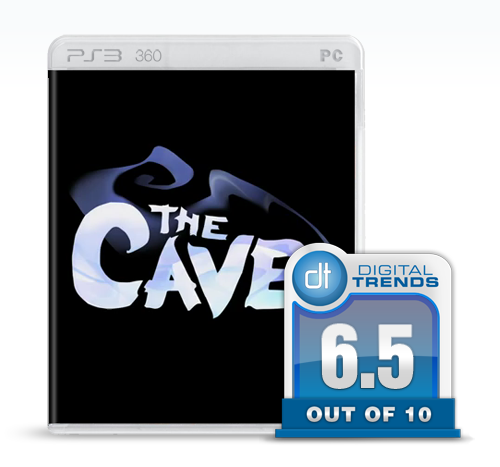
The Cave review: Third time’s not so charming after all

Double Fine’s side-scrolling adventure game The Cave delivers some good ideas within a framework that is built on diminishing returns.

Don’t you love it when a video game actually delivers on 99-percent of the great ideas it was founded on? You can feel that peeking through frequently as Double Fine’s Ron Gilbert-penned adventure, The Cave unfolds, but all of that potential is ultimately swallowed up by the titular underground network’s inky blackness as you explore it a second and then a third time.

The Cave features a 2D platforming-like aesthetic, but it is fundamentally an adventure game. Death and failure are non-concerns; the emphasis is placed instead on figuring out which items to use in which places as you solve a series of oddball puzzles. An early challenge involves using a hot dog obtained from a hot dog vending machine (naturally) to lure a cave monster into place beneath a crane, giving another character time to activate the machine and lift the beast – and, more importantly, its teeth – safely out of reach. First you’ll need to find the vending machine, then a fuse to power it, then a bucket to catch water preventing you from collecting said fuse, then… you get the picture. Adventure game.

The twist is that you’ve got a cast of seven characters to choose from as you build your party of three spelunkers. Each character has his or her own story that you’ll discover when you reach and play through that person’s uniquely tailored section of the cave. These character-specific areas are inaccessible unless you have that person in your party, so you’ll only ever visit three unique locations on a given playthrough, and each playthrough takes roughly 2-3 hours. To see all seven, you’ll have to repeat at least one character’s content. You’ll also have to play through the full game three times, which means re-visiting entire multi-stage puzzles that don’t change at all from playthrough to playthrough.

You can see where there was once probably a killer idea here. Perhaps Double Fine originally had more characters envisioned for this adventure. Perhaps the challenges put before you from game to game were meant to change based on who you brought in during your previous playthrough. Each character is defined in part by a so-called Object of Desire, and there’s some carryover in second and third playthroughs that see your chosen party gaining admittance to the Cave by tracking down the previous party’s lost Objects of Desire.

It feels half-baked though. Like there’s the shadow of a good idea here that has now been painted over by the demands of a development schedule. It’s not fair at all to pan a game for what it doesn’t include, but The Cave feels like it was meant to be much larger than it is. There’s nothing at all in the game to justify forcing players to revisit previous puzzles again and again, both in terms of the gameplay and the story. Different character abilities offer slightly different approaches to solving each one, but it’s not enough to stave off the boredom of having to traipse through multiple unchanging puzzles just to get to the new stuff.

All that said, it’s hard not to love The Cave at least a little. Gilbert’s superior writing talents are on full display, whether its the booming voice of the cave that narrates your adventure, or hilarious ambient dialogue. You’ll run all through an underground rocket launch facility during the Scientist’s story as a recorded voice repeatedly asks you to “insert navigational guidance system” to make the rocket go. Come to a certain point and you’ll learn that the navigational guidance system you’re meant to insert is a screaming, spacesuit-clad chimp.

Also, there are New Grog vending machines. Just so you know.

The puzzles are all very well-designed too. None are as obtuse as those of yesteryear’s adventure games, though red herring puzzle items are scattered everywhere. You’ll simply have to apply a little common sense to solve everything, always being mindful of the clues that the game feeds you at regular intervals. It’s easy to get stumped only to later realize — with a headsmacking “How did I miss that?!” — what the game wants you to do. The character-specific puzzles are the strongest, both because of the unique locations that you’ll visit and the novelty of playing with each character’s unique skill.

Conclusion

The Cave is an experience built on diminishing returns. Your first runthrough is the best: everything is new, the characters feel fresh, the puzzles present a fair yet acceptable level of challenge. You stumble a bit on your second time, waiting for something in those familiar bits to feel different. It never happens, and you finish playthrough #2 dreading your third attempt. You then abandon your third run part of the way through, completely turned off after having jumped through the same set of hoops a second time. If you took three fresh characters along on your first two attempts, you’re stuck with a pair of replays on your final run. 

It’s too bad. The Cave has a lot of promise, and it’s absolutely worth playing through a first time. The controls are on the clunky side, but you’ll likely not notice or care as you see all of the Cave’s sights as a fresh, first-time experience. Gilbert’s creations are as hilariously deranged as they’ve ever been, and the titular underground network seems to be just as much a rendering of his brain’s interior as it is an allegory on Hell, purgatory, and paying for your worldly sins in the afterlife. There’s a lot of quality here, just don’t expect to be rewarded for pushing to see everything.

Score 6.5 out of 10

(This game was reviewed on the Xbox 360 using a code provided by the publisher)


Source : digitaltrends[dot]com

It's free
index