The Almond+, a touchscreen Wi-Fi router with home automation controls

almond+ Wi-fi router and smart hub

Definitely a cool product for anyone that’s into home automation, the Almond+ touchscreen router provides a ton of control options and fast Wi-Fi speeds.

After launching on Kickstarter this week and raising over 60 percent of the funding goal over the past two days, Securifi’s Almond+ touchscreen router and smart hub is drawing significant attention from fans of the original Almond touchscreen router and range extender. The first generation Almond continues to receive a plethora of stellar reviews, specifically due to the simplicity of setting up the device as a wireless N router in addition to the device’s ability to significantly extend the range of a home’s existing wireless network. 

almond colorsBuilding on the success of the first generation model, the Almond+ adds support for the new 802.11ac 1.17Gb/s standard. As new mobile hardware from Apple, Samsung and other manufacturers launch with 802.11ac device support, Almond+ users will be able to take advantage of faster wireless speeds for consuming bandwidth-heavy content like high definition video streaming over serviced like Netflix or Vudu. Of course, the Almond+ also supports the wireless N standard and comes with the typical four Gigabit Ethernet ports for wired connections. 

In addition to 802.11ac support, the Almond+ includes the ability to interact with home automation technology developed by Zigbee and Z-Wave. The Almond+ acts as a delivery system for notifications in addition to providing controls for specific functions within a smart home. For instance, if a front or rear door of a home is equipped with a door sensor, the Almond+ can trigger a notification that’s sent to your smartphone letting you know that the door has been opened or closed. Other features demonstrated at CES 2013 recently include the ability to dim room lighting and control a home’s temperature by using the Almond+ 2.8-inch TFT touchscreen. Basically, this eliminates the cost of a $120 smart hub from Zigbee or Z-Wave as well as the cost of a touchscreen tablet. 

almond on shelfRegarding design, the Almond+ definitely has more of a minimal look when compared to the original Almond router. The Almond+ device can be wall mounted or propped up on a table with the included stand.

The Almond+ will be released in five different colors for Kickstarter backers including black, pearl white, sky blue, green and red. Internally, the Almond+ is powered by 620MHz Processor and 128MB of RAM. The team plans to support for iOS and Android mobile devices at launch. 

While all Kickstarter projects come with a modicum of risk for investors, the risk of investing in the Almond+ is significantly reduced since this is a second generation product. In other words, Securifi has already experienced all the manufacturing issues that other Kickstarter project managers have to deal with to get their first generation product in the hands of early backers. The creators of the Pebble smartwatch, for instance, had to postpone the original launch of that product due to many manufacturing problems.

According to the details on the Kickstarter page, Securifi will likely go through a couple more design revisions in the coming months. However, company management seems confident in both the manufacturer and the supply chain in regards to the product launch. The black version of the Almond+ is priced at $99 while the remaining four colors are priced at $129. Securifi expects to ship the final version to Kickstarter backers by September 2013. 


Source : digitaltrends[dot]com

Regaining Relevancy: Washed-up athletes and the iOS games they need

Shaq game

Dennis Rodman and Shaquille O’Neal have their very own mobile games. We have a feeling they are just the first of many who will join the wave of athletes finding relevancy in apps. We’ve got a few suggestions for who the next pro athlete turned pro game characters should be.

Athletes are, by default, also entrepreneurs. Why? Because they need a backup plan. You can only push your body to perform ridiculous feats for so long before it begins to break down. Lucky for most athletes, money is delivered in piles while they’re playing. But what do they do with all that money after playing with a ball all day? For far too many athletes, the answer to that question is, “Blow it on extravagant cars and houses, then file for bankruptcy,” which isn’t exactly a good answer.

Shaquille O’Neal and Dennis Rodman, however, have a different idea. Both of these basketball stars have found leading roles in their own iOS games. Rodman stuck to what he knows, starring in a free throw game and the upcoming Big Win Basketball title from Hothead Games. Shaq reprised his role from Shaq Fu with ShaqDown, acting as a martial arts master version of himself in which he’s bulging with muscles as opposed to the fat he’s acquired in his post-NBA life. This got us thinking: What other formerly relevant athletes could use a little profile boost from a mobile game?

Brett Favre’s Quest to Lose Respect

If you look at Brett Favre’s career from his college years to 2007, it’s a story of triumph, redemption, and overcoming great struggles. He was an improbable star who came off the bench when the Packers starting quarterback, Dan Majkowski, got injured and never relinquished the role. He overcame an addiction to painkillers and led his team to a Super Bowl. His career ended on a low note with a playoff loss, but he went out a competitor. But it’s 2007-2010 that would be the focus of this never-ending runner style game.

Here’s the idea: Players start with his exit from Green Bay and trade to the New York Jets, where he struggled before retiring and returning again to the loathed Minnesota Viking. Then you collect things like arrant interceptions, inappropriate pictures sent to attractive women, and the crocodile tears that come with every retirement announcement as you try to help Favre distance himself as far as he possibly can from the positive legacy he could have had.

Barry Bond’s Baseball RPG

Role-playing games are all about personal advancement. You better your character by performing certain tasks, gaining experience, collecting items that are beneficial to you, and upgrading yourself in every way possible. It’s the almost a perfect parallel to the career of a professional athlete. Moving up from the minors to the pros is like leveling up. Taking batting practice can help you acquire a new ability, just like a character in an RPG would learn a new skill. Interacting with players and coaches can improve your relationships and might reveal beneficial information.

Here’s the idea: All of the RPG elements above would be present in the Barry Bonds branded baseball RPG, except there would be in-app purchases for steroids and human growth hormone that will max out every stat of your character. It’ll also make your head huge, but that’s the price you pay for smacking every ball thrown at you out of the park.

Latrell Sprewell’s Don’t Choke

More than almost any other major sport, basketball can be as much of a one-man game as it can be team oriented. Sure, there’s almost nothing better than watching a team perfectly execute a strategy that covers the squads’ weaknesses while effectively taking advantage of all its strengths. But if there’s one thing just as fun to see, it’s the one man show when a player absolutely goes off, hits every shot, and carries a team to victory.

Here’s the idea: In Latrell Sprewell’s game, it’s all about teamwork. You’ll play asynchronously as you’re tasked with working together with friends to accomplish a common goal – until one of them speaks up with a strategy. Then you get to choke them, knocking them out for a turn during which you get to do whatever you want. Why? Because you’re Latrell Sprewell and you put spinning rims on shoes, that’s why.

Wayne Gretzky’s Tower Defense featuring Paulina Gretzky

Here’s a little known fact about Wayne Gretzky: Though his scoring prowess is often touted, equally impressive is the number of assists the Great One accumulated over the course of his career. He set the NHL record for most assists to go along with his scoring, points, and hat trick records. The man did almost everything on the ice. The one task he never did tackle was goaltending. Unfortunately for Wayne, that’s pretty much exactly what he’ll be tasked with in his mobile game debut.

Here’s the idea: In this tower defense style game, the Great One will have to play some solid defense to keep the perverted gazes and grabby hands of the ever-eager Internet audience away from his daughter Paulina. She’s become a bit of an entity on Twitter and Instagram, getting lots of attention that has very little to do with her relation to Wayne Gretzky. Pick up the pads and keep the creeps of the world wide web from going five-hole.

Find David Beckham’s Shirt

David Beckham is a worldwide phenomenon. His fame on the soccer field is equally matched by his fame off of it. It could be his high profile stature as a star of the world’s favorite sport, or his marriage to one of the Spice Girls, or the fact that he’s a rather attractive gentleman in his own right. No matter how you look at it, any guy who gets a movie named after him and isn’t even in the movie is clearly well known. But where is David Beckham’s shirt? The man can often be found with absolutely no cloth on his upper body.

Here’s the idea: How does Beckham keep losing his shirt? That’s up to you to discover in this mystery game in the style of Where’s Waldo? See if you can spot Beckham’s jersey across various levels. The final levels are extremely tough and will require you to find Beckham’s old Manchester United kit in a stadium full of rabid Man U fans. The first levels though, just require you to find it in a totally empty LA Galaxy arena.


Source : digitaltrends[dot]com

Resident Evil 6: Capcom hopes PC-exclusive extras can substitute for quality

Resident Evil 6

The PC release of Resident Evil 6 will be the biggest and best version of the game to date, though it will also still feature almost all of the things fans hated about the game’s original incarnation.

When Capcom released Resident Evil 6 on the the PlayStation 3 and Xbox 360 last October, the company seemed confident that it would be yet another massive hit. The Resident Evil games have always been beloved by fans and have perennially done well at retail, so it stands to reason that Resident Evil 6 would continue that trend. The only thing that could cause a new entry in an established franchise like this to fail would be a huge number of baffling design choices or a near-complete ignorance of what made its predecessors so successful. Unfortunately, as our review points out, that’s exactly what went into Resident Evil 6, and almost immediately following the game’s debut it was branded a failure.

Hoping to somehow salvage the game’s fortunes, Capcom has spent the months since its release coming up with new schemes to draw potential gamers to the title. New multiplayer modes, extra characters; anything that could possibly qualify as downloadable content has seemingly been created for Resident Evil 6, though as the game’s sales figures demonstrate, it’s probably long past time for Capcom to simply cut its losses.

Don’t tell Capcom that though, as the publisher is still hoping against hope that it can somehow strike gold with some incarnation of Resident Evil 6. Its final hope may be the game’s PC version, which is scheduled for release on March 22. Instead of merely bringing the console game to home computers with improved resolutions and pretty new graphical effects, Capcom is also promising fans a number of PC-exclusive features (at least for now).

If you purchase the PC version of Resident Evil 6, not only will you instantly have access to all of the downloadable content additions created for the console versions of the game to date, you’ll also receive access to a new Mercenaries mode dubbed Mercenaries: No Mercy. “[Mercenaries: No Mercy] takes fan favorite The Mercenaries and ramps up the gameplay to 11,” reads Capcom’s official announcement. “More enemies on screen than ever before will provide a greater challenge, but also the opportunity for players to use their skills to rack up even higher combo scores.”

Further, shortly after the game’s release, PC users will also be able to enjoy a mode called “Siege” that Capcom describes thusly:

An online multiplayer mode for two to six players, Siege sees a lone AI-controlled rookie BSAA agent in trouble and in need of help. Players will split into two teams with one assuming control of enemy creatures who are trying to take down the rookie, while the other team selects playable characters from the main game and must keep him alive. Each game consists of two rounds with teams switching between the human and enemy roles. The human team wins a round if the BSAA agent survives, while the enemies win if they can defeat him.

Siege will also be coming to the Xbox 360 and PlayStation 3, while PC gamers get the mode for free, console owners will need to shell out $4 for Siege.

Capcom also revealed that henceforth any DLC content released for the console versions of Resident Evil 6 will also be available for the PC game, and all future console DLC will be free to PC players. Consider it Capcom’s mea culpa for forcing PC players to wait six months for Resident Evil 6.


Source : digitaltrends[dot]com

Nokia Lumia 620 available in the U.S. through Expansys, just $289.99

Nokia Lumia 620

Looking for a decent smartphone out of contract, but not willing or able to pay more than $300? While we’d love to recommend the Android-based LG Nexus 4, right now the flagship Android device is nearly impossible to find.

Still, we do have a bit of an unconventional alternative. Instead of going the mainstream Android route, have you ever considered Windows Phone 8? While Microsoft’s latest OS isn’t nearly as popular or app-populated as iOS and Android and probably isn’t for everyone, but it is continuing to grow with support and is certainly a worthwhile choice for Microsoft fans and for those just looking for something different.

So what can under $300 get you in the Windows Phone 8 world? The Nokia Lumia 620 can now be yours completely unlocked through Expansys USA for just $289.99. Technically the Lumia 620 isn’t coming to the US market (through any carrier, anyhow) but as an unlocked world-phone it should play nicely with AT&T and will also work okay with T-Mobile (likely with no higher than EDGE speeds, though).

The Nokia Lumia 620 is not a powerhouse, but it isn’t a total pushover though. For a little less than $300 you get a 3.8-inch screen with an 800 x 480 resolution, a 1GHz dual-core processor, 512MB of RAM, 8GB storage with microSD for expansion, a 5MP back cam, a VGA front cam and a 1300mAh battery. Honestly not bad at all, though 3.8-inches of screen and only 512MB of RAM might be a turn off for some.

Again, no this doesn’t even begin to compare to devices like the LG Nexus 4 on a hardware level. Still, from Windows Phone 8′s live tile UI to the interchangeable Nokia Lumia 620 casings– this one is going to stand out in a crowd and should still perform reasonably well enough for most users. You will also get extra points for “unique factor” as it isn’t going to be a commonplace device due to limited US availability. 

Looking for a low-cost dual-core but not willing to jump platforms to WP8? For those that don’t mind a lesser-known brand, Australian-based Kogan is bringing a dual-core Android phone with a 5-inch display over to the US very soon for just $150.


Source : mobilemag[dot]com

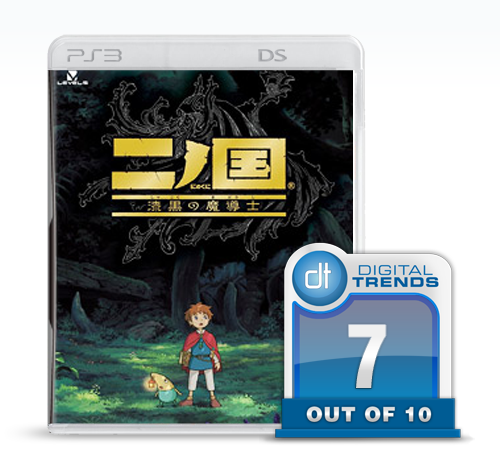
Ni no Kuni: Wrath of the White Witch review: A beautiful but slow world

Ni no Kuni: Wrath of the White Witch is an expertly made role-playing game in the old style, with sumptuous art and music. Excellent as it is, it’s missing a central spark that made Level-5′s past games so special.

Level-5 has made the greatest Japanese role-playing game in history: A sweeping cartoon adventure in a familiar but still somehow surprising fantasy land, full of goofy looking monsters to draft into your service, friends to meet, magic to learn, and myriad kingdoms in need of aid. It’s a role-playing game where you take control of a simple boy who has lost something dear, and he’s willing to topple an ancient evil for just a chance to get it back. As a model of a nearly 30-year-old style of game design, the type of JRPG founded by Yuji Hori and Hironobu Sakaguchi, it is flawless. Other studios should stop making traditional JRPGs in the classic mold.

I’m referring of course to Level-5’s 2005 masterpiece Dragon Quest VIII. That game shunted Level-5 from a promising up and comer to one of the greats of RPG making. The awkwardness of its earlier games, namely the Dark Cloud series, was washed away. Collaborating with Dragon Quest creator Yuji Hori and series illustrator Akira Toriyama helped produce a sweeping vision of an RPG, where every inch of its vast overworld, each forest and mountain, was a place that could be explored on foot. Role-playing games are built to give an impression of grandeur, but Dragon Quest VIII was itself grand.

Ni no Kuni: The Wrath of the White Witch fits that description of Dragon Quest VIII above perfectly. Like that sequel, Level-5’s PlayStation 3 original (similar to, but different a Nintendo DS version) is an old-style role-playing game wrought as a lushly animated cartoon world. There are some differences: Studio Ghibli, whose Hayao Miyazaki-directed films like My Neighbor Totoro have made the studio the only living Japanese anime or manga producer more beloved than Toriyama, produced the art. Miyazaki’s regular collaborator, composer Joe Hisaishi, provides the score.

Level-5 took a break from traditional RPGs in the years since Dragon Quest VIII, focusing on action RPGs like Rogue Galaxy, online mutliplayer RPGs like White Knight Chronicles and Dragon Quest IX, and unique DS adventures like Inazuma Eleven and Professor Layton. With the artistic horsepower of Ghibli and its wealth of experience, Ni no Kuni had the potential to surpass that 2005 milestone. While Ni no Kuni is a fine game in its own right, though, it is ultimately less than the sum of its parts, a game that merely feels grand at times.

The Another World 

Ni no Kuni starts in a more vulnerable and personal place than Dragon Quest VIII’ adventure to save a king and princess did. You control Oliver, an honest boy who loves cars living with his mom in a small American town. (Like many Ghibli films, there’s a strange timelessness to Oliver’s home Motorville. There’s a ‘50s pastiche going on, with malt shops and slick roadsters, but it’s not explicit.) After saving Oliver from drowning, his mother dies of a heart attack, leaving Oliver alone with nothing but a stuffed animal to remember her by. When that stuffed animal comes to life and tells Oliver he’s the Pure-Hearted One, destined to save Another World, the two whisk off to train Oliver to be a wizard so he can possibly save his mom while also saving the world from the White Witch and her minion, the dark genie Shadar.

That’s a lot to cover in the first hour of a game, but Ni no Kuni handles it well, moving along at a swift pace before plonking you down in the green hills of Another World, a parallel world to Earth. From there, though, the game slows down significantly. Over the next 20 hours, Oliver slowly explores the central continent of the Another World, picking up the tools of the wizarding trade as he goes. Some of these are adventures, like undergoing the Great Sage’s trials in the desert, or following a kingly cat into sewers to get your first proper wand. Some of the less action-packed quests are full of emotion.


For example: Oli’s first party member, Esther, is cursed. In order to uncurse her, you have to travel back to Motorville and find her soulmate. (All people in the Other World are connected to people back home. This is how Oli plans to save his mother, by rescuing her soul mate from the bad guys.) Finding her soulmate involves literally bringing a broken family back together, saving a child’s father from nightmares caused by Shadar’s machinations, and helping a little girl overcome her fear of the outside world. It’s powerful stuff, made more moving by Oliver’s plight.

What’s at stake?

Moments like those are dragged down by dull stretches of inane fetch quests, though. Around 15 hours into the game, you need to convince the gluttonous ruler of Al Mamoon to give you passage on her boat. First you need to find out what her favorite food is, though, so you need to find her soulmate in Motorville.  But first you need to figure out what she looks like, so you have to wander into the local shops, pestering merchants for clues. As a set up for comedy and character building, this is perfect, but Level-5 wastes the opportunity with plodding pacing and low stakes for the characters.

Even the combat lacks energy. Oliver and his friends do combat with familiars, little cartoony beasties you collect throughout the Other World, like Ghibli-fied Pokémon. Each character can hold up to three familiars, and you spend a lot of time giving them little treats to help them evolve into new forms. No fight takes advantage of this endless variety, though. Attack, attack, spell, heal: The same routine of the most basic RPGs rears its head here, but fights often lack the speed, charm, or strategy of those in better examples like Dragon Quest VIII. Fights are not so much hard as they are blunt, and the simple level grinding will make even the toughest boss a pushover. Compounding this problem is the fact that the full array of fight options aren’t available until well into the game, when the third character, thief Swaine, joins up.

Conclusion

For all these problems, though, it’s hard to not be charmed by Ni no Kuni. Especially once you can travel the world map by boat, the Other World is a gorgeous place, even if too few adventuresome things take place in it. It may not be as funny as Dragon Quest or Ghibli’s films, but it’s warm all the same. Helping two crabs that are buddies find one another across islands in the south seas is just one of the light, sweet things you can get up to. The Wizard’s Companion, Oliver’s book of spells and guide to the Other World, is entertainment in and of itself, full of short stories and facts about the world that shame the kind of background material found in adult RPGs like Mass Effect and Skyrim. And then there’s Mr. Drippy, Oliver’s stuffed animal turned fairy companion. He’s a weird cross between Scrooge McDuck and Meowth, a pragmatic, funny little guide to the world. Listening to him talk is often enough motivation to keep pushing into the game.

That Level-5 was willing to devote the resources to making such a beautiful, fleshed-out fantasy game is admirable. Almost no game publisher is willing to make games like this on such a scale anymore. The result of its efforts is a game that is very good, warm and charming. It isn’t great, though. Last time Level-5 made a game like this, they made the “Mona Lisa,” a simple, flawless work of art. Ni no Kuni’s failure is that it tried to match it.


Source : digitaltrends[dot]com

It's free
index