Weekly mobile news recap: Feuding over filters, CES rumors begin

It's the holidays, so you know what that means: time for feuding, fighting, and battling for customers. Twitter and Instagram duke it out to be the service you send your holiday photos through, Apple and Samsung battle to be the most gifted, and more in this week's mobile news wrap.

The holiday season is one that brings thoughts of joy and giving shared among friends and family. That is, until you finally gather with your relatives and feuds get re-sparked and arguments break out between the opening of gifts. It’s out of love, of course, but there’s significantly less love when major companies get to feuding. Competing for customers, users, and sales, the holidays are the perfect time for mobile’s biggest makers to make a move for more loyal consumers. More on the fighting later, along with other stories like rumors for next year, Google Maps’ return to iOS, and more from the week of December 10-15, 2012. 

Holiday shopping is in full swing

We’re under two weeks away from the biggest gift-giving holiday of the season, which means you probably still have the majority of shopping to do. If you’d like to contribute to the companies that seem to be topping the sales chart this year, make sure you give your money to Apple or Samsung. Interestingly, if you want to give the gift your loved one probably wants, you’ll go with an iPhone. If you give what most people are giving, though, you’ll go with an Android device. Apple will probably spin that in to an argument that patent infringement is clearly costing them, rather than focus on the imposing price tag of their device. Let’s just hope it makes its finger pointing seasonal by doing it with holly and mistletoe.

Google Maps finds quickest route back to iOS

Doing some traveling this holiday season? Rejoice at the return of Google Maps on iOS to get you to your destination. Apple has made an effort to fix the problems of its often criticized Maps app, but it’s hard to update your app with a feature like, “Now no longer strands you in remote locations!” Taking a look at Google Maps on its own shows just how much work Google has put into improving the traveling tool. Putting it side-by-side with Apple’s homemade cartography project will create a stark comparison for you. We’re waiting for the first horror film that starts with a group of teens led astray by Apple Maps to a remote location where they are eventually greeted by a masked murderer.

Rumors all around

What good do rumors do aside from giving us something to talk about? Well it fills up this paragraph, for whatever that may be worth. There are always new devices coming out and others in development, but three of the current prospective portables being discussed already have current models on the market. One can never discount the idea that Apple has something shaping up at all times, and that appears to be the case now. An iPhone 5S could be on its way as soon as June of 2013, because why let people enjoy the iPhone 5 for too long? Keep it fresh! Same goes for the iPad, which will have its 5th version in under three years according to reports. Not to be left out, the iPad Mini will get a refresh as well. Samsung is Apple’s biggest competitor at the moment, so they’ve gotta keep up with the updates. First among them may be the huge Galaxy Note, will have its third installment in two years and will have a 6.3-inch screen. Samsung is apparently attempting to capture the NBA centers and power forwards market with this move.

Texting turns 20, goes through reckless years

Texting turned 20 last week, which means a couple things. First, it means that this time next year, all of our texts are going to be completely nonsensical because texting will be like bar-hopping. Secondly, it means we’ve seen a technology that has been around for two decades, which is well beyond the lifespan of many other things that have come and gone in that time. We don’t think texting is going anywhere any time soon, either. Studies are showing that people who walk while texting aren’t going anywhere good. You’re just as likely to connect with a street sign as you are with the person you’re texting if you walk and type. Keep your head up so we’ve still got people texting for the next decades to come.

Feuding over Filters

Apple and Samsung are fighting for sales and to push out updates, but the biggest feud of this past week came when Instagram discontinued its friendly relationship with Twitter. Photos from the filtered picture service will no longer show up when used on Twitter, the platform that helped make Instagram so popular in the first place. Twitter got its hands on its own set of filters and will be instituting its answer to Instagram since the two will no longer play nicely. Who would have thought that pictures with a slight tint on them would become such a battleground?


Source : digitaltrends[dot]com

Why ‘good-enough’ computing could be a fluke

Will the concept of "good-enough" computing be relevant in the future? Or will it vanish as new technologies – and possibilities – arrive?

It’s no secret that worldwide computer sales have been on the decline, and one of the most recognized reasons for this slide is the rise of “good-enough” computing. The Good Enough revolution rode on the popularity of netbooks, making its real debut into tech culture around 2009 when a roster of publications – including Wired, The Economist, Fortune, and PC World – published articles hailing “good enough” as the future of computing. These renowned publications argued that, if given the chance, people would be happy to abandon the breakneck pace of a computer’s upgrade cycle.

There’s reason to believe today’s home computers have reached a plateau. The average home doesn’t need a new quad-core processor to run Word and check email, suggesting that today’s PCs are as powerful as they’ll ever need to be. Is this the permanent state of computing? Or has the hardware simply out-paced innovation?

The interface of the future demands horsepower

The interface you use when you sit in front of your PC today isn’t fundamentally different from that used two decades ago. It’s a two-dimensional graphical user interface (GUI) that relies on fine manipulation of different elements. Recent innovation has replaced the keyboard and mouse with touch, which is only half of a step in a new direction; use of a 2D GUI is still standard.

We’re just now beginning to see the possibilities beyond a standard GUI. They exist in technology like Microsoft’s Kinect, which can recognize gestures and voice as input. Gesture and voice are both rudimentary implementations that can only interact with users in limited ways, but the possibilities only require imagination. The days of computers being used at a desktop may be coming to an end.

But these new technologies need power. The Kinect’s task, simple though it may be, was demanding enough to require the use of a separate processor inside the Kinect rather than the hardware already in the Xbox 360. Even so, it can only handle a small number of inputs in limited situations, and its tracking is not perfect. In fact, motion tracking is a serious computing problem. A computer that’s tracking motion is taking images of an area and using algorithms to compare them and then determine where motion has occurred. Higher precision requires better images and more complex algorithms, both of which need more power. That’s tough enough as it is, but to be appealing, a future gesture-based interface would need to detect motion in three dimensions, which, of course, only increases the power needed.

We’re still years away from gesture-based input becoming a common computing interface, but it’s already being researched by some of the world’s largest tech companies. The only question is how quickly it can be made practical for home PCs.

What are the system requirements of the holodeck?

Virtual reality has been the holy grail of geeks for decades. It’s agreed to be an awesome concept, though, like flying cars and truly intelligent AI, it’s still found in fiction more often than life. VR systems exist, but most of them are expensive simulators far outside the average person’s budget. Plus, the quality of the experience isn’t on par with the life-like virtual worlds found in sci-fi films and shows.

VR differs from flying cars, however, because its only obstacle is technology. Recreating reality – even an approximation of it – needs some form of immersive display paired with advanced inputs (like the motion-tracking we’ve already discussed). Both demand incredible computing power. Even modern 3D graphics are a long way from providing the realism that VR demands.

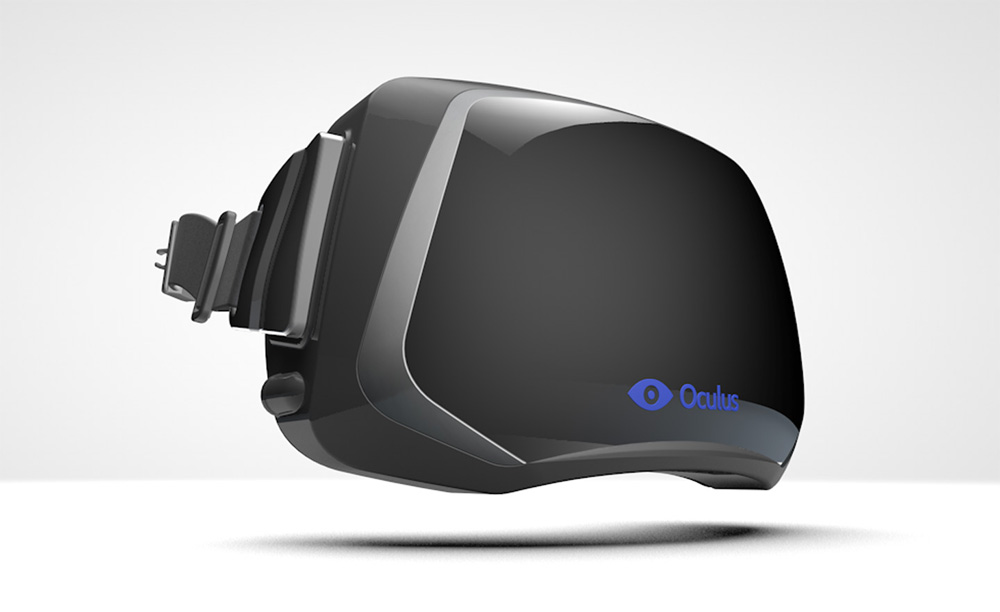
Oculus Rift

Of course, innovation in this area won’t impact computing if it never reaches the consumer market; but there’s reason to believe it will. Microsoft has submitted a patent application for a 360-degree projector that can be used alongside a television to create a simple virtual environment. Oculus is working on the Rift, a Kickstarter-supported VR headset. And Google is working on a pair of augmented-reality glasses that are small and light enough to wear every day.

None of these technologies are full virtual reality, but they’re an indication that technology is finally mature enough to support exploration of basic mass-market VR. Once we head down this path, we’ll find that computing power will be one of two major obstacles (the other being display technology) between us and even-more-realistic VR. Good-enough computing will only be relevant when humans have literally recreated reality.

Not good enough for tomorrow

It’s not hard to see today’s computers as good-enough if your perspective is tied to their capabilities. Obviously, they’re more than capable of handling today’s tasks. What’s in contention is the assumption that today’s tasks are all computers will ever handle.

I don’t think that’s the case. Today’s home computer will eventually be replaced by a home that is a computer. It will be able to activate pre-programmed functions when you come home from work. It will let you navigate a recipe book via gestures while you’re cooking. It will envelope you in 360-degree entertainment and games. The possibilities are endless and exciting. 

This future relies on the evolution of technology that’s available today. Refining all of these elements into a complete vision, however, requires computing power and efficiency far beyond what’s available in the today’s consumer PCs. Plateaus are often large, but they’re not infinite – and this one is only the base of the next summit. 


Source : digitaltrends[dot]com

DT’s ‘Better Than Socks’ Holiday Giveaway: DIY Berlin Boombox

Berlin Boombox giveaway

The new year calls for a new and awesome way to play your 2013 tunes. Lucky for you, we're giving away the DIY Berlin Boombox from Firebox for your listening pleasure.

DTs-Better-Than-Socks-Holiday-Giveaway-Drop-Cap

Building your own speaker may sound like an impossible feat, but not with the Berlin Boombox from Firebox. For Day 5 of DT’s “Better Than Socks” Holiday Giveaway, we’re offering up a DIY stereo that can be used to play any device with a 3.5mm audio input.

Made of industrial strength recycled cardboard, the Berlin Boombox comes flat-packed, making it portable and easy to ship. All the pieces are precut, and all you have to do is put the pieces together – no glue or tools required. If you’d rather give this black and white stereo a little flavor, take out your art supplies before assembling it and do your thing. You’ll be the only one on the block with your own personalized ghetto blaster. 

The Berlin Boombox features two 5W integrated amplifiers, two speakers, a headphone jack, and a volume knob so you can pump up the jams. Weighing less than two pounds, you can easily carry this boombox on your shoulder and strut your stuff. It comes with three AA batteries, but we have a feeling you may need a few backups on hand due to excessive rockin’. No word on whether or not it goes to 11. 

Interested in winning the Berlin Boombox? Just tell us your go-to karaoke song in the comments below. The contest ends Saturday, December 22, and we’ll notify the winner the following day.

If the Berlin Boombox isn’t your jam, check out the rest of DT’s “Better Than Socks” Holiday Giveaways all month long.

Good luck!


Source : digitaltrends[dot]com

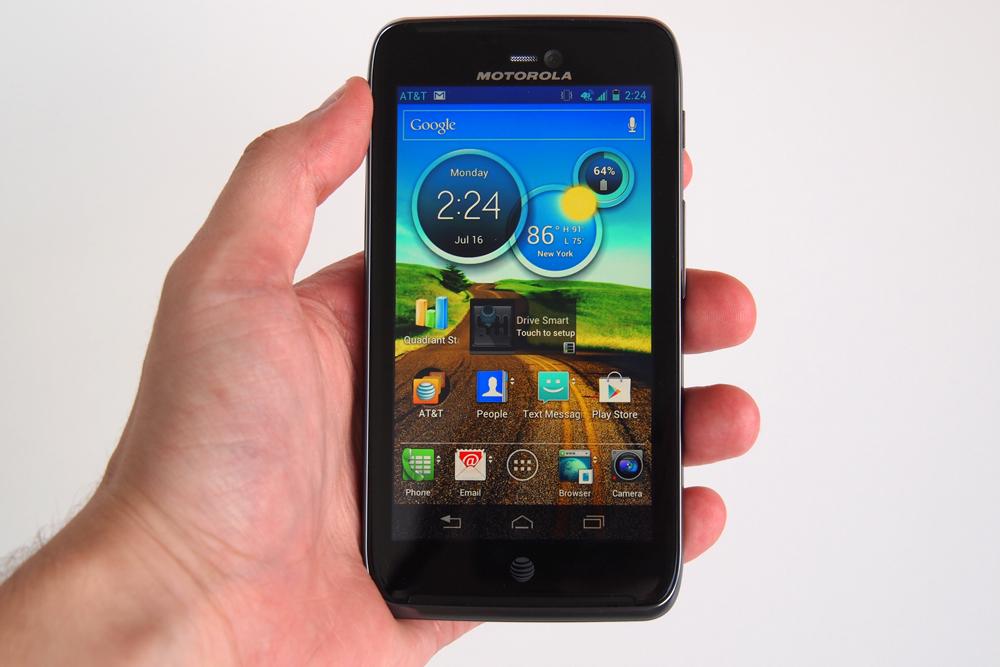
Android 4.1 Jelly Bean now available for AT&T’s Motorola Atrix HD

Motorola Atrix HD Review hardware android screen

On Friday, AT&T announced that its Motorola Atrix HD will be updated to Android 4.1 Jelly Bean.

As 2012 comes to an end, Jelly Bean is on a rampage. In a slew of recent announcements concerning Android 4.1, Motorola’s Atrix HD has just been upgraded to Google’s most recent version of its mobile operating system.

On Friday, AT&T announced that the Motorola handset would be one many to get the Jelly Bean update as of late. This over-the-air update will bring features such as Google Now and Android beam to the 4.5-inch smartphone. It’s also worth noting that this is AT&T’s fourth device to operate on Android 4.1 Jelly Bean. Other gadgets that preceded it in getting the update include HTC’s One X +, Samsung’s Galaxy Note 2 and Galaxy S3. Jelly Bean is expected to arrive on smartphones such as the original HTC One X and LG Optimus G soon, but no launch window has been specified.

In addition to the features mentioned above, Jelly Bean brings a variety of enhancements such as a fresh, buttery smooth user interface, an improved camera app and a refreshed notification center among other additions.

Google officially announced its Jelly Bean operating system its I/O developers conference back in June. The update has been rolling out fairly slowly since then, but has seen a significant surge toward the end of the year. Verizon’s version of the Samsung Galaxy S3 was also upgraded to Android 4.1 today, and the AT&T variant saw the upgrade last week.

While many devices have been patiently waiting for Android 4.1, the search engine giant unveiled the second-generation of Jelly Bean last month: Android 4.2. This expanded and updated version of Jelly Bean saw its debut with Google’s Nexus 4 handset and Nexus 10 tablet, but was met with some harsh criticisms upon release.

The Android-loving world is still focused on Jelly Bean, but rumors about the next iteration of the mobile software have already begun to surface. Android’s next treat-themed operating system, believed to be called Android 5.0, is likely to be named Key Lime Pie.

Earlier this month a Google executive posted a cartoon to his Google+ profile that illustrated each generation of Android. The last image in the line depicted the loveable Android mascot holding a slice of Key Lime Pie, sparking speculation that Android 5.0 could be in the works. Before Google unveils “Key Lime Pie,” however, it should focus on launching Android Jelly Bean for all of its existing devices. 


Source : digitaltrends[dot]com

Jetsetter: EVE Online expands its universe with 450,000 players

This week in Jetsetter we head to Iceland, the United Kingdom and India for discussion of MMOs, Windows 8, and the complete end of reality. Just the end of the world again in Digital Trends' look at international gaming.

windows-8-dropcap

Welcome once again to Jetsetter, Digital Trends weekly jaunt across the wide world of video games. We cover the video game industry daily here at Digital Trends, but Jetsetter is devoted to looking beyond the biggest video game market on Earth. Weird Korean imports, Turkish MMOs, Indian-developed mobile games released in the Kenyan market, Pakistani pricing of FIFA 13—these topics and more are our bread and butter.

It was a busy week. Czech developer Bohemia Interactive was forced to delay ArmA 3 into 2013, Nintendo of Europe explained that German laws were restricting Wii U eShop sales, and Finnish studio Rovio celebrated three successful years of Angry Birds. Now let’s move onto Iceland, the UK, and India.

EVE Online grows to 450,000 subscribers.

Iceland’s CCP Games have carved out an impenetrable and fascinating corner of the massively multiplayer online gaming world over the past ten years. Since opening EVE Online in 2003, the game’s never ascended to A-list World of Warcraft success (or even C-list Lord of the Rings Online success), but it hasn’t needed to. The game’s kept both the studio and its cultish, obsessed audience enraptured. The game’s simulated galaxy has a rich, functioning economy that’s more stable than most real world economies, and it still manages to play host to stellar intrigue. CCP Games announced this week that the game now has 450,000 players. That’s a fraction of most MMOs, but most MMOs don’t require players to make spreadsheets. This milestone came two weeks after EVE Online was added to the MoMA’s first collection of video games.

* Microsoft lifts Windows Store ban on 18+ rated games.

Prior to Windows 8’s release in October, Digital Trends reported on how Microsoft was going to have some trouble convincing developers to bring their games to the platform’s store. At the time, the Windows Store blocked the sale of 18+ rated games in the UK, meaning titles like Heavy Rain and Grand Theft Auto with PEGI 18 ratings would be unavailable even to adults. Microsoft has unsurprisingly rolled back the restriction, announcing its commitment to Windows Store gaming on its blog. “In welcoming PEGI 18 games into the Store, we again reinforce two principles—flexibility and confidence—fundamental to the Windows Store,” reads the post, “We recognize that people have come to expect and appreciate rich gaming experiences on Windows and this includes games rated PEGI 18.” Will this mean people will stop using Steam as their primary digital distribution platform on PC? Will it mean that more gamers will use Windows 8 in the UK? No. No it doesn’t.

* Indian games retailer gets into the season’s spirit with End of the World sale.

NextWorld.in, an online video game retailer serving India, is embracing the spirit this December. The spirit of Quetzcoatl and the birth of the fifth sun that is! Rather than a Christmas or other holiday theme, NextWorld is celebrating the end of the world due on Dec. 21 when the Mayan calendar runs out. If you’re a gamer in India and you don’t want to pay an outrageous price on FIFA 13, pick it up now!


Source : digitaltrends[dot]com

It's free
index