Just what’s up Dish Network’s sleeve?

dish network surprise

Dish Network has recently gotten its 4G network blessing from the FCC, but just what is it planning for the future?

Dish Network has been getting a lot of buzz lately, and it ironically has nothing to do with its television service. While the company continues to straddle along with its 14 million satellite television subscribers, the company has made some interesting, though a tad odd, shifts in the market, ranging from acquisitions of bankrupt brands to pushing out satellite broadband for the world. While the acquisitions and new services are certainly an act of diversification by the satellite telecom company, the real question is just what in the world Dish has been planning with the wireless world? Is Dish trying to become a carrier? Merge its services with one, or just exit the market?

For months now, Dish has been flip flopping between a myriad of plans, floating ideas like Blockbuster Mobile stores, teaming up with Sprint or Google, and offering up its own wireless 4G by satellite. At first glance, it seems like Dish just really wants to burn that Christmas bonus in a hurry. For months now, the company has been hinting at an entry into the wireless market. Its recent offering of satellite broadband service at home and in cars only furthers the logic they want to play the game as hard as AT&T, Verizon, and other multidisciplinary telecom companies.
Back in November, word got out that Google and Dish Network were discussing plans to enter the market together as a joint wireless venture, though neither admitted any progress or acknowledged the discussion publicly. Now rumor has it that Sprint has been chatting it up with Dish, specifically in regard to Dish’s recent FCC approval for 4G usage of their satellite band. So the question is posed: Does Dish have what it takes – and what it needs – to be the first satellite wireless hybrid network?

“The parts are there” Rob Enderle, Principal Analyst of the Enderle Group, told us, ”but getting them to work together will be very difficult.” Enderle says the problem is that Dish can’t run a network purely on satellite cost-effectively, and that Dish Network would need to partner up with wireless heavyweights, and that’s something he doesn’t see happening. Though Google’s fiber network grows with every week, neither it or Dish have “a national wireless footprint,” and that could pose problem if Dish plans on competing with the very companies that own all the cell towers. For years, Verizon and Sprint have shared roaming service with one another. Dish would have to strike affordable roaming agreements with multiple carriers to offer up satellite service in rural areas and backing it with some 3G (or even 4G) footprint. 

The very idea of a hybrid satellite / cellular wireless service poses technological problems. It’s bad enough that satellite phones have notoriously large antennas. One can only imagine how Dish will stuff 3G, 4G LTE, and satellite service all into one device. There have yet to be Android satellite phones, and it’d be tough for Dish to sell a mainstream wireless service without a flagship smartphone that can do everything modern phone buyers expect, whether it be Android, iPhone, or Windows Phone. The challenge is getting everything to work just right from a mixture of logistics and technology, and it looks just plain impossible to figure out.

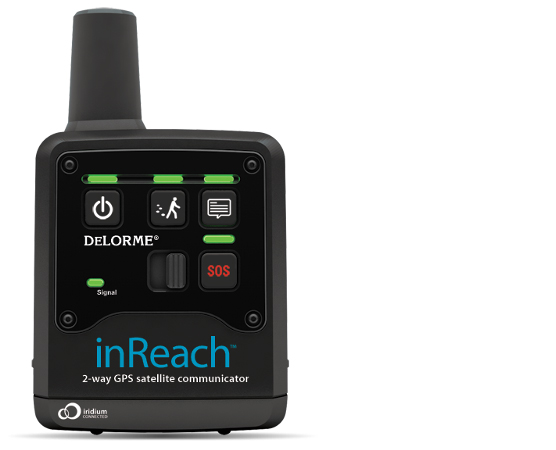
On the other hand, Dish doesn’t have to go all-in with this bet. It could simply offer its 4G bandwidth as a reliable LTE hotspot alternative at a competitive price point. GPS mapping & service company DeLorme is among a small collection of companies offering Bluetooth-powered accessories for iPhones and Android devices alike, allowing users access to devices such as the inReach to communicate via satellite, send text messages, and get data access for mapping your present location. Dish may not be set to offer a full-blown wireless service, but it could offer a supplementary, supply-side service for carriers like Sprint, and offer a hotspot device for those looking for satellite-based internet. This service could very well mix in with the other wireless carriers on the market, maintain a niche, and attract (or even blend in) with Dish Home Internet customers. If Dish can’t get a big partner like Google or Sprint on its side with its spectrum, a niche service could still stand as an effective backup plan for the company.

Lastly, Dish could just call it a day and sell its spectrum. This is perhaps the last thing Dish would want to do, but blending the wireless world with satellite technology may prove to be too expensive and difficult. A quick sell is always an option, and with folks like AT&T, Verizon, and Sprint with plenty of equity, and Google looking to jump into the wireless ring, there’s no doubt someone will take the spectrum off Dish’s hands if it really wanted to call it quits.

Whether Dish decides to throw its hat into the mobile ring or not, all eyes are on the company as it make its play. Dish could start a wireless venture, offer a supply-side service, or just sell its spectrum and move on. However, with plans in the making for over a year, and we don’t think Dish will abandon everything overnight. By purchasing Blockbuster, Dish proved that it can think outside the box. We can’t wait to see what it has up its sleeve.


Source : digitaltrends[dot]com

Nvidia Tegra 4 Specifications Leaked to the Net

It seems that the next-generation Tegra 4 processor specs have now been leaked to the net. Codenamed Wayne, the newest smartphone and tablet processor looks to be rather impressive.

From what we are hearing, it is likely based on Cortex-A15 and is described as a 4-PLUS-1 Quad Core Eagle. Even more impressively, if this rumor turns out to be true the Tegra 4 will feature a 72-core GPU setup that makes its graphical abilities six times improved over the current-gen Tegra chips.

With such power behind it, you’d think it would also be a battery hog. Actually, with its 28nm manufacturing process it is said to be an improvement when it comes to battery and power efficiency.

The slide information seen in the image above also shows the chip has support for USB 3.0, 4k video playback and resolutions up to 2560 x 1440. There is no mention of integrated LTE, though.

Keep in mind that this is an unconfirmed leak and should be taken with a healthy dose of skepticism. The Tegra 4 sounds amazing, but until NVIDIA gives us direct information, it’s all just speculation and rumor at this point.

What do you think, if this is all true, are you excited about the next-generation of Tegra chips?


Source : mobilemag[dot]com

CyanogenMOD 10.1 Gets Ported to LG Optimus G


For many intents and purposes, the LG Optimus G is fundamentally the same smartphone as the hotly desired Google Nexus 4, aside from some differences in form factor and the fact that the Optimus G doesn’t run “vanilla” Android. However, it looks like the LG Optimus G could soon be a “better” Nexus 4 with the port of CyanogenMOD 10.1.

The custom ROM is based on the Android 4.2 Jelly Bean build that is found on the Nexus 4. It strips away that LG Optimus UI and gives you the free CM experience that you’ve come to expect from previous CyanogenMOD builds. This is an early build, though, so there are problems. The WiFi, NFC and capacitive keys don’t work yet, for example, but they’re hopeful it’ll all be fully functional by year’s end.

Remember that the Optimus G ships with just ICS under the hood, so this is likely a much faster way to get to Android 4.2 than waiting for an official update skinned by LG. Getting to load these custom ROMs is easier too, as there is a $1 app in the Google Play Store called FreeGee that allows you to unlock your bootloader and remove LG security. You could still bootload the old school way, but the app is easier.

Should you want to brave the early build on your LG Optimus G, you can find the CM 10.1 download on XDA. As with all these kinds of mods, proceed at your own risk and discretion.


Source : mobilemag[dot]com

Huawei Ascend D2 smartphone outed in photos revealing 5-inch display

Huawei Ascend D2 smartphone outed in photos revealing 5-inch display

Will Huawei's new flagship cut the mustard? (credit: Tenaa)

Images have now appeared online claiming to show the much talked about Huawei Ascend D2 in all its 5-inch glory.

Just this morning we reported that a Huawei executive confirmed the Ascend D2 would be arriving at CES 2013, alongside the Windows Phone 8 touting Ascend W1.

The photos come courtesy of China's version of the FCC, which posted three snaps of the device on its website, showing a minimalist white handset with no buttons on the front and an HTC One X style camera on the rear.

Huawei Ascend D2 - LEAK

Full HD, 1080p

The key feature on the Ascend D2 is its full HD, 5-inch display which will see the handset go up against the likes of the Samsung Galaxy Note 2 and HTC Butterfly/Droid DNA in the super-sized phone market.

Some specifications accompanied the photos, which apparently shows the Ascend D2 weighing in at a hefty 170g, measuring 140x71x9.9mm and packing a decent 2,900mAh battery.

We're yet to hear anything official directly from Huawei, so we are not getting carried away with these latest reports, but it's all looking pretty good at the moment for the Chinese firm.


Source : techradar[dot]com

New iOS app Dish.fm does more than suggest restaurants, it tells you what to order

A new app uses online reviews and photos from Instagram to generate suggestions for individual orders at restaurants.

There are plenty of applications that can direct you to a restaurant or provide accurate reviews, but what happens when you get there and can’t decide what to order? There’s an app for that.

Dish.fm, the new iOS and Web app that just launched today, helps users decide on an individual dish. The new app currently covers restaurants in San Francisco and New York City, but more locations are coming soon. In order to brainstorm suggestions, Dish.fm analyzes tons of reviews from other services such as Yelp and Foursquare and looks at any mentions of individual dishes. The app takes both positive and negative reviews into account and also sources image from platforms like Instagram, according to The Next Web.

Users can start out by browsing restaurants by name or location. Once a place is chose, users can then peruse dishes by rank. Each dish is ranked by popularity based on the number of positive citations pulled from online reviews. These dishes are accompanied by photos, and users also have the option to add their own image if necessary. Dish.fm patrons can add their own opinion to the mix by rating each dish as awesome or awful.

The team behind Dish.fm is based in Moscow and initially attempted to roll out the application in June.  Back then, the foodie application was based on crowdsourced images and reviews.

“We realized that like this the app attracts only niche users, those who like to make pictures of their food and share the experience,” co-founder Zhanna Sharipove said to TNW. “The mass-market consumer does not bother to make pictures, he or she only wants to get recommendations about what’s to order and be done.”

Making use of information that’s already on the Web sounds like a solid solution, but an app can only rely on this model if New Yorkers and San Francisco residents actively try different food and share their experience. It also depends on how accurately the app processes these reviews and searches for images.

To try the app out for yourself, head over to Apple’s App Store or check out their website. 


Source : digitaltrends[dot]com

It's free
index