Nokia Lumia 620 available in the U.S. through Expansys, just $289.99

Nokia Lumia 620

Looking for a decent smartphone out of contract, but not willing or able to pay more than $300? While we’d love to recommend the Android-based LG Nexus 4, right now the flagship Android device is nearly impossible to find.

Still, we do have a bit of an unconventional alternative. Instead of going the mainstream Android route, have you ever considered Windows Phone 8? While Microsoft’s latest OS isn’t nearly as popular or app-populated as iOS and Android and probably isn’t for everyone, but it is continuing to grow with support and is certainly a worthwhile choice for Microsoft fans and for those just looking for something different.

So what can under $300 get you in the Windows Phone 8 world? The Nokia Lumia 620 can now be yours completely unlocked through Expansys USA for just $289.99. Technically the Lumia 620 isn’t coming to the US market (through any carrier, anyhow) but as an unlocked world-phone it should play nicely with AT&T and will also work okay with T-Mobile (likely with no higher than EDGE speeds, though).

The Nokia Lumia 620 is not a powerhouse, but it isn’t a total pushover though. For a little less than $300 you get a 3.8-inch screen with an 800 x 480 resolution, a 1GHz dual-core processor, 512MB of RAM, 8GB storage with microSD for expansion, a 5MP back cam, a VGA front cam and a 1300mAh battery. Honestly not bad at all, though 3.8-inches of screen and only 512MB of RAM might be a turn off for some.

Again, no this doesn’t even begin to compare to devices like the LG Nexus 4 on a hardware level. Still, from Windows Phone 8′s live tile UI to the interchangeable Nokia Lumia 620 casings– this one is going to stand out in a crowd and should still perform reasonably well enough for most users. You will also get extra points for “unique factor” as it isn’t going to be a commonplace device due to limited US availability

Looking for a low-cost dual-core but not willing to jump platforms to WP8? For those that don’t mind a lesser-known brand, Australian-based Kogan is bringing a dual-core Android phone with a 5-inch display over to the US very soon for just $150.


Source : mobilemag[dot]com

Ni no Kuni: Wrath of the White Witch review: A beautiful but slow world

Ni no Kuni: Wrath of the White Witch is an expertly made role-playing game in the old style, with sumptuous art and music. Excellent as it is, it’s missing a central spark that made Level-5′s past games so special.

Level-5 has made the greatest Japanese role-playing game in history: A sweeping cartoon adventure in a familiar but still somehow surprising fantasy land, full of goofy looking monsters to draft into your service, friends to meet, magic to learn, and myriad kingdoms in need of aid. It’s a role-playing game where you take control of a simple boy who has lost something dear, and he’s willing to topple an ancient evil for just a chance to get it back. As a model of a nearly 30-year-old style of game design, the type of JRPG founded by Yuji Hori and Hironobu Sakaguchi, it is flawless. Other studios should stop making traditional JRPGs in the classic mold.

I’m referring of course to Level-5’s 2005 masterpiece Dragon Quest VIII. That game shunted Level-5 from a promising up and comer to one of the greats of RPG making. The awkwardness of its earlier games, namely the Dark Cloud series, was washed away. Collaborating with Dragon Quest creator Yuji Hori and series illustrator Akira Toriyama helped produce a sweeping vision of an RPG, where every inch of its vast overworld, each forest and mountain, was a place that could be explored on foot. Role-playing games are built to give an impression of grandeur, but Dragon Quest VIII was itself grand.

Ni no Kuni: The Wrath of the White Witch fits that description of Dragon Quest VIII above perfectly. Like that sequel, Level-5’s PlayStation 3 original (similar to, but different a Nintendo DS version) is an old-style role-playing game wrought as a lushly animated cartoon world. There are some differences: Studio Ghibli, whose Hayao Miyazaki-directed films like My Neighbor Totoro have made the studio the only living Japanese anime or manga producer more beloved than Toriyama, produced the art. Miyazaki’s regular collaborator, composer Joe Hisaishi, provides the score.

Level-5 took a break from traditional RPGs in the years since Dragon Quest VIII, focusing on action RPGs like Rogue Galaxy, online mutliplayer RPGs like White Knight Chronicles and Dragon Quest IX, and unique DS adventures like Inazuma Eleven and Professor Layton. With the artistic horsepower of Ghibli and its wealth of experience, Ni no Kuni had the potential to surpass that 2005 milestone. While Ni no Kuni is a fine game in its own right, though, it is ultimately less than the sum of its parts, a game that merely feels grand at times.

The Another World 

Ni no Kuni starts in a more vulnerable and personal place than Dragon Quest VIII’ adventure to save a king and princess did. You control Oliver, an honest boy who loves cars living with his mom in a small American town. (Like many Ghibli films, there’s a strange timelessness to Oliver’s home Motorville. There’s a ‘50s pastiche going on, with malt shops and slick roadsters, but it’s not explicit.) After saving Oliver from drowning, his mother dies of a heart attack, leaving Oliver alone with nothing but a stuffed animal to remember her by. When that stuffed animal comes to life and tells Oliver he’s the Pure-Hearted One, destined to save Another World, the two whisk off to train Oliver to be a wizard so he can possibly save his mom while also saving the world from the White Witch and her minion, the dark genie Shadar.

That’s a lot to cover in the first hour of a game, but Ni no Kuni handles it well, moving along at a swift pace before plonking you down in the green hills of Another World, a parallel world to Earth. From there, though, the game slows down significantly. Over the next 20 hours, Oliver slowly explores the central continent of the Another World, picking up the tools of the wizarding trade as he goes. Some of these are adventures, like undergoing the Great Sage’s trials in the desert, or following a kingly cat into sewers to get your first proper wand. Some of the less action-packed quests are full of emotion.


For example: Oli’s first party member, Esther, is cursed. In order to uncurse her, you have to travel back to Motorville and find her soulmate. (All people in the Other World are connected to people back home. This is how Oli plans to save his mother, by rescuing her soul mate from the bad guys.) Finding her soulmate involves literally bringing a broken family back together, saving a child’s father from nightmares caused by Shadar’s machinations, and helping a little girl overcome her fear of the outside world. It’s powerful stuff, made more moving by Oliver’s plight.

What’s at stake?

Moments like those are dragged down by dull stretches of inane fetch quests, though. Around 15 hours into the game, you need to convince the gluttonous ruler of Al Mamoon to give you passage on her boat. First you need to find out what her favorite food is, though, so you need to find her soulmate in Motorville.  But first you need to figure out what she looks like, so you have to wander into the local shops, pestering merchants for clues. As a set up for comedy and character building, this is perfect, but Level-5 wastes the opportunity with plodding pacing and low stakes for the characters.

Even the combat lacks energy. Oliver and his friends do combat with familiars, little cartoony beasties you collect throughout the Other World, like Ghibli-fied Pokémon. Each character can hold up to three familiars, and you spend a lot of time giving them little treats to help them evolve into new forms. No fight takes advantage of this endless variety, though. Attack, attack, spell, heal: The same routine of the most basic RPGs rears its head here, but fights often lack the speed, charm, or strategy of those in better examples like Dragon Quest VIII. Fights are not so much hard as they are blunt, and the simple level grinding will make even the toughest boss a pushover. Compounding this problem is the fact that the full array of fight options aren’t available until well into the game, when the third character, thief Swaine, joins up.

Conclusion

For all these problems, though, it’s hard to not be charmed by Ni no Kuni. Especially once you can travel the world map by boat, the Other World is a gorgeous place, even if too few adventuresome things take place in it. It may not be as funny as Dragon Quest or Ghibli’s films, but it’s warm all the same. Helping two crabs that are buddies find one another across islands in the south seas is just one of the light, sweet things you can get up to. The Wizard’s Companion, Oliver’s book of spells and guide to the Other World, is entertainment in and of itself, full of short stories and facts about the world that shame the kind of background material found in adult RPGs like Mass Effect and Skyrim. And then there’s Mr. Drippy, Oliver’s stuffed animal turned fairy companion. He’s a weird cross between Scrooge McDuck and Meowth, a pragmatic, funny little guide to the world. Listening to him talk is often enough motivation to keep pushing into the game.

That Level-5 was willing to devote the resources to making such a beautiful, fleshed-out fantasy game is admirable. Almost no game publisher is willing to make games like this on such a scale anymore. The result of its efforts is a game that is very good, warm and charming. It isn’t great, though. Last time Level-5 made a game like this, they made the “Mona Lisa,” a simple, flawless work of art. Ni no Kuni’s failure is that it tried to match it.


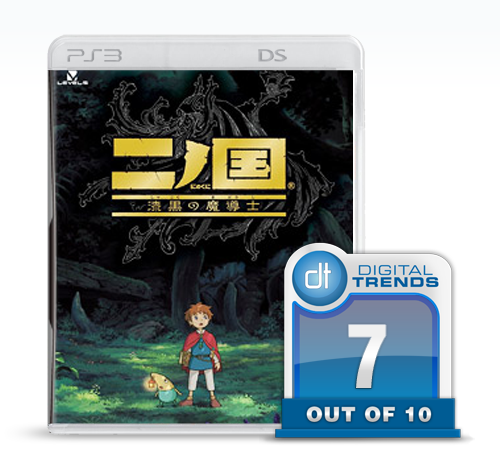
Source : digitaltrends[dot]com

Samsung reportedly sets ridiculously ambitious sales goal for Galaxy S4

Samsung reportedly sets ridiculously ambitious sales goal for Galaxy S4

Galaxy S4 would have to achieve about 1.5x the Galaxy S3 sales

Samsung Galaxy S4rumors are at a fever pitch, and so are the company's sales expectations for the soon-to-be-announced smartphone each month, according to South Korean media.

Korean language news site Money Today reports that Samsung has already ordered 10 million Galaxy S4 components per month.

This figures indicates that Samsung is capable of selling 10 million units per month, following the expected Galaxy S4 release date in April.

The translated text from the Korean site doesn't express how long its industry sources expect Samsung to be able to keep this 10-million unit level going.

Galaxy S4 vs. Galaxy S3 vs. Galaxy S2 sales

The dominating sales of the Galaxy S3 and and the Galaxy S2 smartphones before it indicate that the Galaxy S4 should be a gigantic success.

However, if Samsung does indeed have a lofty goal of 10 million units per month, as rumored, it would have to sell about one-and-a-half times as many Galaxy S4 smartphones at launch.

The Galaxy S3 took 50 days to achieve that 10 million sold figure, and the S2 took 5 months.

May come down to Galaxy S4 specs, price

Samsung's ability to sell that many Galaxy S4 smartphones may come down to the technology inside of the handset and the price on the outside of its box.

There have been Galaxy S4 leaks aplenty, leading us to speculate that the smartphone will have a 4.99-inch screen and a Full HD 440PPI resolution.

The Galaxy S4 processor, meanwhile, is rumored to set a new benchmark with a Exynos Octa 5 eight-core 1.8GHz chip.

It's been speculated that the phone will run Android 4.2.1, have at least a 10-megapixel camera, and support wireless charging to boot.

While there have been many tech spec rumors, leakers haven't been as vocal about a Galaxy S4 price, a key determinant to the success of any smartphone these days.

Whether or not Samsung is able to move 10 million Galaxy S4s per month, the company is likely to achieve its 500 million smartphone sales goal in 2013 in large part due to this highly anticipated phone.


Source : techradar[dot]com

Nvidia's GeForce Experience PC game optimizer enters open beta

Nvidia has opened the doors on its GeForce Experience after letting thousands of users hammer on it over the last month. Announced last April and introduced as a closed beta in December, the PC game optimizer aims to help players get the most out of their machines by automatically adjusting in-game settings for their hardware.

When the initiative was first revealed, Nvidia cited a survey that suggested more than 80% of users play PC games in their default configuration, presumably because they're either intimidated by the myriad of quality settings or they simply don't care to invest the time necessary to find a decent configuration for their particular system.

When the closed beta began last month, the GeForce Experience only supported 32 games, and while that number hasn't increased by much, Nvidia has added nine more titles to its database, including Far Cry 3, Mechwarrior Online and Hawken. You'll still need a Fermi or Kepler-based graphics card, though the software now offers limited support for Core 2 Duo and Core 2 Quad processors, which weren't backed before.

Nvidia says other changes since the closed beta include enhanced game detection logic, support for optimizing games played on 2560x1440 displays, better Chinese, Danish and UK English translations, improved client startup, billboard display, game scan and communication with Nvidia's servers, as well as with various bug fixes. The company previously outlined its six-step game testing process and we'll list that again:

  1. We start with expert game testers that play through key levels of the game (indoors, outdoors, multiplayer etc.) to get a feel for the load and how different settings affect quality and performance.
  2. The game tester identifies an area for automated testing. This area will be from a demanding portion of the game. We don’t always select the absolute worst case since they tend to distort the results.
  3. As part of the game evaluation, the expert game tester will identify an appropriate FPS target. Fast paced games typically require higher FPS. Slower games lower FPS. We also define and test against a minimum FPS to minimize stuttering. The average framerate target is typically between 40-60 FPS, the minimum 25 FPS.
  4. The most difficult part of OPS is deciding which settings to turn on and which to leave off in a performance limited setting. This is done by analyzing each setting and assigning them quality and performance weights. The game tester compares how each setting (eg. shader, texture, shadow) and each quality level (eg. low, medium, high) affects image quality and performance. These are stored as weights which are fed to the automation algorithm.
  5. From here on the testing is automated. The GeForce Experience supercomputer tests the game by turning on settings until the FPS target is reached. This is done in the order of maximum bang for the buck; settings that provide the most visual benefit and least stress on the GPU (eg. texture quality) are turned on first; settings that are performance intensive but visually subtle (eg. 8xAA) are enabled last.
  6. Finally, the GeForce Experience supercomputer goes through and tests thousands of hardware configurations for the given game. Unique settings are generated for each CPU, GPU, and monitor resolution combination.

Source : techspot[dot]com

Report: Samsung Galaxy S4 could sell 10 million every month

Report: Samsung Galaxy S4 could sell 10 million every month

Galaxy S4 would have to achieve about 1.5x the Galaxy S3 sales

Samsung Galaxy S4rumors are at a fever pitch, and so are the company's sales expectations for the soon-to-be-announced smartphone each month, according to South Korean media.

According to Korean language news site Money Trade, Samsung has already ordered 10 million Galaxy S4 components per month.

This figures indicates that Samsung is capable of selling 10 million units per month, following the expected Galaxy S4 release date in April.

The translated text from the Korean site doesn't express how long its industry sources expect Samsung to be able to keep this 10 million unit level going.

Galaxy S4 vs. Galaxy S3 vs. Galaxy S2 sales

The dominating sales of the Galaxy S3 and and the Galaxy S2 smartphones before it indicate that the Galaxy S4 will be a gigantic success.

However, if Samsung does indeed have a lofty goal of 10 million units per month, as rumored, it would have to sell about one-and-a-half times as many Galaxy S4 smartphones at launch.

The Galaxy S3 took 50 days to achieve that 10 million sold figure, and the S2 took five months.

May come down to Galaxy S4 specs, price

Samsung's ability to sell that many Galaxy S4 smartphones may come down to the technology inside of the handset and the price on the outside of its box.

There have been Galaxy S4 leaks aplenty, leading us to speculate that the smartphone will have a 4.99-inch screen and a Full HD 440PPI resolution.

The Galaxy S4 processor, meanwhile, is rumored to set a new benchmark with a Exynos Octa 5 eight-core 1.8GHz chip.

It's been speculated that the phone will run Android 4.2.1 and support wireless charging to boot.

While there have been many tech spec rumors, leakers haven't been as vocal about a Galaxy S4 price, a key determinant to the success of any smartphone these days.

Whether or not Samsung is able to move 10 million Galaxy S4s per month, the company is likely to achieve its 500 million smartphone sales goal in 2013 in large part due to this highly anticipated phone.


Source : techradar[dot]com

It's free
index